I would like to share with you a story: the story of the dissemination and influence of Mao Zedong's works across the world in the period immediately following the founding of the People's Republic of China. This is also the fruit of our research. Prior to 1935, Mao Zedong, Zhou Enlai, Zhu De, and other leaders of the Chinese Communist Party had not yet attracted widespread international attention. It was only after the founding of the People's Republic of China in 1949, as China gradually came to get a more prominent position on the international stage, that the works of CPC leaders represented by Mao Zedong began to draw the attention of countries around the world. One important turning point was the publication of 'Red Star Over China,' which for the first time brought relatively concentrated international attention to CPC leaders and their thought. Systematic attention to the dissemination of Mao Zedong's works, however, only truly began in the context of the Cold War, after the founding of People's Republic of China, when the socialist camp led by the Soviet Union and the capitalist camp led by the United States imposed a comprehensive blockade on China. In the period from 1949 to 1966, delegations from countries of Asia, Africa, and Latin America visited China with great frequency, and these visits were extensively reported in the People's Daily.
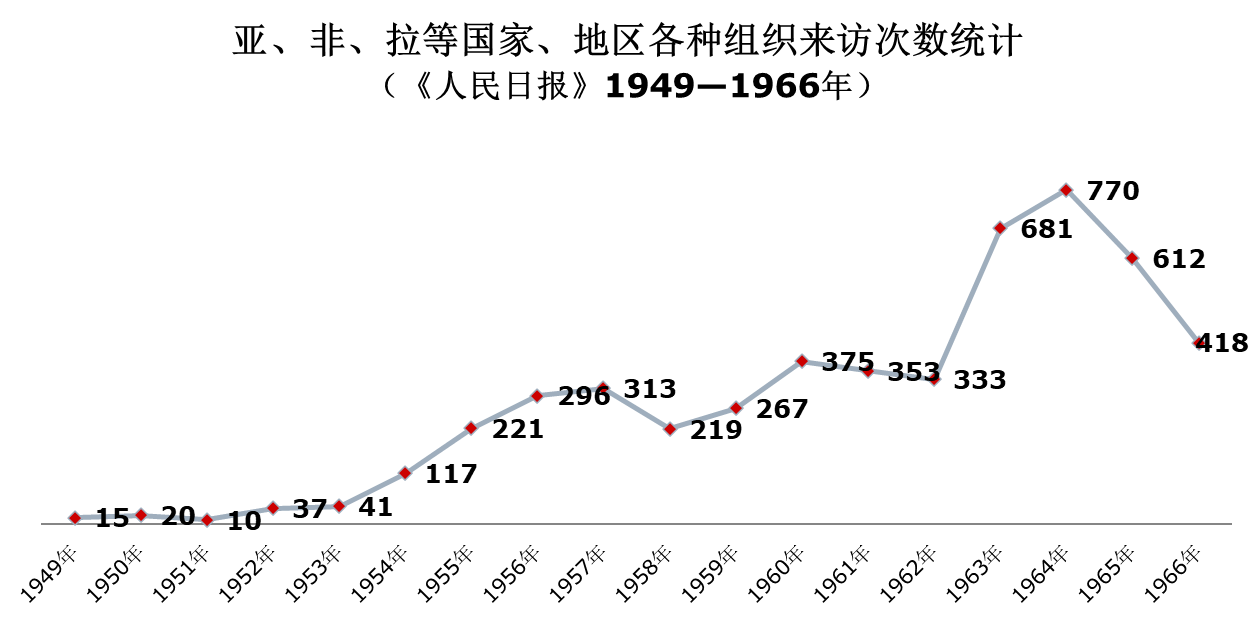
Numbers of visit to China from Asian, African, and Latin American organizations (reported by People's Daily in 1949–1966).
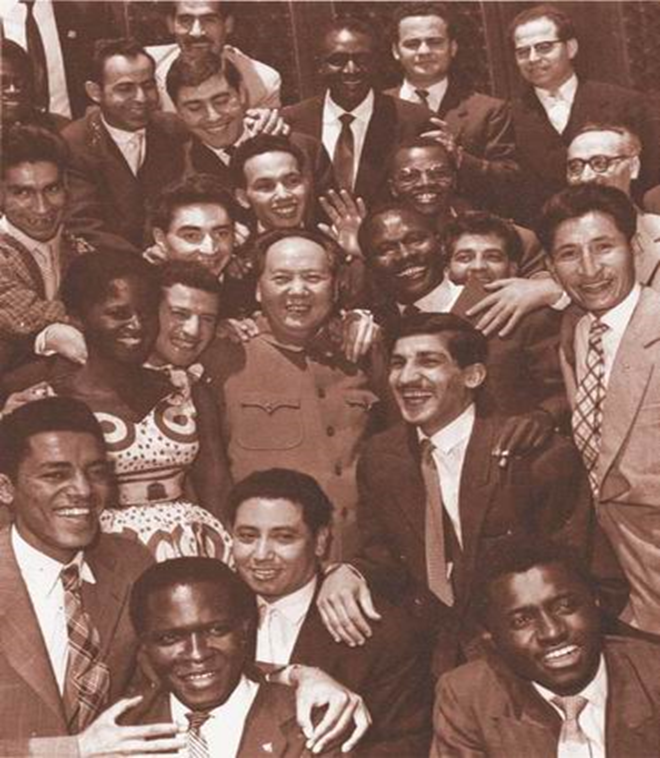
From 1 October 1949 to 1 October 1959, during the first decade of the People's Republic, government delegations, social institutions, and organisations from the Third World came to China to study its experience of achieving national independence.
Those who first took an interest in Mao Zedong's works after the founding of New China were foreign socialist countries and forces seeking national liberation. The initial work of translation was not initiated by China but arose from the needs of other countries. In 1948, Czechoslovakia was the first to propose translating the works of Mao Zedong. Stalin subsequently made several suggestions that Mao's writings be translated, wishing to determine whether Mao was genuinely a Communist. In 1949, in preparation for his visit to the Soviet Union, Mao Zedong gave his consent to the translation, noting that his theoretical level was limited and expressing the hope that the Soviet side would send theorists to assist. Thereafter, under the guidance of Eugen, a Soviet theorist, the Chinese side began compiling and translating the relevant works.
Between 1952 and 1954, the first Russian-language edition of Mao Zedong's works was published in the Soviet Union, and subsequently disseminated to a number of socialist countries in Central and Eastern Europe, including Czechoslovakia, Yugoslavia, and Central Asian countries like Kazakhstan and Kyrgyzstan. The Russian edition was the first foreign-language edition of Mao Zedong's works.
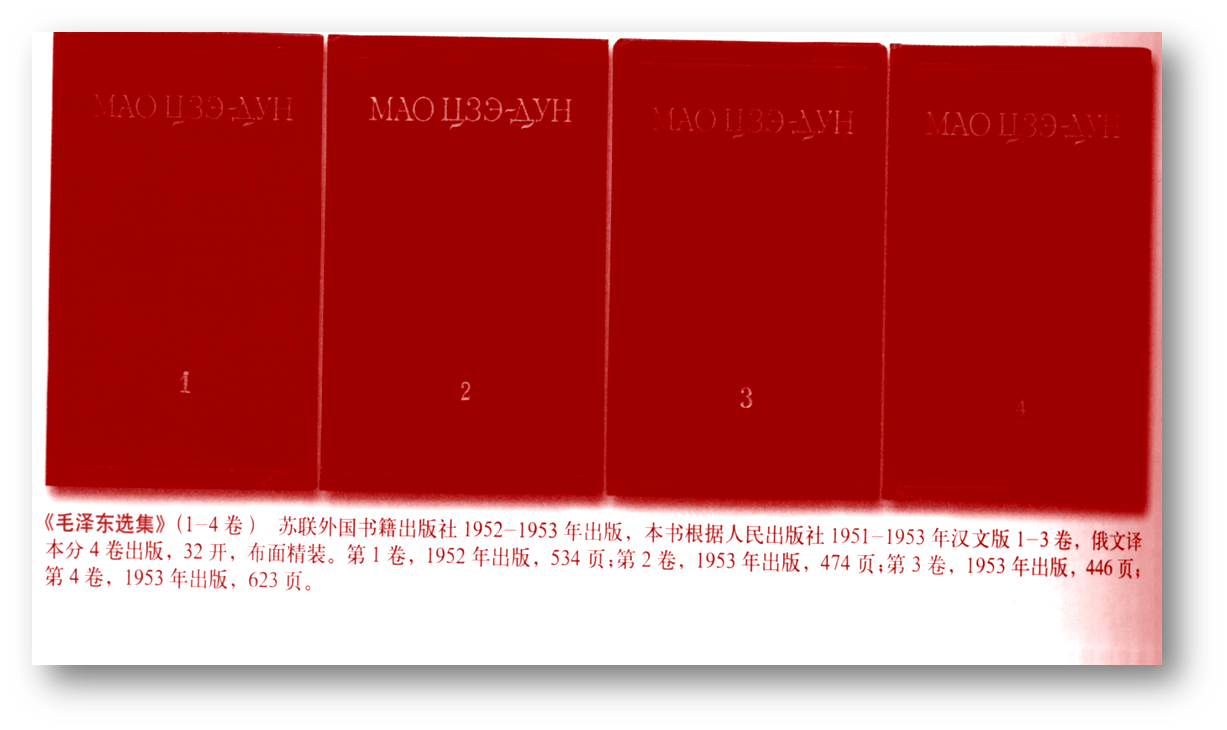
The Russian-language edition of the 'Selected Works of Mao Zedong', published by the Soviet Foreign Languages Press between 1952 and 1953.
Within the Western camp, it was the Communist Party of Great Britain that first took an interest in Mao Zedong's works. In 1953, a representative of the British publisher Lawrence and Wishart, by the name of Russell, made his way to China by an indirect route and signed with the Chinese side's International Bookstore the first publishing agreement for an English-language edition of the 'Selected Works of Mao Zedong.' Following its publication in 1956, the English edition began to circulate in Western countries including the United States, and from it a number of other language editions were derived, including French, Indian, and Sri Lankan editions. Many national liberation organisations in Asia, Africa, and Latin America also took the initiative to use the English edition as a basis for retranslation. As these organisations were generally unable to afford copyright fees, the Chinese Communist Party subsequently decided to make Mao Zedong's works freely available for translation. The first royalty payment received by New China came from Lawrence and Wishart in Britain, amounting to approximately twelve thousand pounds. Thereafter, no copyright fees were charged for Mao Zedong's works, and their free translation and dissemination across the world was permitted.
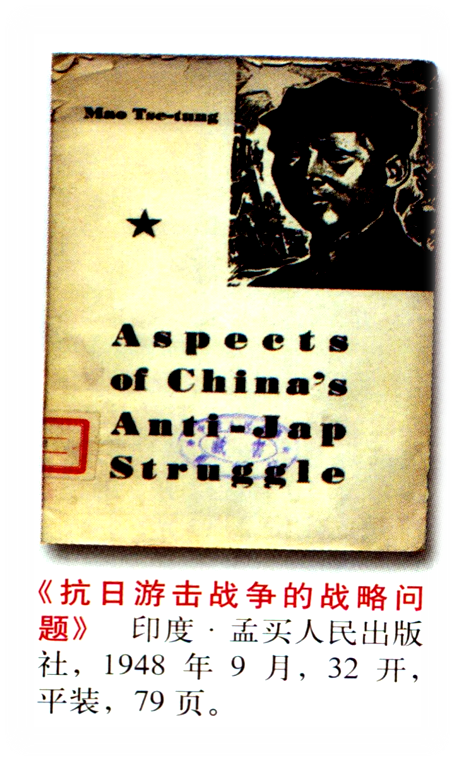
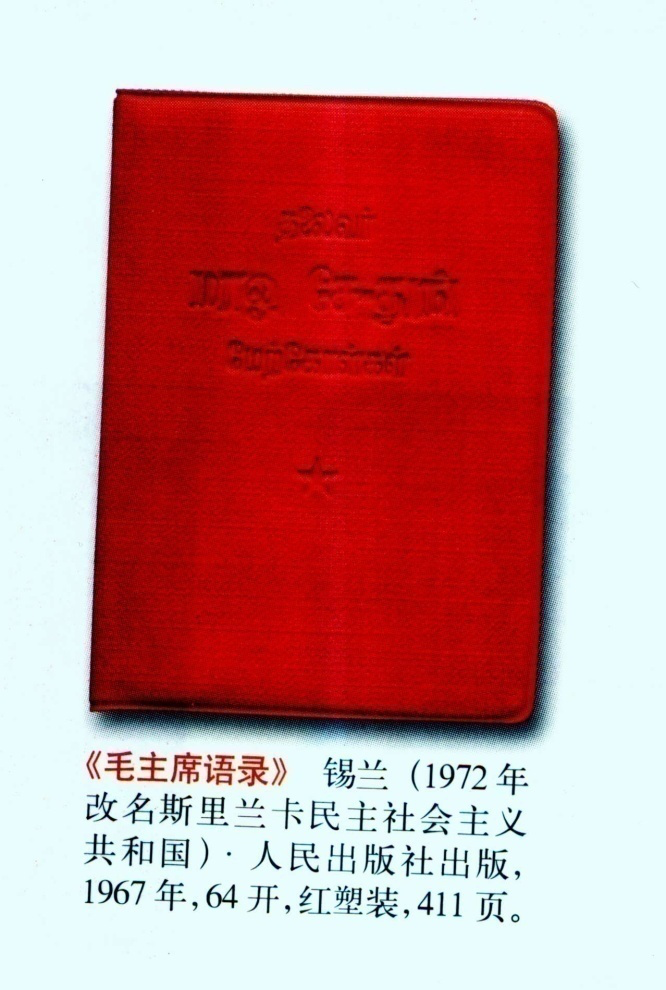
Left: Aspects of China's Anti-Jap Struggle, People's Publishing House, Bombay, India, September 1948. 32mo, paperback, 79 pp.; Right: Quotations from Chairman Mao, People's Publishing House, Ceylon (renamed the Democratic Socialist Republic of Sri Lanka in 1972), 1947. 64mo, red plastic binding, 411 pp.
Selected Works of Mao Zedong (Vol. 1), Damascus Publishing House, Syria, 1967. Small 16mo, paperback.
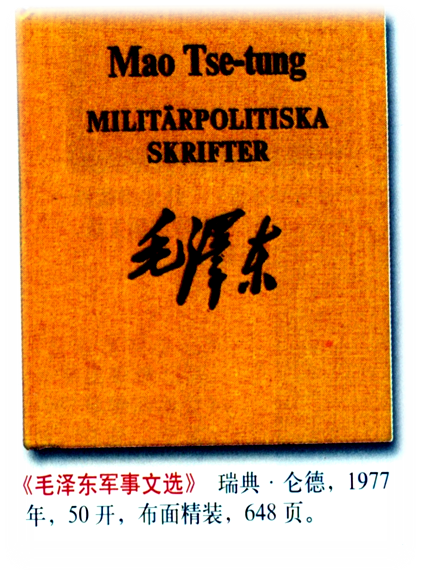
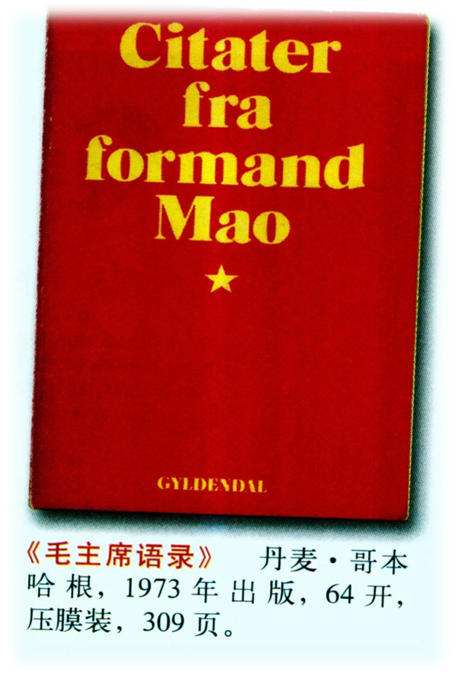
Left: Selected Military Writings of Mao Tse-tung, Lund, Sweden, 1977. 50mo, cloth hardcover, 648 pp.; Right: Quotations from Mao, Copenhagen, Denmark, 1973. 64mo, laminated binding, 309 pp.
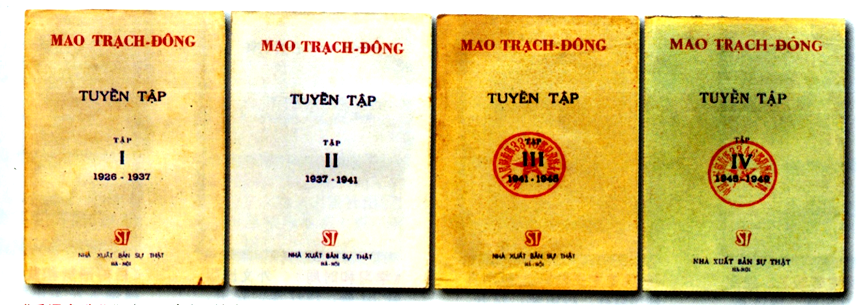
Vietnamese edition.
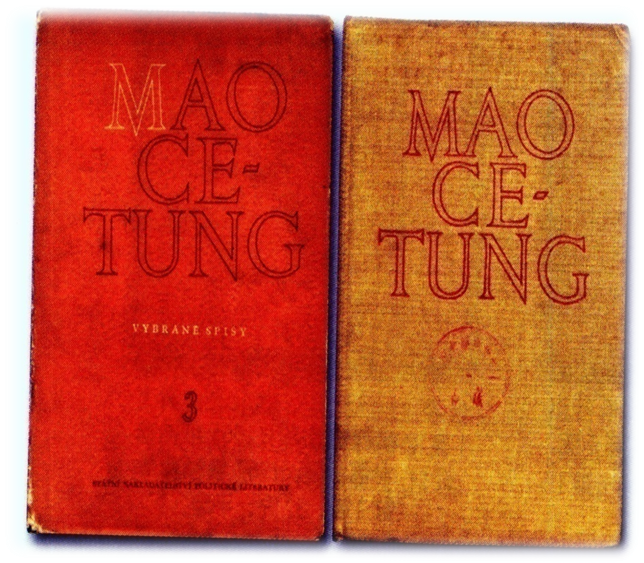
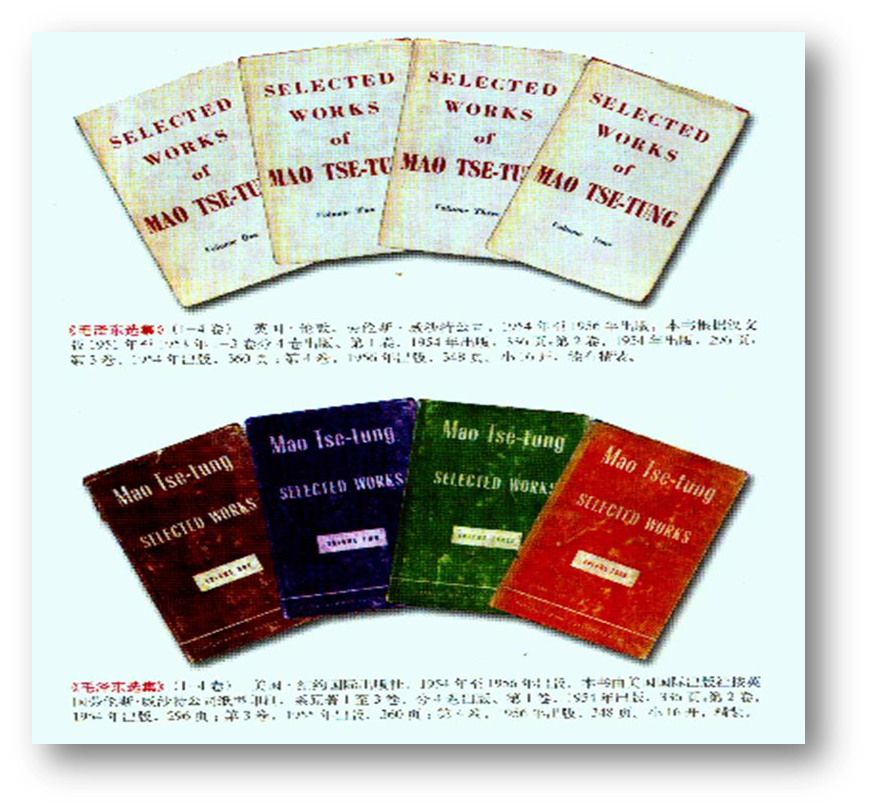
Left: Czech edition; Right: Lawrence and Wishart edition, London, 1954–1956; International Publishers edition, New York, 1954–1956 (produced on the basis of the Lawrence and Wishart edition).
At the same time, editions in multiple languages published, including Czech, Vietnamese, Slovak, and French. Japan initially produced its own translation of the Selected Works of Mao Zedong without the knowledge of the Chinese side, which only learned of it after the fact; a second version subsequently published, with the result that the Japanese market at one point had three different editions of the Selected Works and multiple editions of the Quotations from Chairman Mao. Western scholarship has often described this phenomenon as 'China exporting revolution,' but from the perspective of the history of dissemination, this characterisation is not accurate. From approximately 1948 to 1960, the Chinese side did not actively promote translation; what truly drove the dissemination was the demand generated by national liberation forces across the Global South in their struggles against imperialism, colonialism, and oppression.
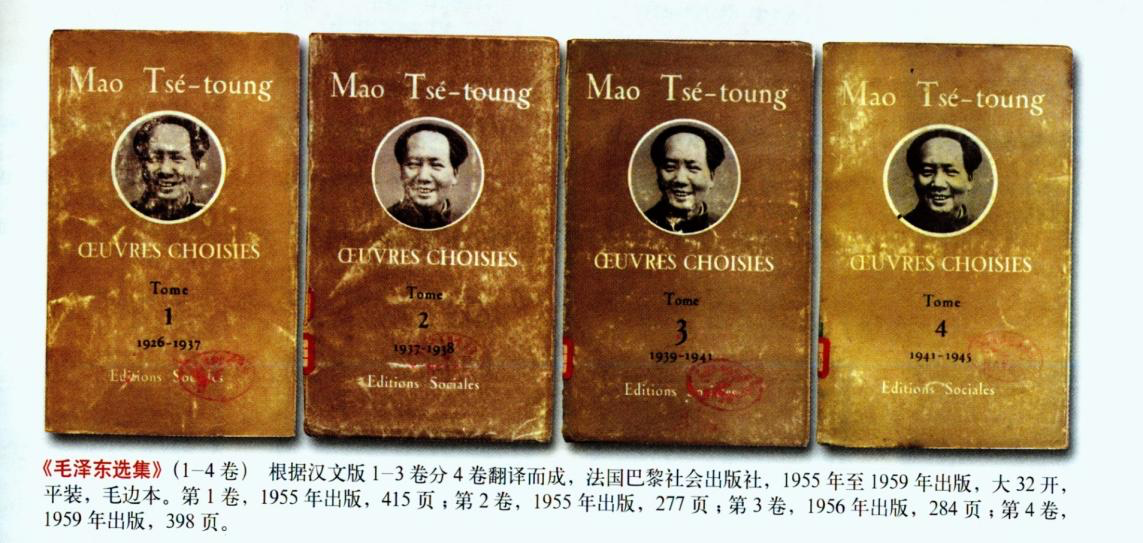
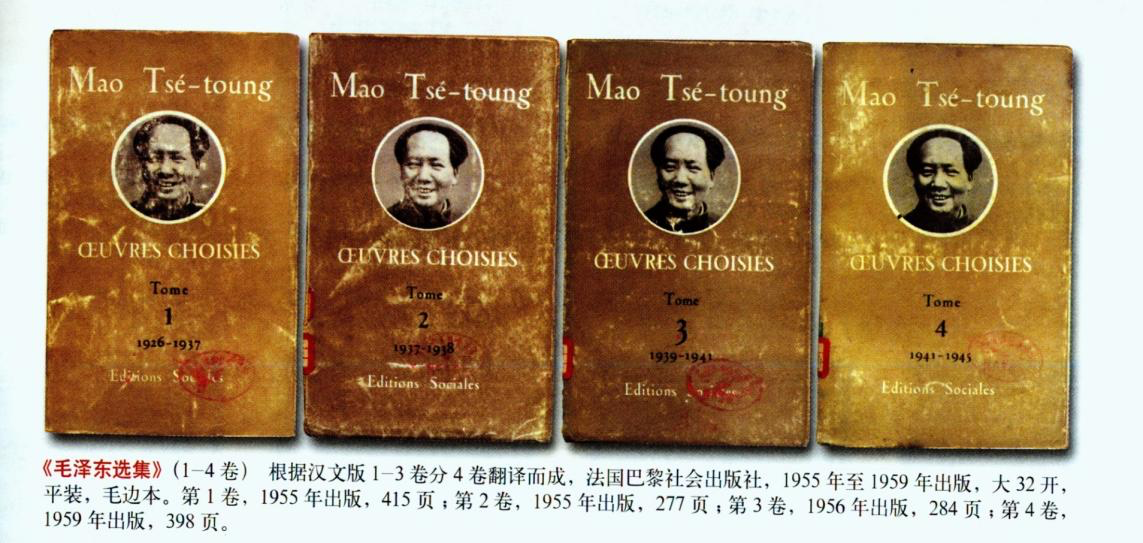
The French edition of the Selected Works of Mao Zedong, translated and published by Éditions Sociales of Paris between 1955 and 1959.
It was only in the early 1960s that China began, within the framework of the CPC Central Committee's Foreign Propaganda Group, to actively promote the international dissemination of Mao Zedong's works and other publications. Large quantities of 'China Pictorial,' Mao Zedong's works, and reading materials in Hausa and Swahili aimed at African children were transported from Beijing Capital Airport to destinations across the world. Most of these materials were provided as gratuitous assistance, and children in many East African countries used them as textbooks. Tanzania's first printing plant and its first daily newspaper press were also built during this period, provided free of charge by China.
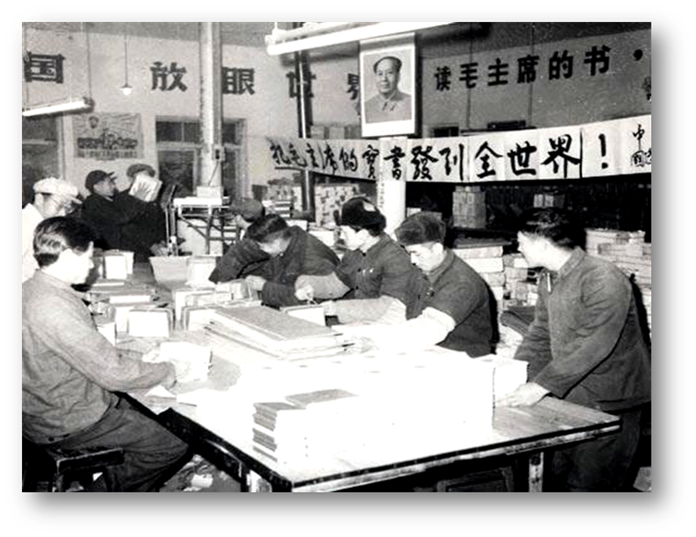
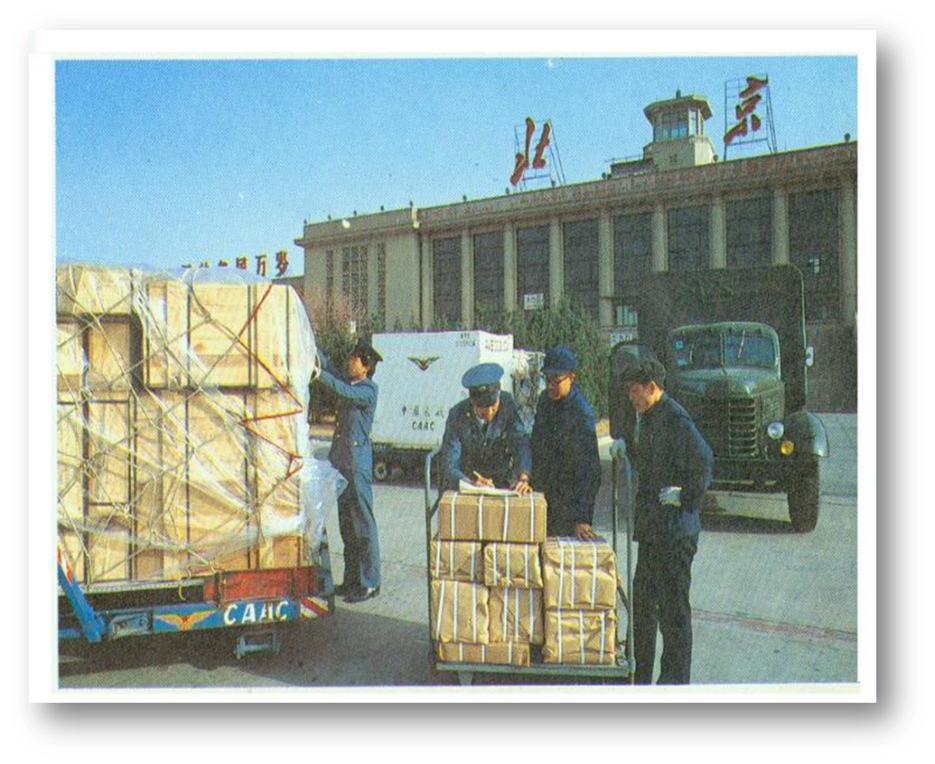
Left: Loading publications for international distribution; Right: Books being transported to destinations worldwide.
In sum, the early global dissemination of Mao Zedong's works was shaped both by the international dynamics of the Cold War and by its close relationship with national liberation movements in Asia, Africa, and Latin America. It was not a case of 'exporting revolution' in the conventional sense but the product of multiple driving forces working in combination. Under conditions of extreme difficulty at the time, China established a coordinating body for the distribution of publications abroad, headed by Chen Yi. Despite severe constraints on the country's foreign exchange reserves, China persisted in sending large quantities of publications including the People's Daily to destinations around the world by air, and this formed an important part of New China's early cultural outreach to the outside world.
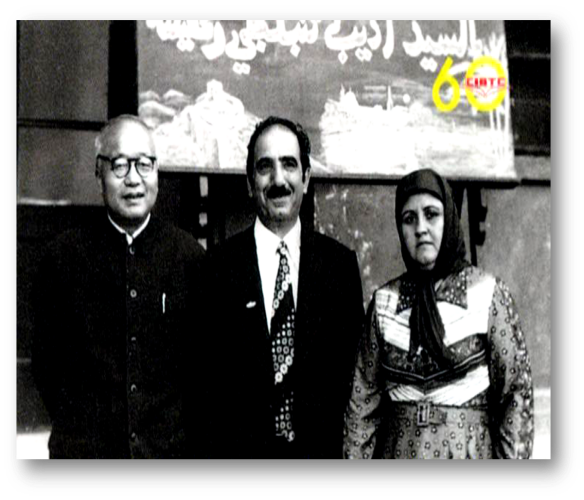
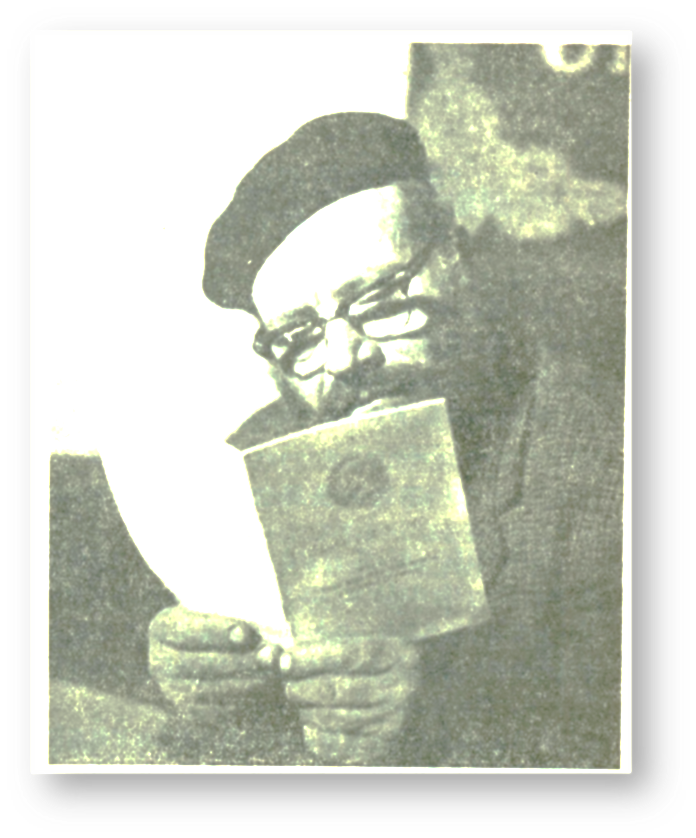
In the course of the overseas dissemination of Mao Zedong's works, many moving stories unfolded across Asia, Africa, and Latin America. Iraq's earliest 'Mousan Bookshop,' before the outbreak of war, sold approximately half a million copies of new books and periodicals from China. In Damascus, Syria, a bookshop run by two brothers sold Chinese publications; taking the London edition of the Selected Works as their source text, they independently translated it into Arabic and promoted the Arabic edition in countries such as Oman that had not yet established diplomatic relations with China. These stories illustrate that the early dissemination often depended on the initiative of foreign friends. The descendants of the Damascus bookshop's owners have been sought on several occasions without success, though it is surmised from local circumstances that the bookshop may still exist, its location simply unknown.
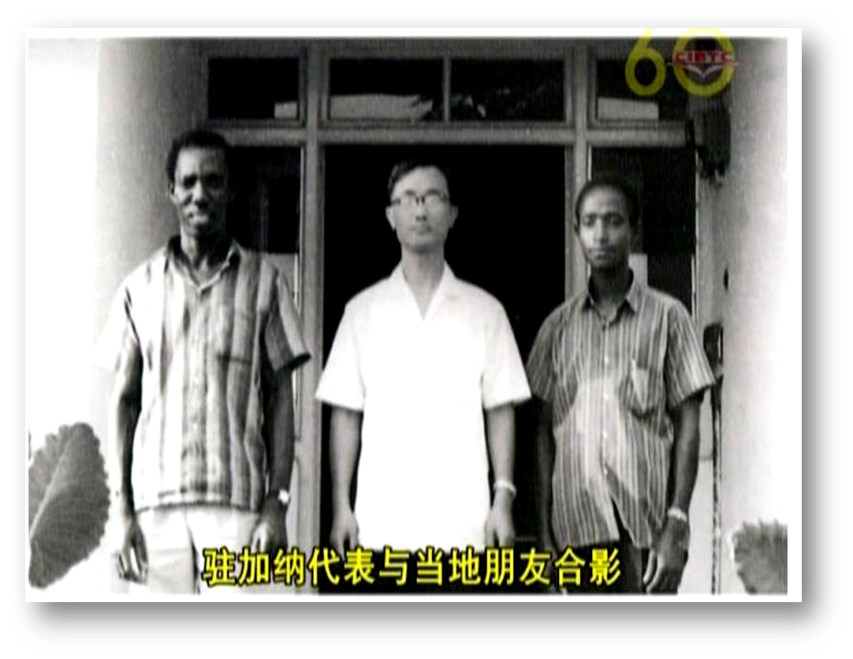
The dissemination of Chinese publications was equally extensive across African countries. In Ghana, for instance, China provided several hundred thousand volumes of books and periodicals between 1963 and 1964, almost entirely as gratuitous assistance. A local pair known as the 'Akwon Brothers,' without stable employment, came forward and proposed to distribute Chinese books and periodicals. China at the time had no domestic automobile production, and specifically purchased a Toyota vehicle in Japan to send to Ghana, enabling the two brothers to operate as a mobile bookshop, disseminating Chinese publications across the country. They became long-standing friends of China.
Left: Distribution of Chinese publications in Ghana; Right: The Akwon Brothers mobile bookshop.
There are many more stories of this kind, all of them a vivid testament to the efforts Peopl's Republic of China made in its first phase of cultural outreach abroad, centred on Mao Zedong's works. Through organised and systematic distribution of publications, China succeeded in breaking through its international isolation under the Cold War blockade and in forging deep friendships with many countries. Large quantities of publications were sent as gratuitous cultural assistance to Asian and African countries: in Ghana, the circulation reached 1.38 million copies; in Tanzania, 530,000; in Nigeria, 850,000; in Algeria, 640,000; and in Egypt, 560,000, all achieved within the span of a few years.
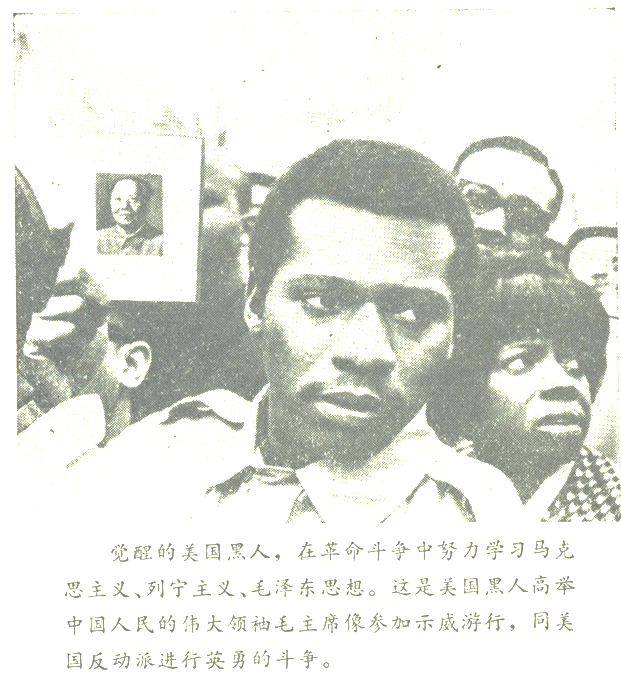
It is also worthy to mention the American friend Henry Noyes. Having spent his childhood in China and speaking fluent Cantonese, he retained a deep attachment to China after returning to the United States and established the 'China Books and Periodicals' company in the 1960s. At the height of the Cold War between China and the United States, he used a Greyhound bus purchased for sixty-six dollars as a mobile bookshop, touring the United States to sell China's 'Little Red Book' (namely, the Quotations from Chairman Mao), achieving sales of approximately two million copies. As there were no diplomatic relations, postal services, or financial transfers between the two countries at the time, these revenues could not be remitted to China. It was not until 1972, following the normalisation of Sino-American relations, that 'China Books and Periodicals' delivered one million US dollars to China, the first foreign exchange China received from the United States.
These examples illustrate the profound significance of sentiment, friendship, and intergenerational continuity in early international dissemination. In the face of the long-standing suppression by the 'Global North' of the voices of the 'Global South,' how is the inequality of discourse to be overcome? Experience demonstrates that the key lies in solidarity and cooperation among the countries of the Global South. The mainstream international media, such as the New York Times and the Wall Street Journal, command the principal channels of discourse, yet they are not controlled by the Global South countries. These countries therefore need to speak with a common voice, share resources, and build their own systems of communication. The solidarity of the Global South is a vital step towards transforming the landscape of discourse. Where cooperation is maintained, many problems will find their resolution.
Watch the whole speech here: