On November , “Nanfang Institute” (南方学社) unveiling ceremony and the “Field China Workshop” (田野中国工作坊) inauguration ceremony were successfully held in Toutang Village, Guzhou Town, Rongjiang County, Guizhou Province, signifying Rongjiang’s official establishment as an important platform for international communication research on poverty alleviation and rural revitalization. Following the ceremony, the “Cun Chao International Communication Workshop ()” was simultaneously launched, further expanding Rongjiang’s exchanges in the fields of rural revitalization and international communication and injecting new academic vitality and international perspectives into rural revitalization.
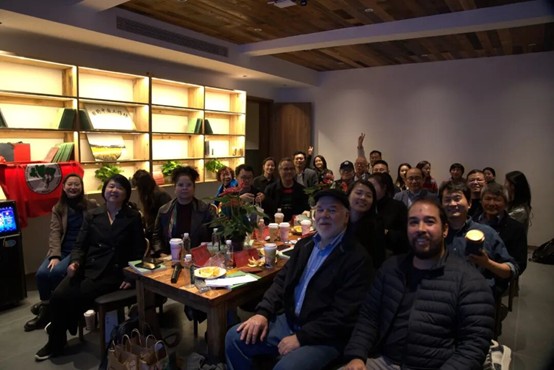
Image Captions: The unveiling ceremony of "Southern Society" and the Village Chao International Communication Workshop (2025) were successfully held.
“Nanfang Institute” is an academic research and practice base co-established by the Institute for International Communication at East China Normal University (ECNU) and Rongjiang County, guided by the mechanism of East-West Collaboration. It aims to implement the crucial spirit of “deepening solidarity and cooperation among Global South countries,” build a platform for academic exchange and practical innovation, assist in cultivating talent for rural revitalization, promote the international communication of distinctive culture, and contribute “Southern Wisdom” to global peace and development. The simultaneously inaugurated “Field China Workshop” is an international communication research and practice project co-established by Shanghai Media Group (SMG) International Center for Communication, the Global South Academic Forum, and Rongjiang County. Yang Yingjie, Assistant Director of SMG International Center for Communication, Lu Xinyu, Dean of ECNU’s Institute for International Communication, and Long Chunlan from the Rongjiang County Media Convergence Center jointly inaugurated the workshop.
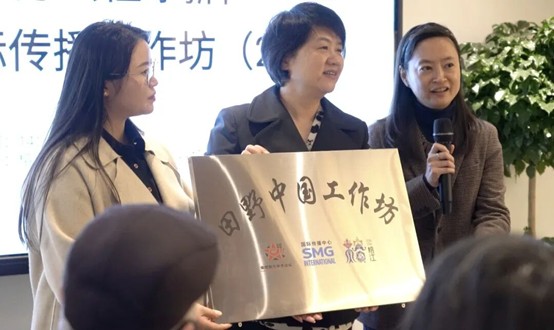
Image Captions: Yang Yingjie, Assistant Director of SMG International Center for Communication, Lu Xinyu, Dean of ECNU’s Institute for International Communication, and Long Chunlan from the Rongjiang County Media Convergence Center jointly inaugurated the Field China Workshop.
After the institute’s unveiling, the “Cun Chao International Communication Workshop ()” commenced. The bilingual documentary TOP Destination: China!—Guizhou Cun Chao, produced by SMG International Center for Communication, premiered. The film offers a deep dive, through the first-person perspective of a foreign observer, into the entire process of “pause—self-rescue—reboot” in Rongjiang County, Qiandongnan Prefecture, Guizhou Province—the location of “Cun Chao”—during a “once-in-a-century” flood. It captures the collective memory of “one city, one group of people, one heart,” showcasing the resilience and vitality of rural China. The creative team, scholar guests, and the film’s protagonists watched the screening together, creating a lively atmosphere; the guests were touched by the authentic, vivid disaster relief scenes and the warmth of neighborly support. Following the film, a book launch for Cun Chao in My Eyes by Xu Qianqian was held. Based on her multiple in-depth, personal experiences in Rongjiang, the author shared her journey of forming a bond with “Cun Chao” from first encounter to deep affection, observations from Rongjiang such as the countryside’s resilient rebirth after the flood, and the creative process of using words to capture local strength. She expressed that “Cun Chao” is the most vivid footnote to rural revitalization, as it uses football to awaken rural vitality, sparks a collision between traditional culture and modern sports, and allows more people to see the infinite possibilities of the countryside.
During the sharing and exchange session, Chinese and foreign guests engaged in a lively discussion around the social value of Cun Chao, its international communication, and the pathways for rural revitalization. Vijay Prashad, Director of Tricontinental: Institute for Social Research, pointed out that China and India’s Kerala state are the only regions globally to have completely eliminated absolute poverty, and like China, Kerala is led by a Marxist party. He stated that Cun Chao is a vivid socialist practice where the people actively create happiness. Neuri Domingos Rossetto, a member of the Coordinating Committee of the Brazilian Organization of Rural Workers, believes that Cun Chao is an important way to create shared social wealth for the masses, and he expressed his hope for deepening exchange and cooperation. Udom Tangjettanaporn, a Thai scholar and Senior Consultant at the China Institute, Fudan University, views “Cun Chao” not merely as a football match, but as a vivid model of rural revitalization for Global South countries. He hopes to take the opportunity of the th anniversary of China-Thailand diplomatic relations to promote mutual youth football visits and build a cross-national exchange platform. Professor Meng Jie, Distinguished Professor at the School of Economics, Fudan University, considers Rongjiang and “Cun Chao” a lively model of China’s endogenous motivation for rural revitalization, and a fresh example of the resonance between grassroots practice and institutional advantages. Li Bo, General Manager of Guancha.cn, believes that the international communication of “Cun Chao” transcends cultural display and has become an important link for China to share rural development experience with Global South countries. Wang Dongbin, Research Project Supervisor at the China Institute, Fudan University, was deeply impressed by the associated narrative of “Cun Chao + disaster relief,” emphasizing the supporting role of the countryside for cities in the face of major disasters. Mikaela Nhondo Erskog, Senior Researcher at Tricontinental: Institute for Social Research, referenced Li Ziqi’s personalized communication to highlight that Cun Chao represents a collective and popular communication power. She believes that after solving material needs, China is now focusing on creating spiritual culture and a beautiful life. Dean Lu Xinyu of ECNU’s Institute for International Communication emphasized in her summary that Cun Chao is a socialist phenomenon that adheres to the principal position of the people. Its communication aggregates positive traffic with positive energy, possesses both socialist development practice and communication theory value, and offers valuable experience for rural development in the Global South.
Before and after the workshop, the participating guests delved into multiple villages and institutions in Rongjiang, carrying out a series of field surveys. On November 9, the guests visited Daili Dong Village and Wugong Village in Zhaihao Town to experience the unique folk charm and ecological beauty of the Dong villages. They focused their research on how these villages leverage the “Cun Chao” IP to achieve deep integration of culture, tourism, and rural revitalization. That afternoon, the research team visited the No. 1 Middle School of Guzhou Town to observe a campus football match and learn in detail about the school’s normalized mechanism of “a team in every class and a match every week”. Its youth training model of “prioritizing popularization over elite training, and emphasizing culture while strengthening skills” provides a replicable sample for county-level football development and embodies Rongjiang’s football revitalization concept of “a small football, a big dream”.
On the morning of November , the guests visited Yuezhai Village in Guzhou Town, listened intently to village officials sharing the governance experience of “Party building guidance + villagers’ autonomy,” and focused on the story of the “Niang Niang Group” (Aunties’ Group) transforming from housewives in the fields into new media hosts. This vividly illustrates the rural digital transformation where “mobile phones become new agricultural tools and live streaming becomes new farm work”. The guests also visited the Rongjiang County New Media Industry Park and the Cun Chao History Museum, gaining a firsthand understanding of the local achievements in leveraging new media to assist rural revitalization and activating county development through distinctive sports.
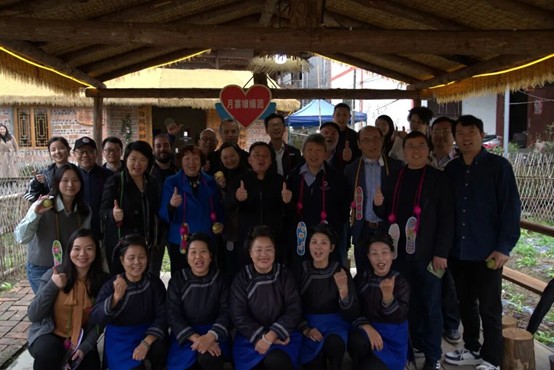
**Image Captions:**The guests entered Yuezhai Village, Guzhou Town
On November , the research team conducted a field investigation in Lexiang Village, Zhongcheng Town, focusing on the popularization and application of AI technology in rural industry promotion, grassroots governance, and livelihood services. A Brazilian guest sincerely expressed that Rongjiang’s innovative model of “technology sinking and serving livelihoods” precisely meets the actual needs of the countryside and offers valuable, implementable reference for Brazil’s rural digital transformation.
Moving forward, “Nanfang Institute” will continue to leverage its platform role to promote greater exchange, mutual learning, and international communication of rural development experiences.