From January 12 to 15, 2026, at the invitation of the local "No More Battle of Okinawa: Life is Precious Association" and the All Asia Movement Against Imperialist Domination and Aggression by the US and Japan (AWC), a delegation from the Global South Academic Forum, led by Secretary-General Xiong Jie, visited Ryukyu for research and investigation. The delegation included Zang Ruxing, Director of the International Department of the Taiwan Labor Party (China), and Tings Chak and Atul Chandra, Asia Coordinators of the Tricontinental Institute for Social Research. The two sides jointly organized a symposium titled "China-Okinawa Exchange Meeting—Building a Transnational Peace Community." Senior Okinawan peace movement activists Mr. Aragaki Kunio, Mr. Gushiken Takamasa, Ms. Yonaha Keiko, Ms. Shimizu Saoko, and Mr. Sakoda Hidefumi provided full reception throughout the visit.
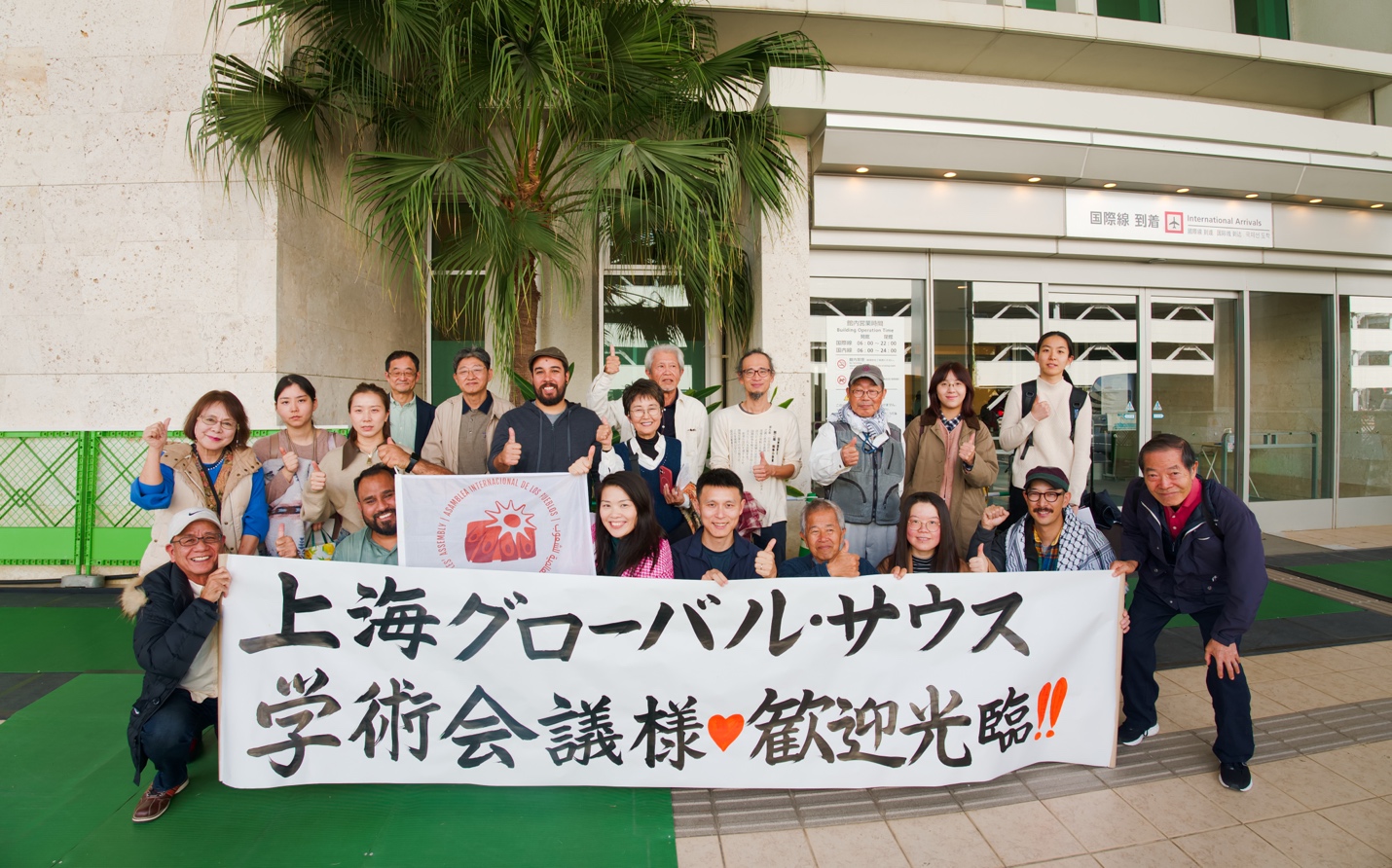 Image Captions: Delegation arrival photo
This exchange represents a significant extension of Global South academic community building, marking in-depth dialogue and cooperation between mainland China, Taiwan Province, and Ryukyu peace forces on issues of anti-war and opposition to US military bases. The Mori no Eigasha film crew accompanied the delegation for documentation, while Mauro Ramos, a journalist from Brasil de Fato, and Song Kankan, a Tokyo correspondent for Shanghai Media Group's Dragon TV, provided comprehensive coverage. This transmitted the voices and images of this civilian peace dialogue to East Asia, Latin America, and the globe, creating a media networking effect across the Global South.
January 12, 2026 - First Day of Okinawa Research Visit
Investigation of Kadena Air Base
Upon arrival in Okinawa, the team's first destination was Kadena Air Base and its surrounding areas in central Okinawa Island. Kadena Air Base is the largest US Air Force installation in the Far East, covering approximately 19.95 square kilometers. The town of Kadena, where the base is located, has a total area of only 15.12 square kilometers, with approximately 82% of its land occupied by the base, leaving extremely limited land available for residents' actual use.
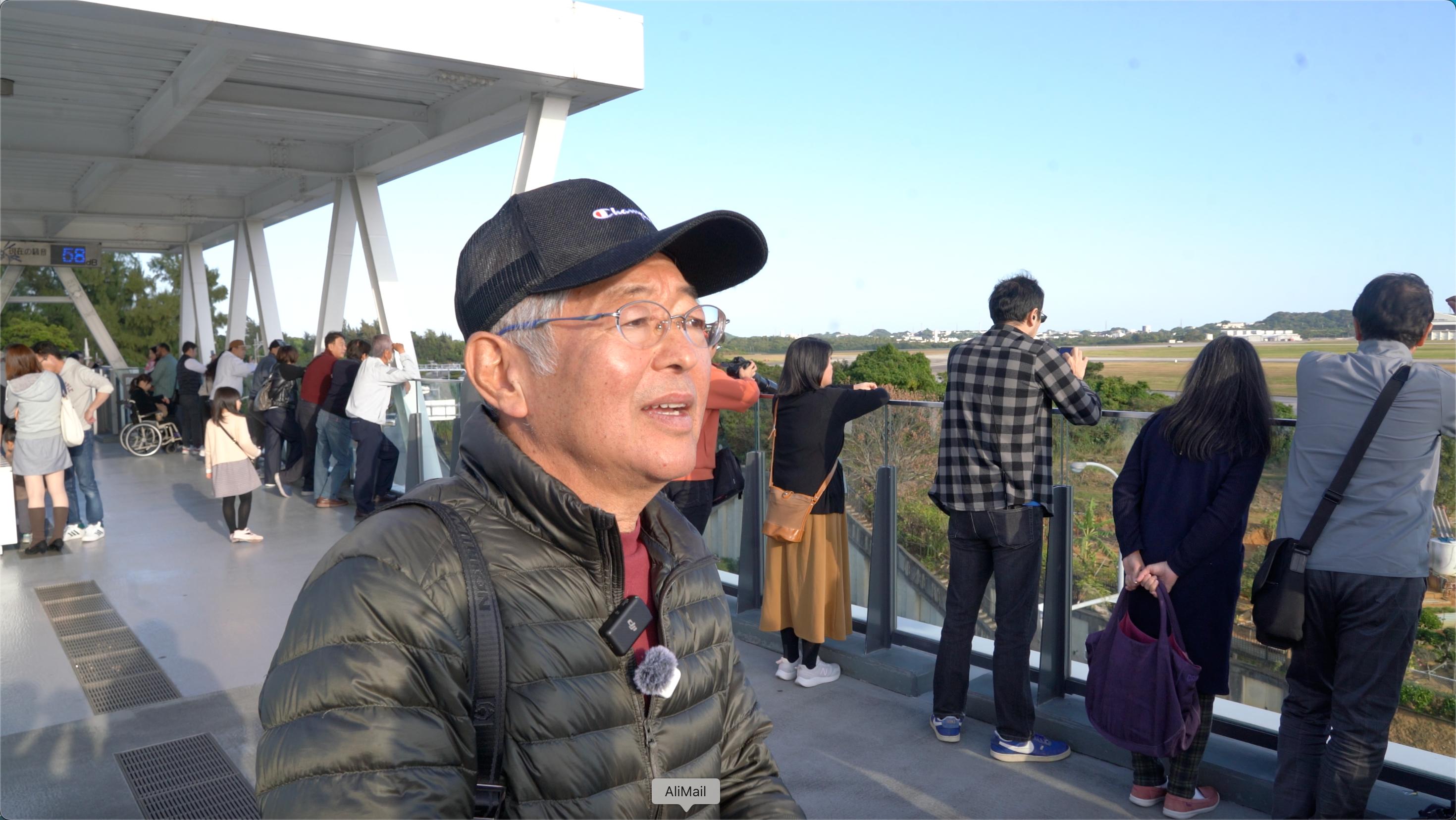 Image Captions: Fukuchi Yoshihiro, Kadena Town Council member and Vice President of the Fourth Kadena Base Noise Lawsuit Plaintiffs' Group, being interviewed by Dragon TV and Brasil de Fato
The base hosts the US Air Force's 18th Wing, equipped with various military aircraft including F-15 fighters, KC-135 aerial refueling tankers, and E-3 AWACS aircraft. Daily military training and operational missions result in frequent aircraft takeoffs and landings, with measured noise levels reaching up to 104 decibels. According to monitoring data from the Kadena Town government, nighttime flight training occurs regularly, severely affecting the normal lives of surrounding residents.
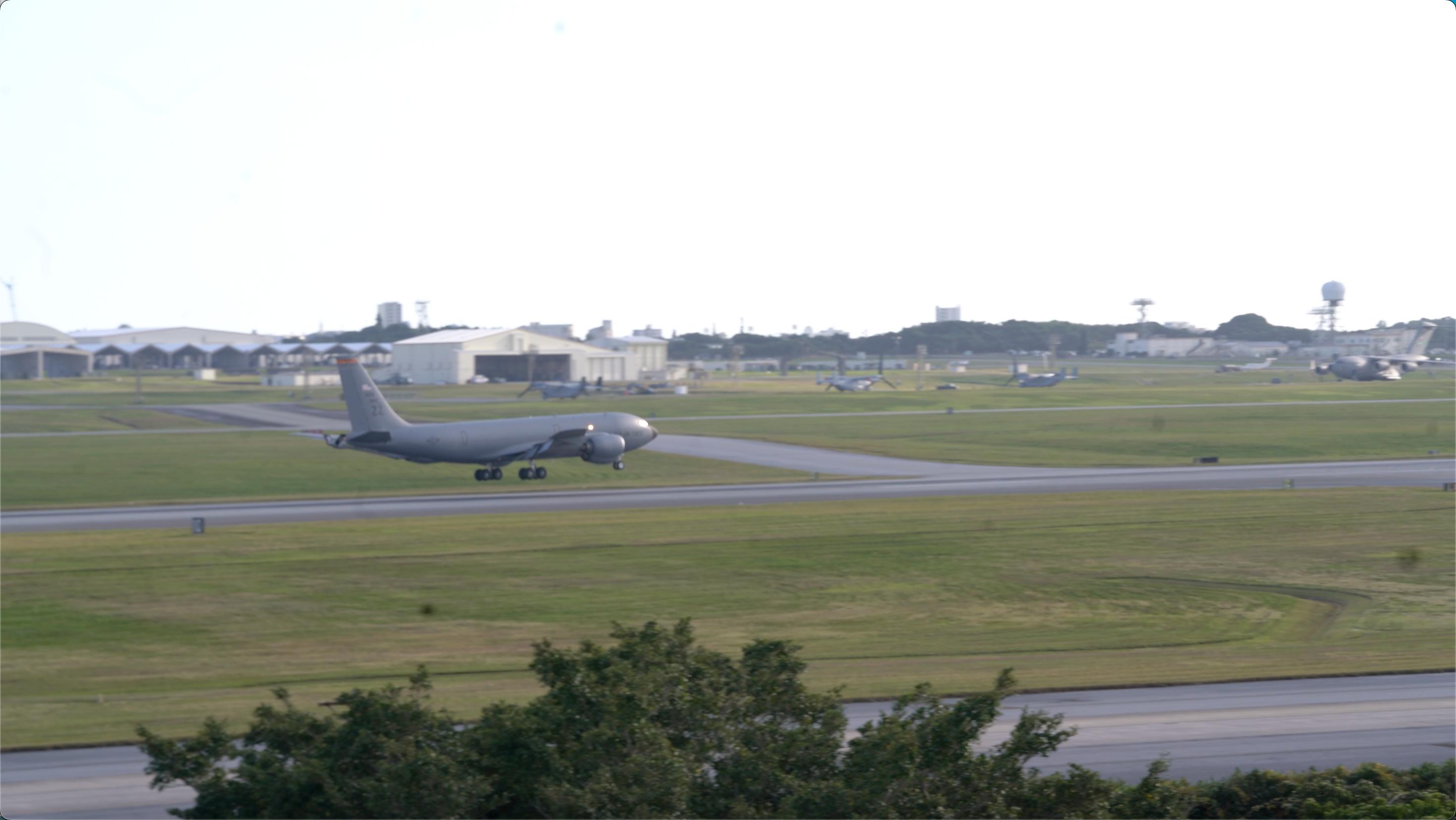 Image Captions: US Air Force KC-135R Stratotanker/Medical Evacuation Aircraft landing and taxiing
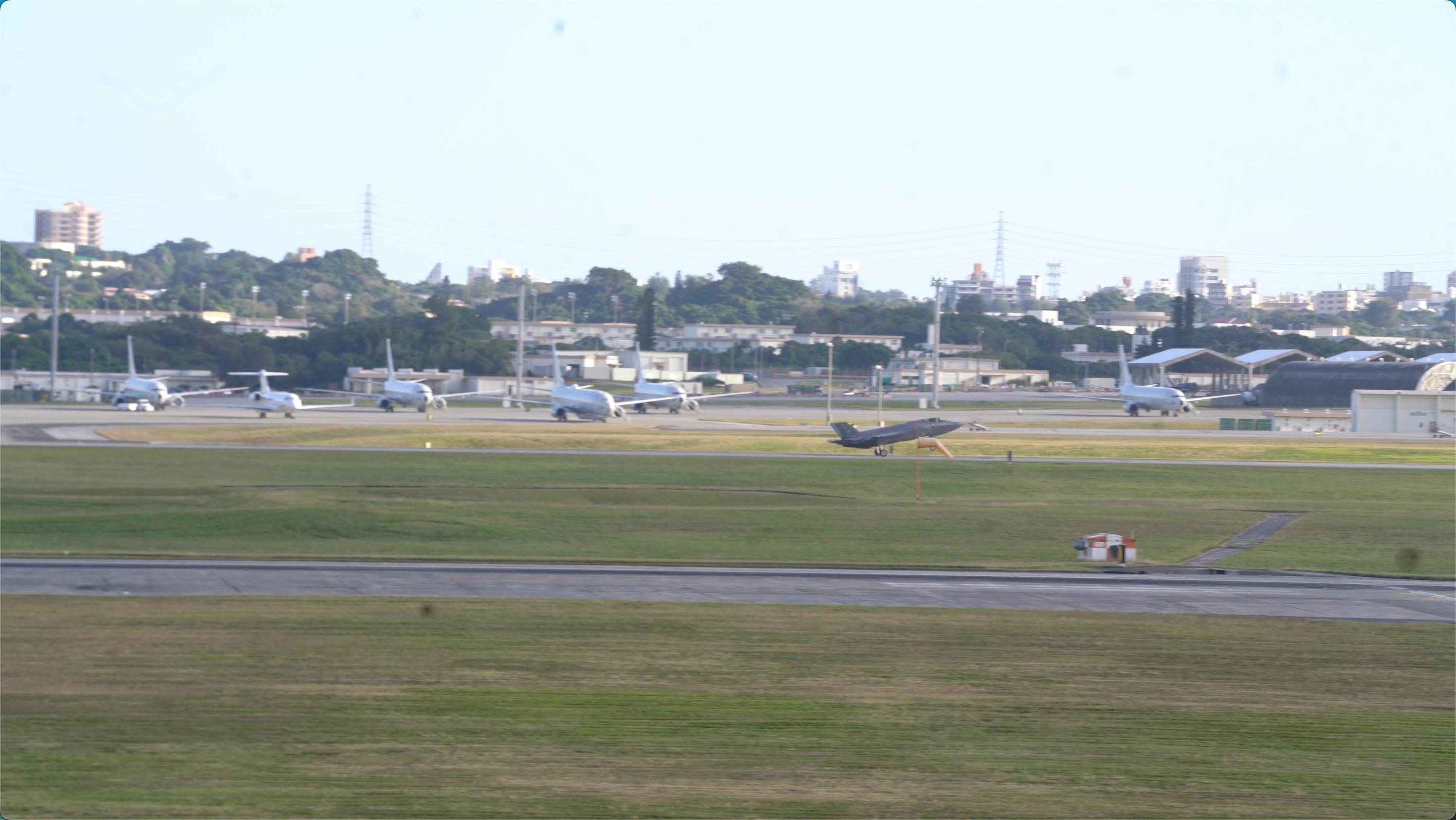 Image Captions: US Air Force F-35 Lightning II fighter taking off
Since 1982, local residents have filed four successive lawsuits demanding cessation of nighttime flight training and compensation for damages. While Japanese courts have acknowledged the factual harm of noise pollution and ordered the Japanese government to pay partial compensation, they have ruled that Japanese courts lack jurisdiction to restrict US military base operations, citing the US-Japan Status of Forces Agreement.
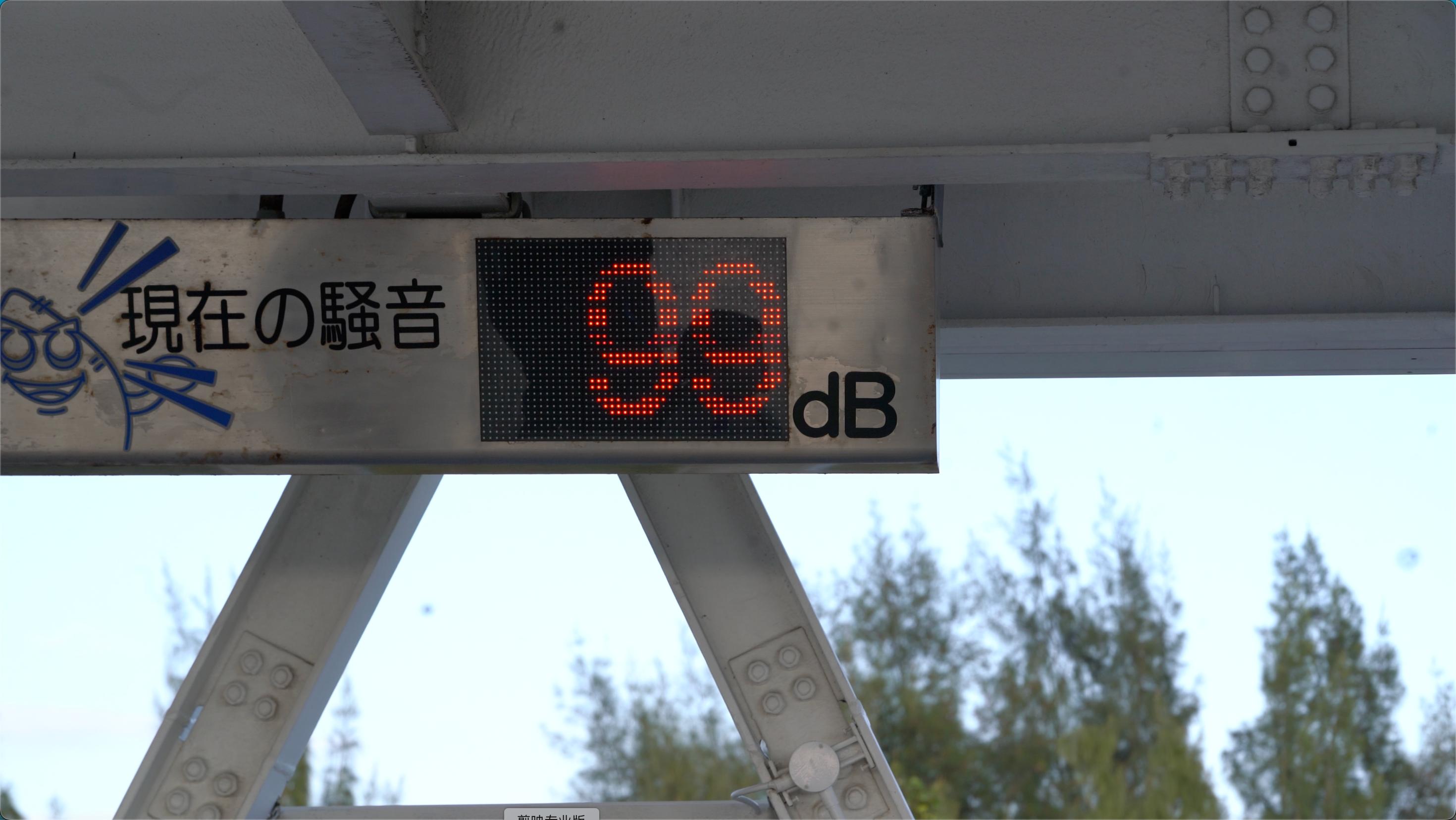 Image Captions: Noise decibel display
Chibichiri Gama Historical Site
The second stop was a visit to Chibichiri Gama cave in Yomitan Village. In April 1945, after US forces landed on Okinawa Island, local residents sought refuge in natural caves. Two neighboring caves in this area witnessed drastically different outcomes due to residents' differing perceptions of US forces.
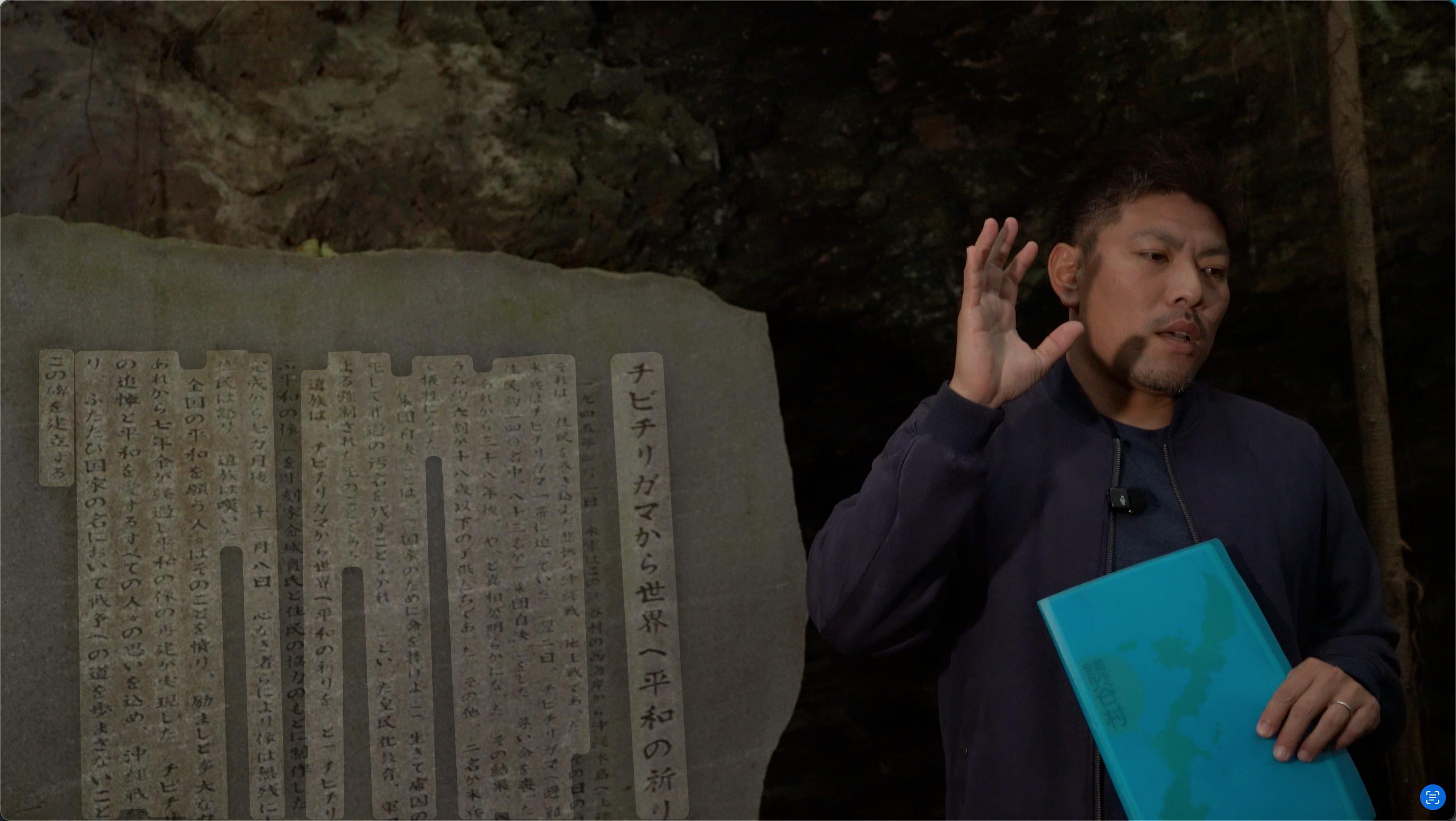 Image Captions: Local residents introducing the Chibichiri Gama memorial monument
Approximately 140 residents sheltering in Chibichiri Gama, believing Japanese military propaganda that "US forces would brutally torture prisoners," chose collective suicide as US forces approached. Ultimately, 83 people died, including many women and children.
At Shimuku Gama cave, located about 1 kilometer away, two residents who had previously lived in Hawaii understood that US forces would not harm civilians. They persuaded approximately 1,000 refugees inside the cave to surrender. All of these residents survived.
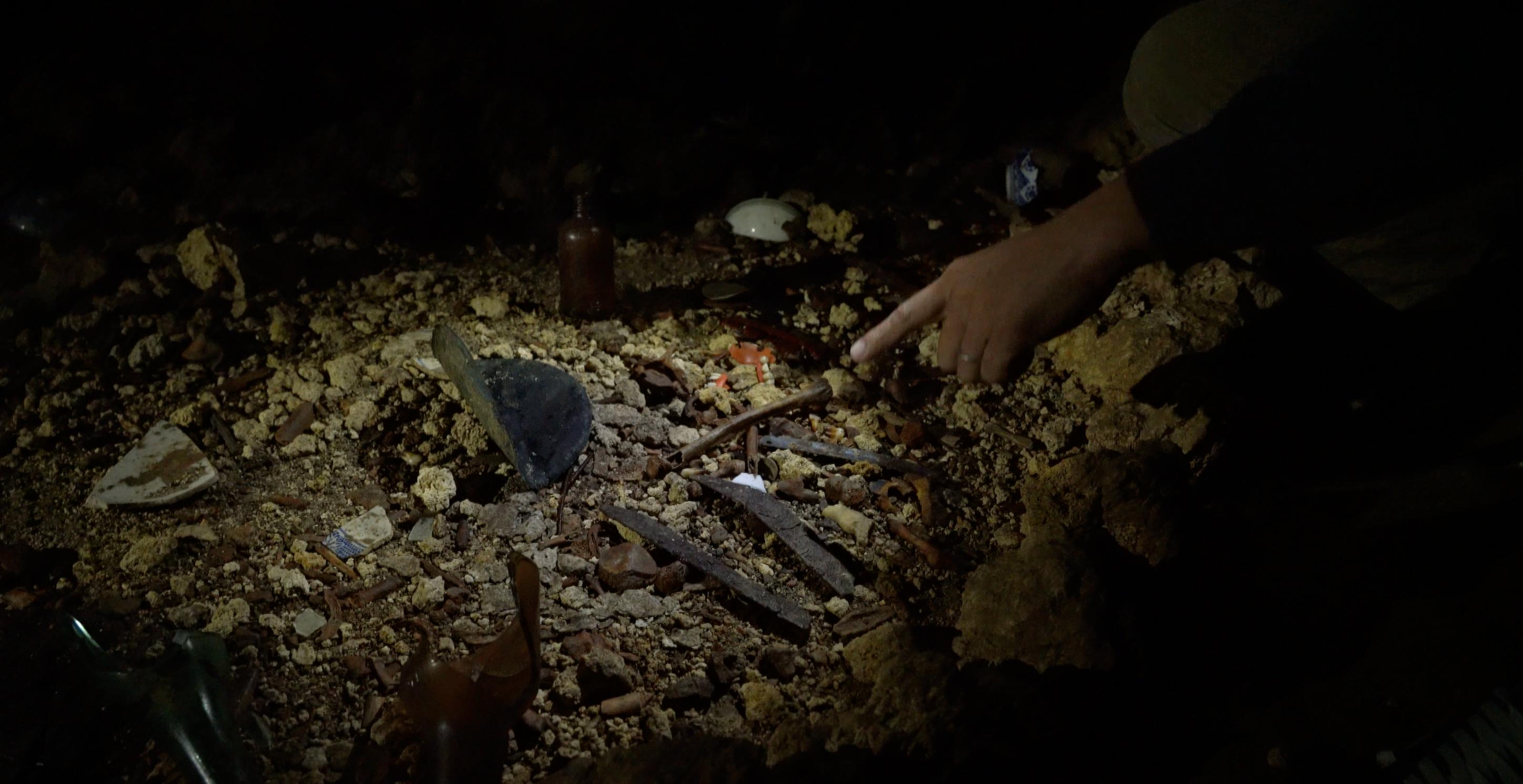 Image Captions: Deep inside Chibichiri Gama cave
Kinjo Minoru Sculpture Workshop
The day concluded with a visit to the workshop of Ryukyuan sculptor Kinjo Minoru. Born in 1939 on Henza Island, Kinjo is a renowned anti-war artist in Okinawa. His works predominantly focus on Okinawan war memories and peace themes.
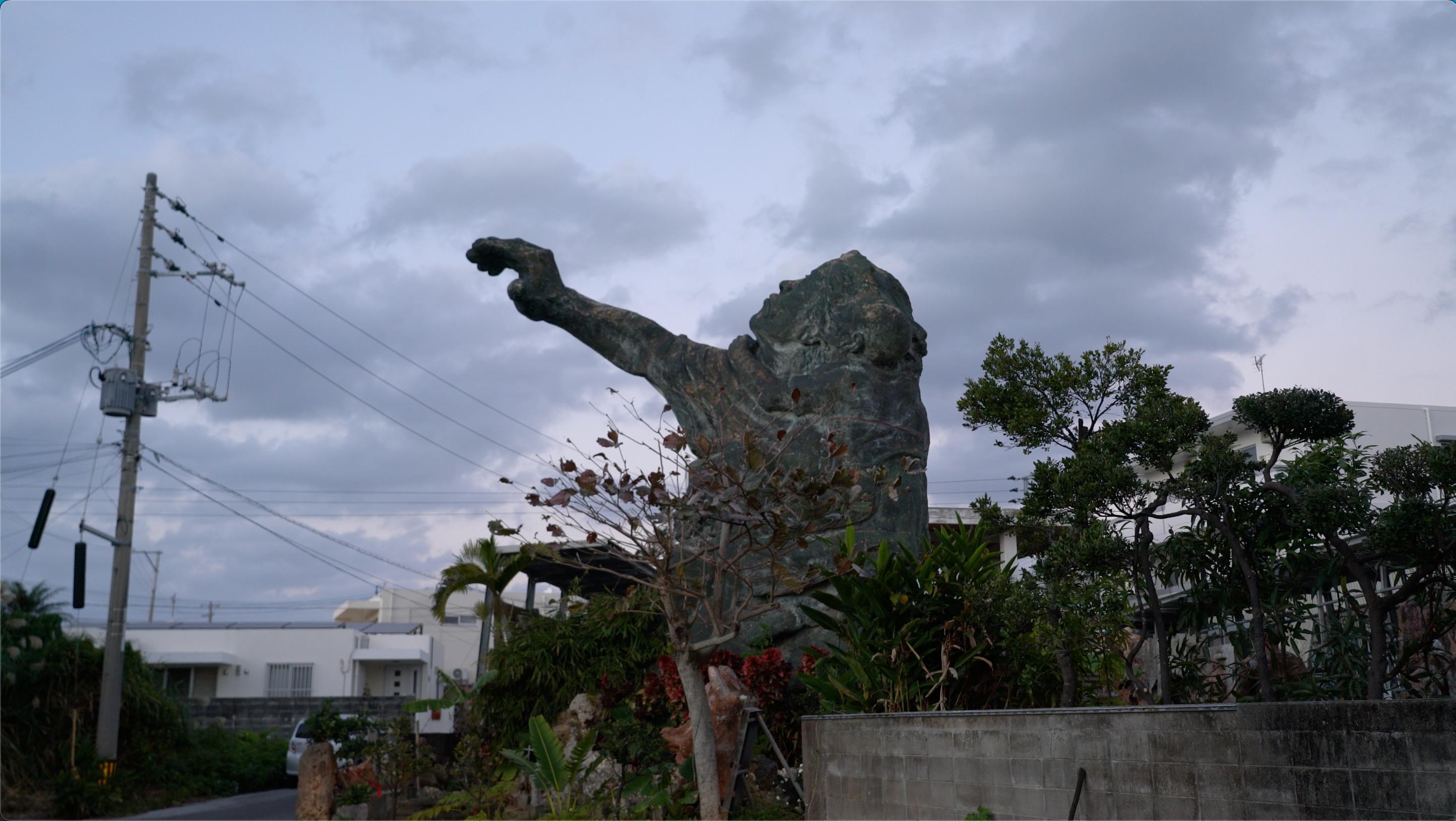 Image Captions: Kinjo Minoru's ten-year project "War and Humanity"
A large relief sculpture under creation in the studio attracted particular attention. This work is a collaborative project between Kinjo and a team of Chongqing bombing victims. The relief depicts the strategic bombing of Chongqing by Japanese forces from 1938 to 1944, documenting this historical period that caused massive civilian casualties in Chongqing's urban areas. The work features four large Chinese characters "愈炸愈强" (The more bombings, the stronger we become), reflecting the resilient spirit of resistance demonstrated by Chongqing's people during the bombardment. According to introduction, the project is scheduled to complete its main creation within 2026.
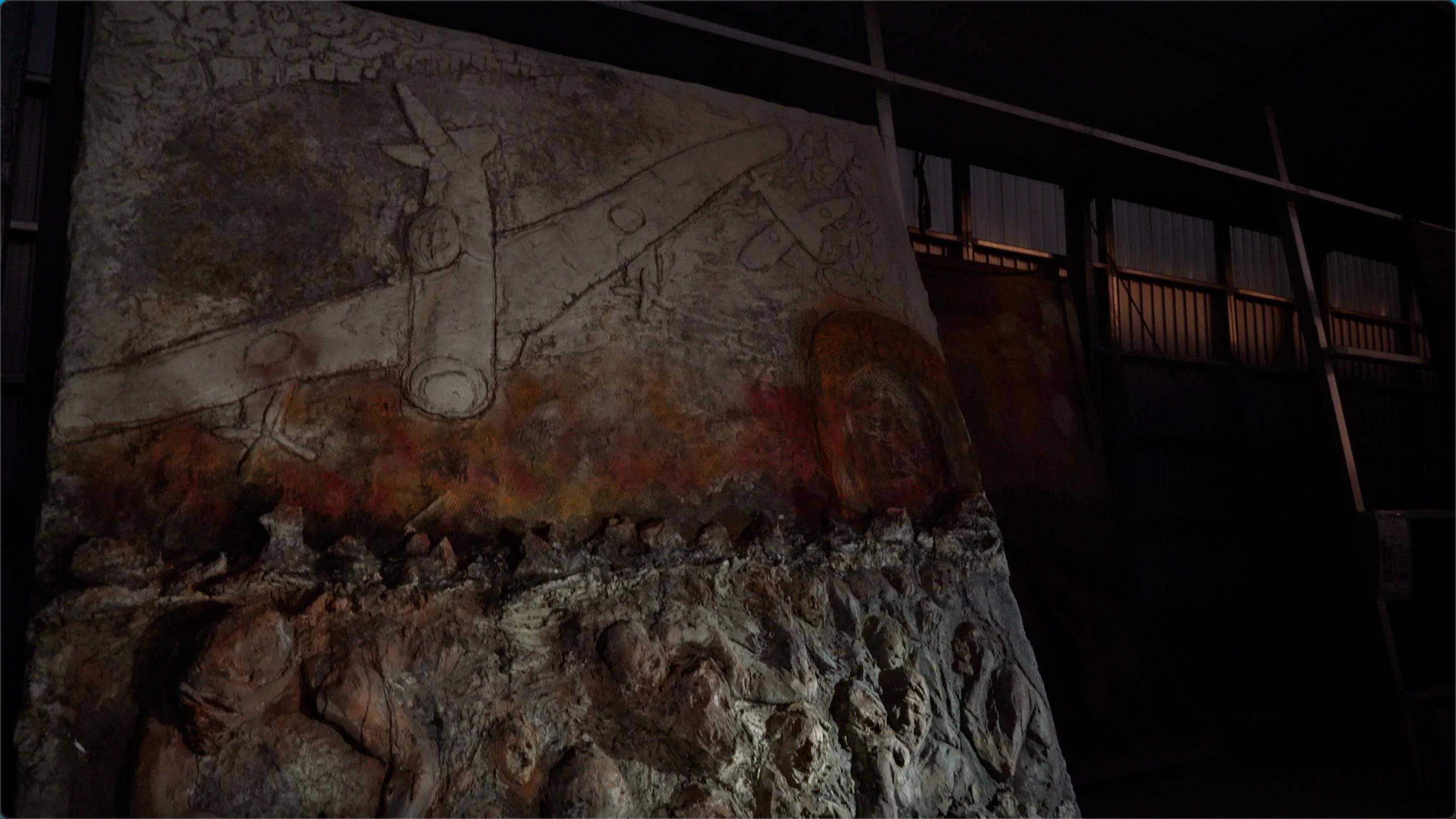 Image Captions: The "Okinawa Peace Visit Group," composed of over ten members from Chongqing, Chengdu, and Changde, jointly creating the "Chongqing Bombing Memorial Wall Relief" with Kinjo Minoru
Kinjo stated that both Okinawa and Chongqing have experienced the trauma of war, and recording history through artistic creation helps promote common understanding of war and peace among people from different regions.
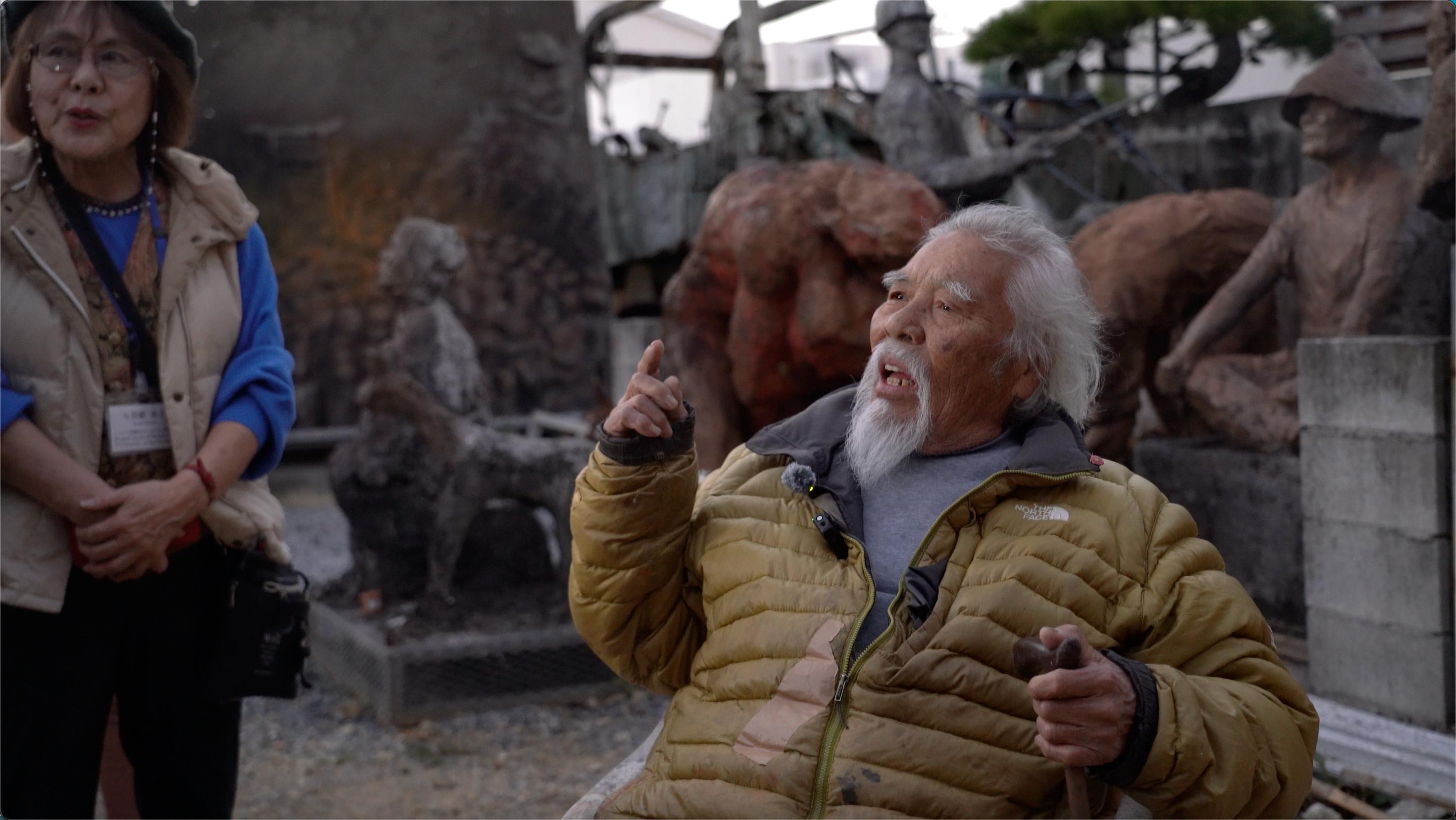 Image Captions: Kinjo Minoru sharing personal experiences with the delegation
January 13, 2026 - Second Day of Okinawa Research Visit
Investigation of Henoko New Base Construction Site
In the morning, the team traveled north along the east coast to the Henoko area in Nago City, passing through areas densely populated with US military bases, with barbed wire fences and military facilities visible along the route. The team first arrived at the protest camp in front of the main gate of Camp Schwab. This camp has operated continuously since its establishment in 2014, with local residents taking turns keeping watch. The site features numerous blue tents, banners, display boards, and sound equipment. Protesters span a wide age range, from young students to octogenarians, expressing opposition to the new base construction through peaceful means such as sit-ins, sign-holding, and singing. Each morning, protesters gather at the construction vehicle entrance, attempting to delay project progress.
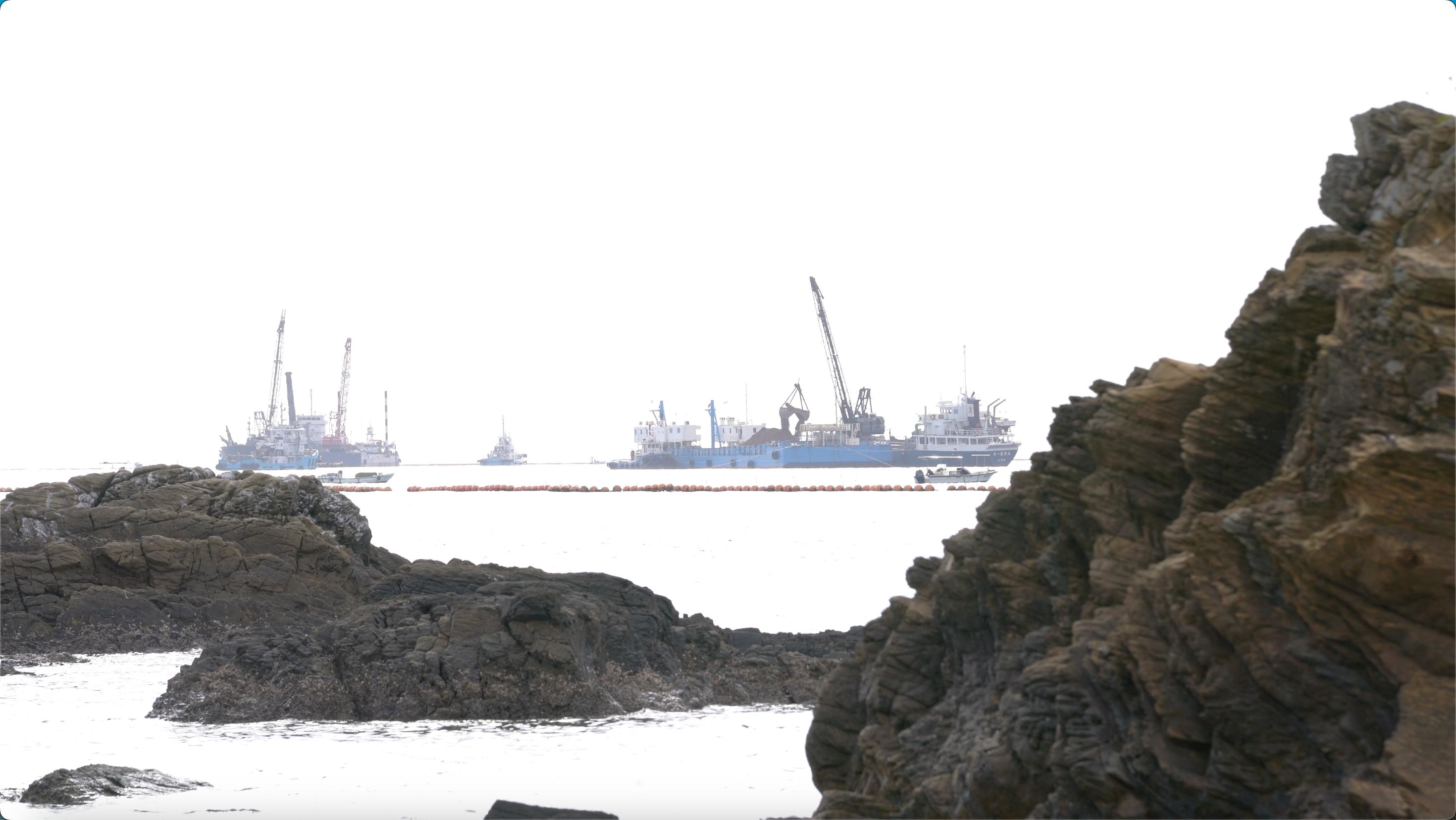
Subsequently, the team proceeded to the coast of Oura Bay in Henoko to directly observe the land reclamation operations. The Futenma Base relocation project plans to reclaim 160 hectares of sea here. Multiple construction vessels were visible at work, with large transport ships continuously dumping earth and stone into the sea; seawall construction had already taken initial shape. The originally clear blue seawater had become turbid due to construction, coral reefs were dying on a large scale, and seagrass beds had disappeared.
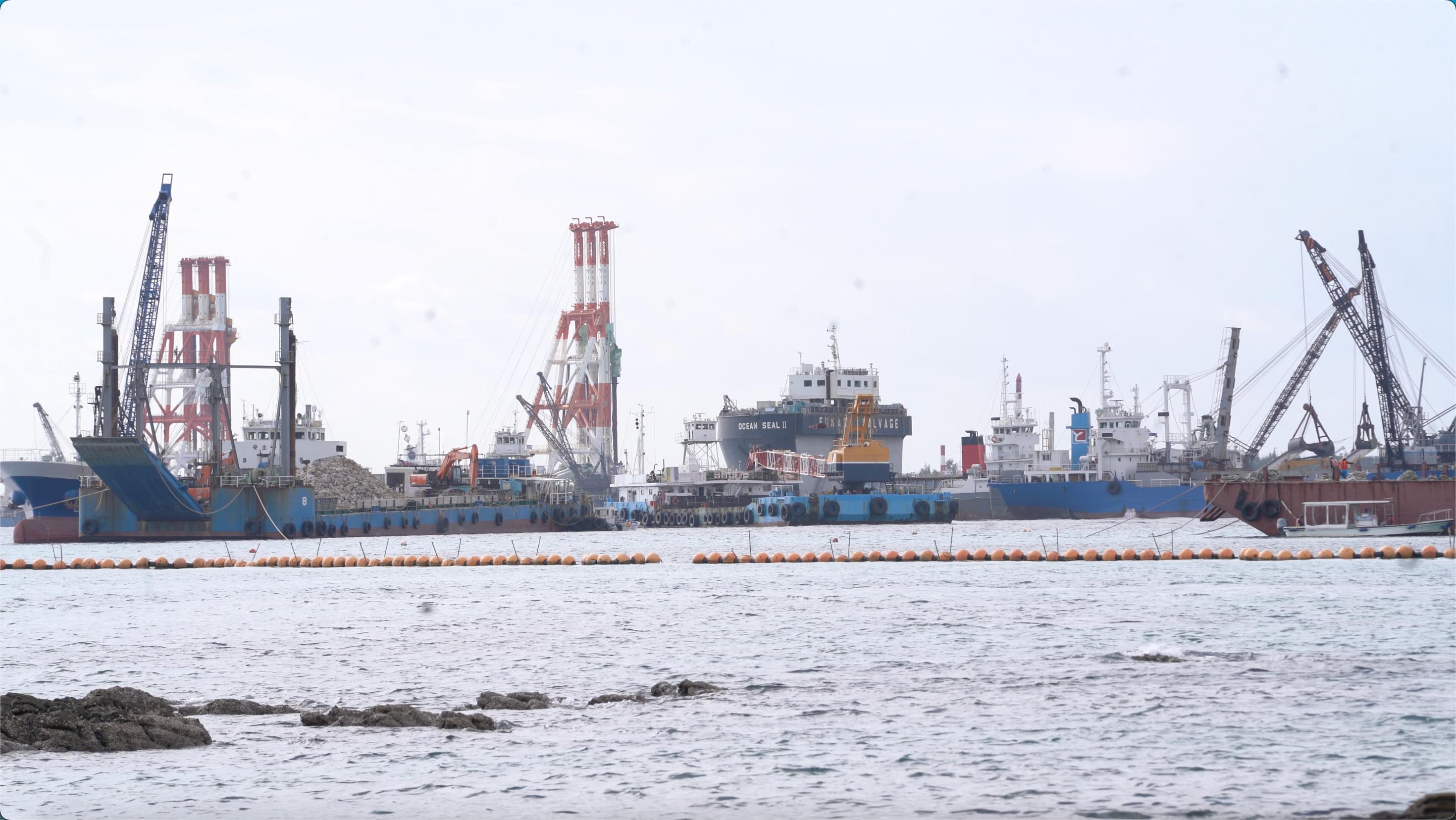
A local woman in her 70s recounted to the delegation that after the Battle of Okinawa ended in 1945, farmland on the island was destroyed and supplies were extremely scarce. In the early postwar period, surviving residents primarily survived by collecting shellfish, seaweed, and small fish from the coast. She said emotionally: "The sea saved our lives and fed an entire generation. Now seeing the sea being filled and destroyed like this is extremely painful."
Futenma Base occupies approximately 4.8 square kilometers and is called "the world's most dangerous base" because it is completely surrounded by the urban area of Ginowan City, with residential areas, schools, hospitals, and other facilities densely packed around it.
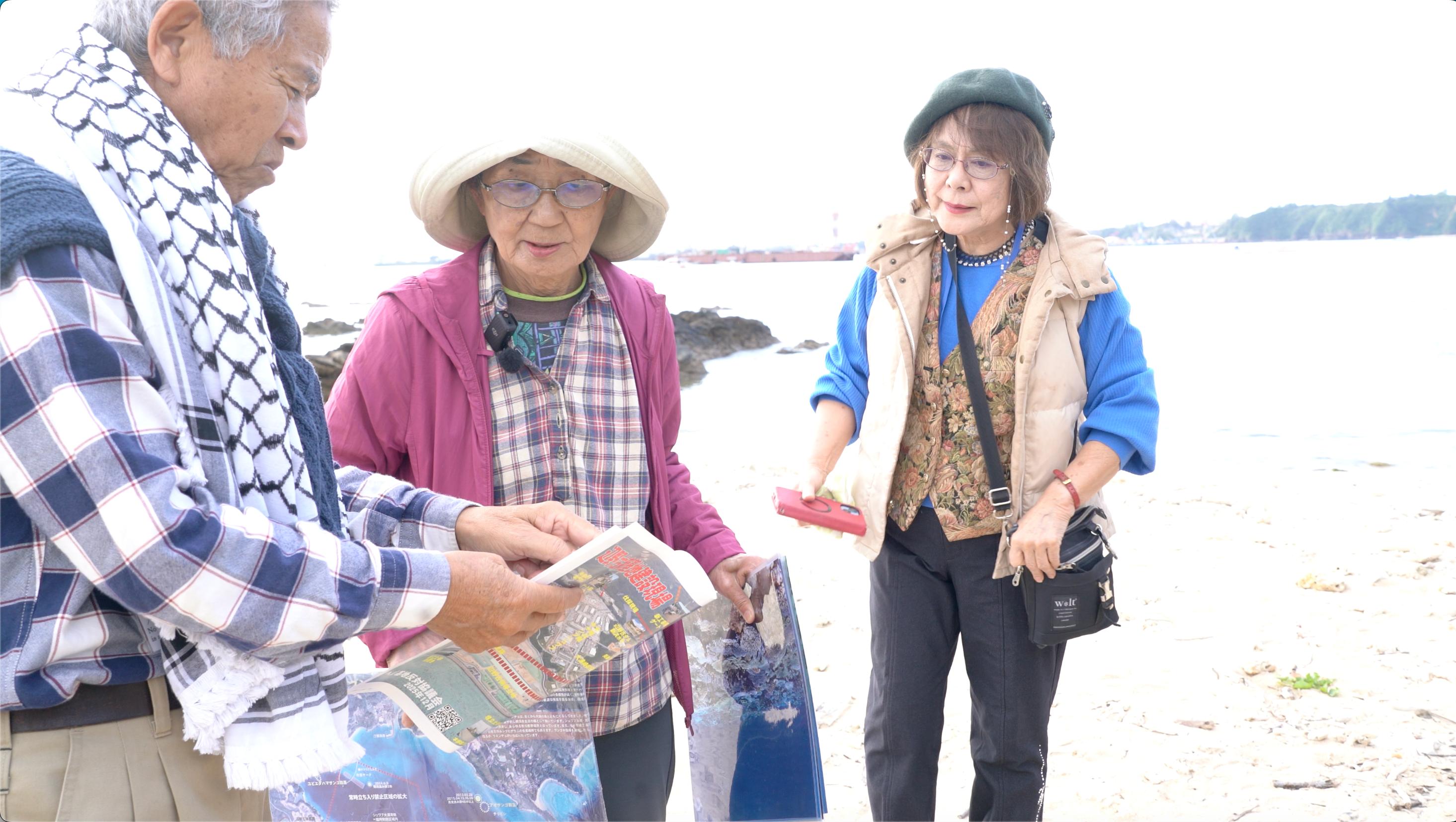 Image Captions: Local resident explaining the construction situation at Henoko Base
"China-Okinawa Exchange Meeting" Symposium
In the afternoon, the "China-Okinawa Exchange Meeting—Building a Transnational Peace Community" was held at the Okinawa Prefecture Gender Equality Center Tiruru. Over 100 people from various sectors attended, including peace movement organization members, scholars, citizens, and international students.
The meeting was chaired by Aragaki Kunio, Secretary-General of the "No More Battle of Okinawa: Life is Precious Association." In his opening remarks, he introduced the organization's mission: to prevent Okinawa from becoming a battlefield again and to promote peace in the East Asian region. He mentioned that from last year to this year, the world situation has undergone dramatic changes, with the United States deploying approximately 800 military bases globally and continued turmoil in places like Venezuela. Okinawa often focuses only on immediate base issues and Taiwan questions; today, through the "Global South" perspective, he hoped to understand the broader world situation and the overall significance of these changes.
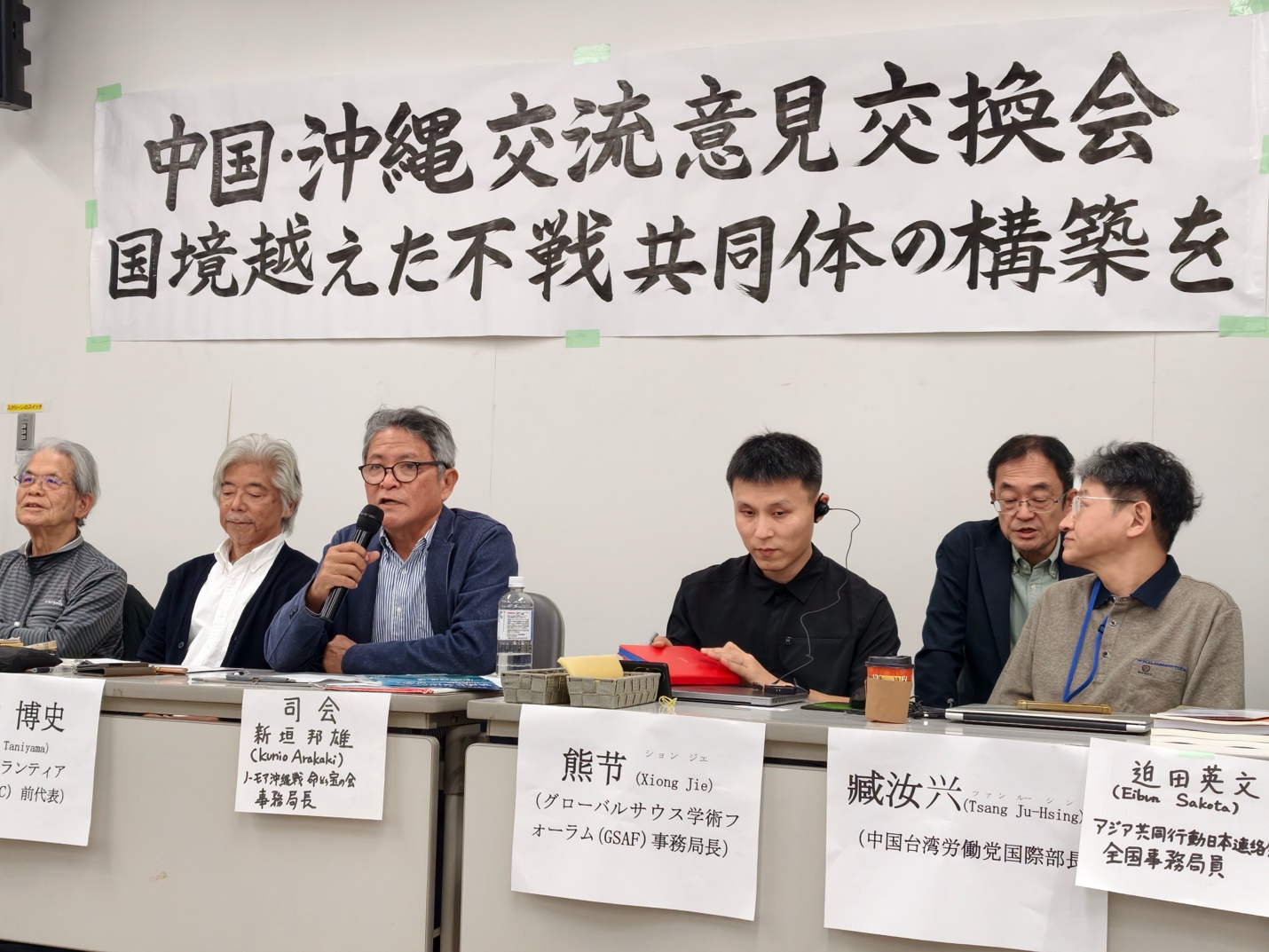 Image Captions: Aragaki Kunio, Secretary-General of the "No More Battle of Okinawa: Life is Precious Association," making opening remarks
Delegation members introduced their respective organizations and concepts. Xiong Jie introduced the mission of the Global South Academic Forum, emphasizing that Global South countries need to establish independent knowledge exchange platforms under US imperialist oppression, and criticized US military hegemony using the example of Okinawan US military bases. He responded to inappropriate remarks about Taiwan by Japanese Prime Minister Sanae Takaichi, pointing out that the root cause of tensions in Northeast Asia lies in the US pursuit of a new Cold War and military containment, reaffirming China's position of adhering to peace while resolutely defending sovereignty and territorial integrity, while calling on the Chinese and Japanese peoples to jointly oppose interference by external forces and jointly maintain regional peace.
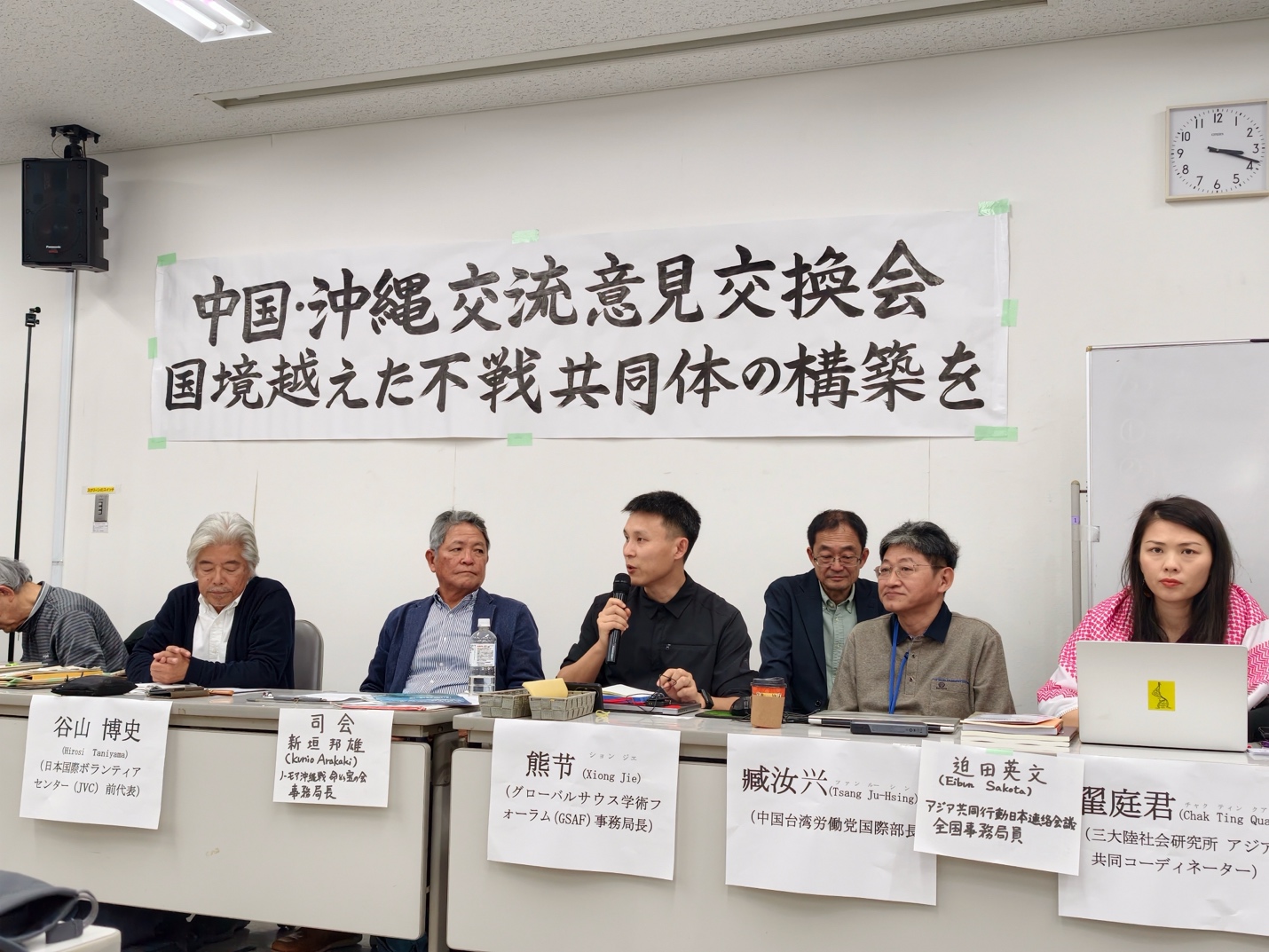 Image Captions: Xiong Jie, Secretary-General of the Global South Academic Forum
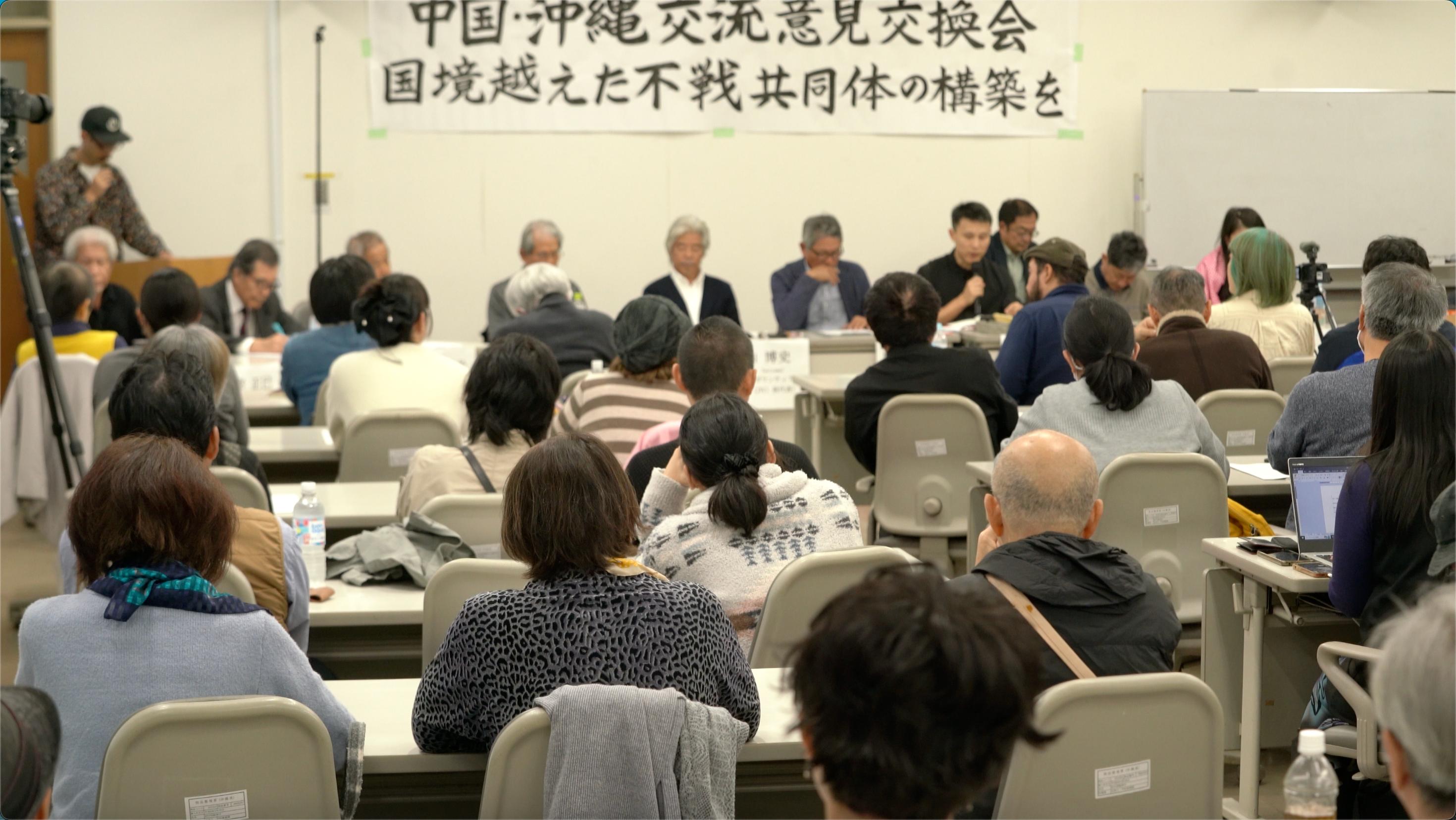
Zang Ruxing addressed the essence of cross-strait issues as China's internal affairs. The Chinese mainland's promotion toward Taiwan is "reunification" rather than "territorial expansion"; since it is not territorial expansion, Japan need not trap itself in the panic of "Japan will be next after Taiwan." Tings Chak and Atul Chandra introduced the mission of Tricontinental Institute for Social Research and their research work over the past decade, including the 2024 publication of the research report "Hyper-Imperialism," hoping to document the current situation in Okinawa and disseminate it to Global South countries.
Japanese speakers included bone collection volunteer Gushiken Takamasa, scholar Yonaha Keiko, Ryukyu University Professor Emeritus Uesato Kenichi, Okinawa University Visiting Professor Matayoshi Seishin, "Okinawa Dialogue Project" initiator Taniyama Hiroshi, and "Nanjing-Okinawa Connection Society" member Gushiken Masami. From different perspectives, they expressed concerns about the current situation, firmly opposed external forces militarizing and complicating it, unanimously believed that the Chinese people love peace, and called on all parties to work together to maintain peace and stability in East Asia and prevent the tragedy of war from repeating.
The meeting lasted approximately three hours, with participants engaging in in-depth exchanges. After the meeting, some participants continued to exchange views outside the venue, exchanged contact information, and discussed future cooperation. In the evening, Chinese and Japanese representatives held an informal exchange dinner at a local restaurant, further deepening mutual understanding.
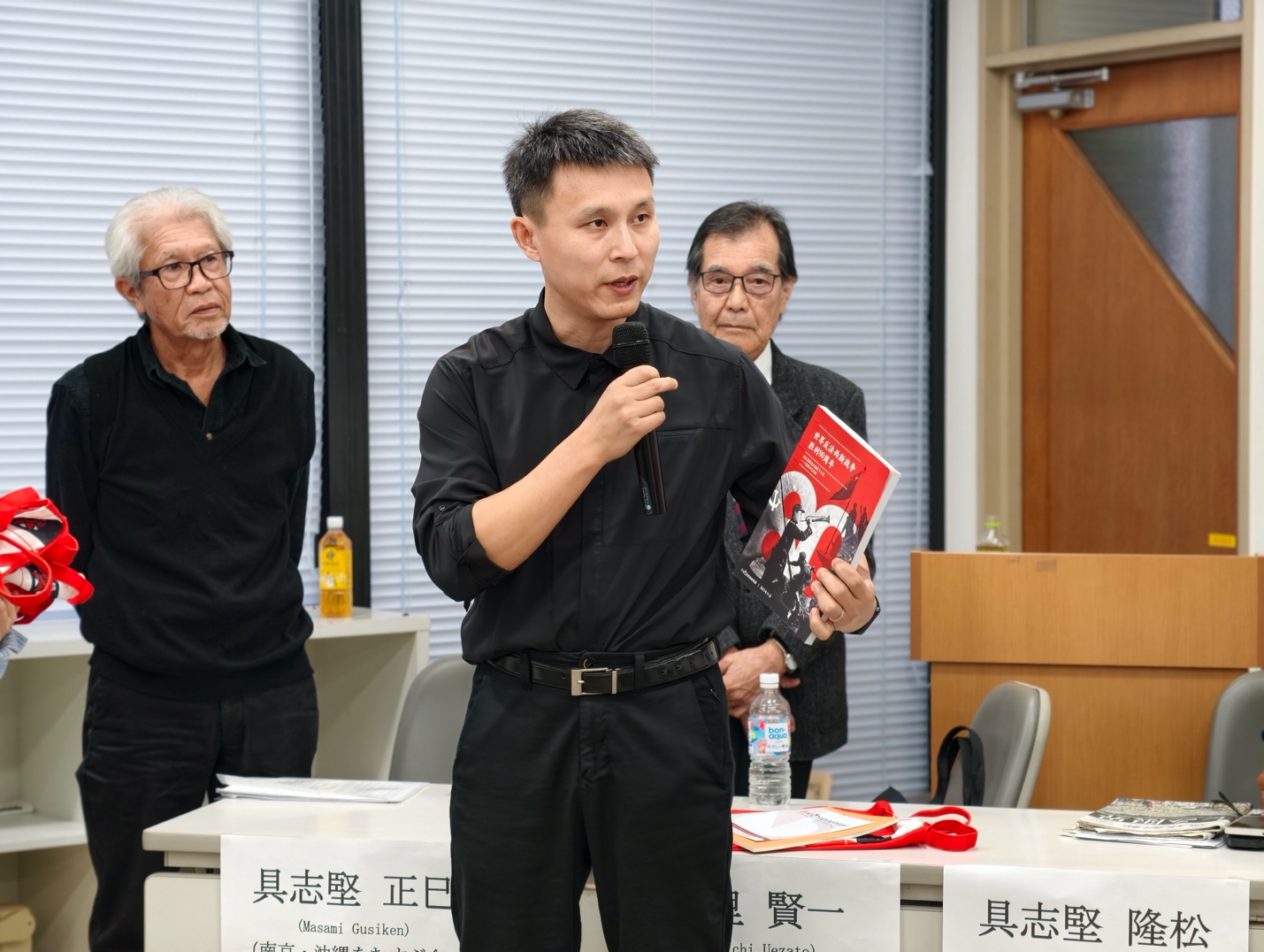 Image Captions: Xiong Jie introducing the report "80th Anniversary of the Victory in the World Anti-Fascist War—Recognizing Who Truly Saved Human History and Restoring Historical Truth" to Japanese guests
January 14, 2026 - Third Day of Okinawa Research Visit
On January 14, the delegation flew to Miyakojima for field investigation. In the morning, the team visited the Japan Self-Defense Forces military base on Miyakojima, ammunition depots, signal collection towers, and other military facilities, as well as a locally erected comfort women memorial.
In the afternoon, the delegation participated in the "Miyakojima-Mainland China-Taiwan Province Dialogue and Exchange Assembly." Local Miyakojima peace movement activists Ms. Shimizu Saoko, Uesato Kiyomi, and Nakazato Shigeshige engaged in in-depth dialogue with the delegation.
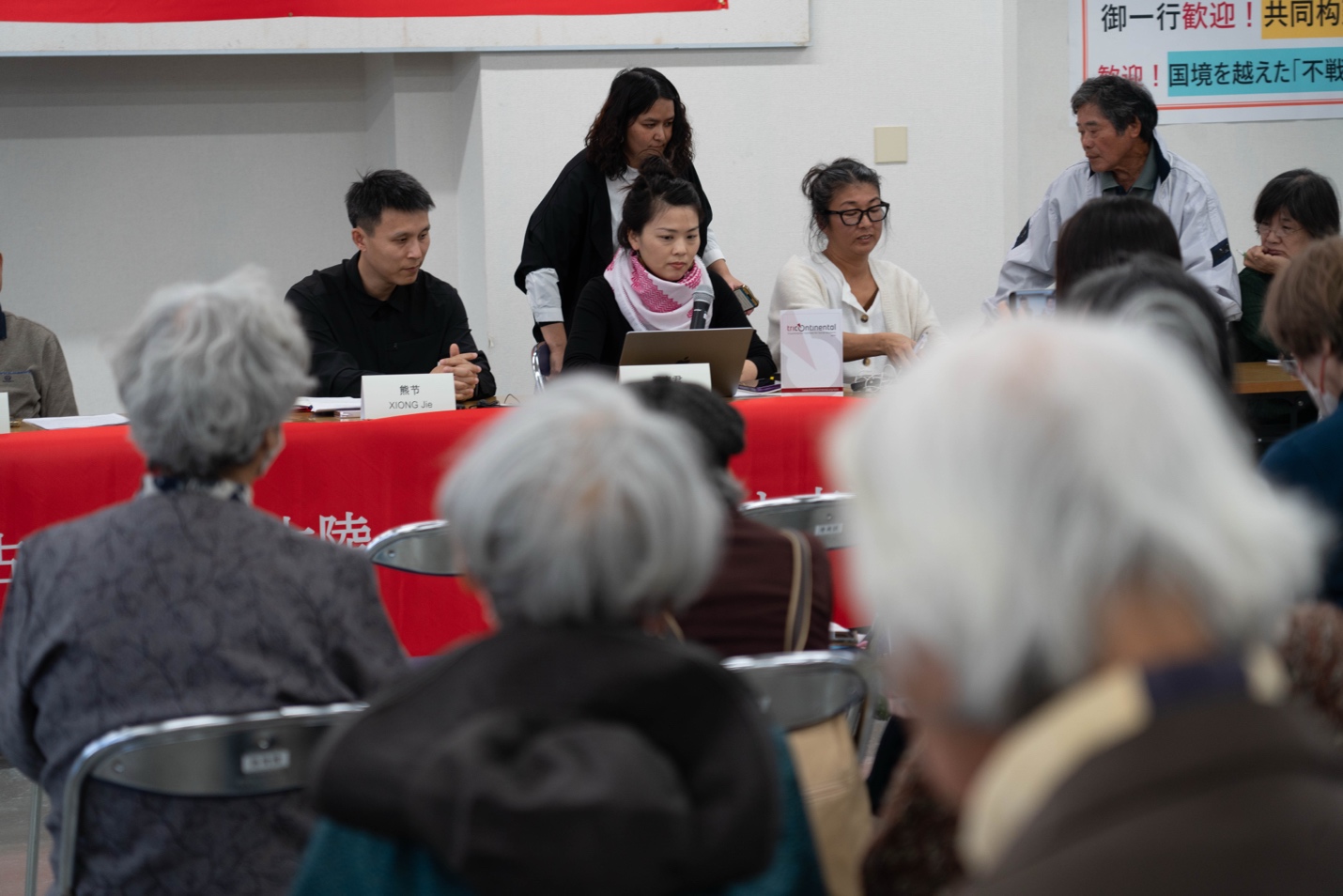 Image Captions: Symposium scene
Shimizu Saoko and other local activists introduced the current state of the anti-war movement on Miyakojima and expressed concerns about the island's continued militarization. They emphasized that Miyakojima residents do not wish to see the constant expansion of military facilities and hope to maintain peace on this land.
This Miyakojima visit allowed the delegation to witness firsthand the militarization pressure faced by outlying island areas in Okinawa Prefecture and to see the persistent peace efforts of local residents. Through exchanges with local activists, the connection and understanding between the Global South and peace forces on various Okinawan islands was further deepened.
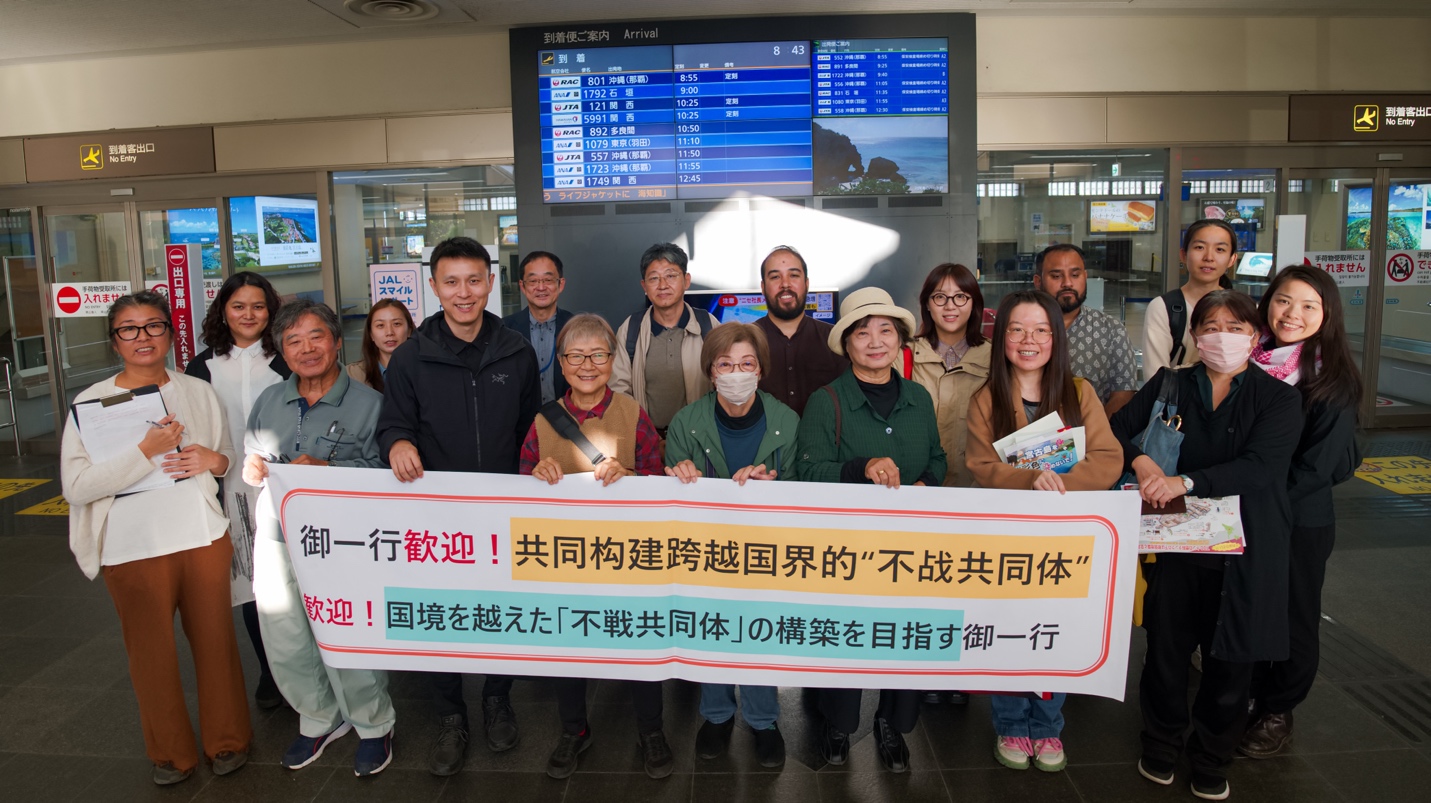
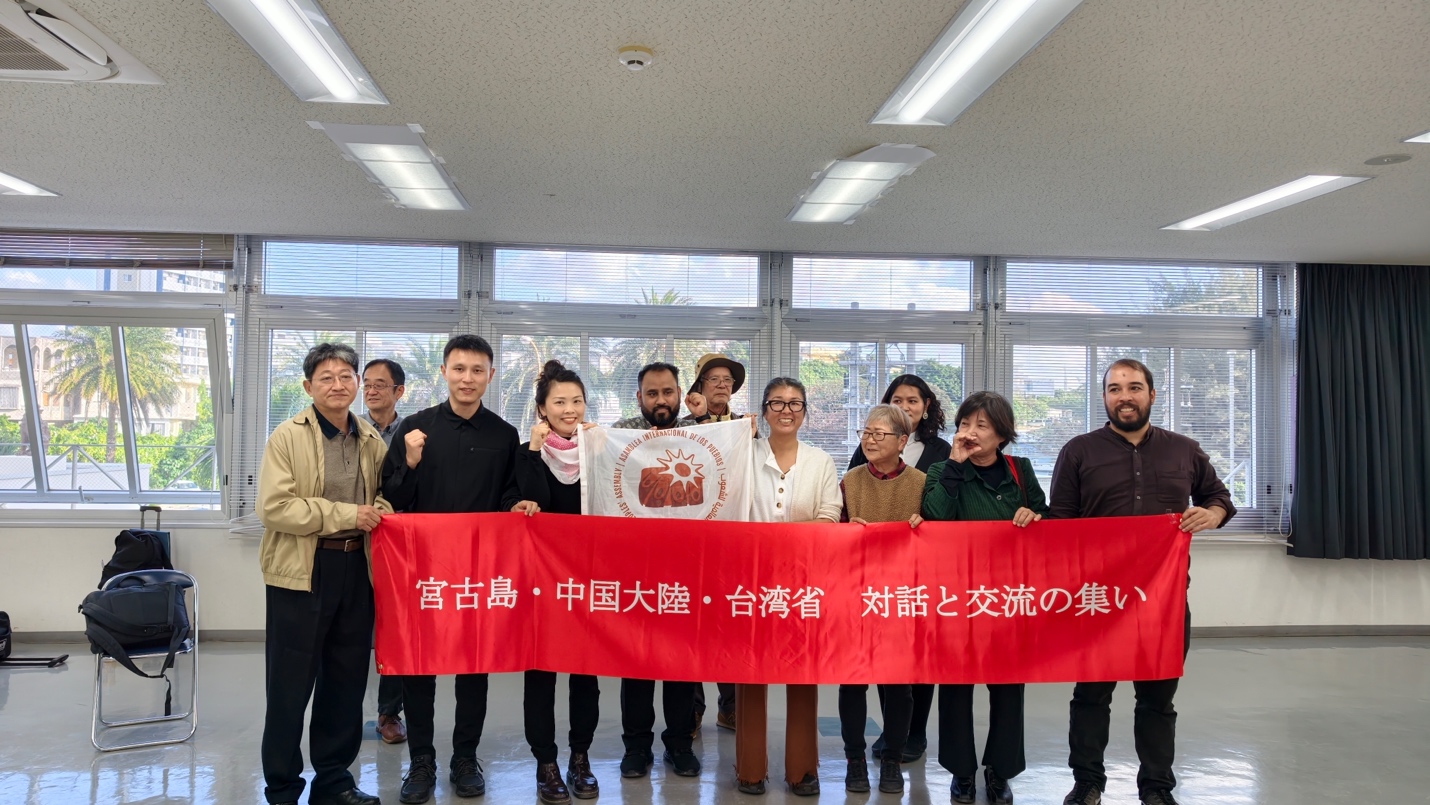 Image Captions: Group photo at the "Miyakojima-Mainland China-Taiwan Province Dialogue and Exchange Assembly"
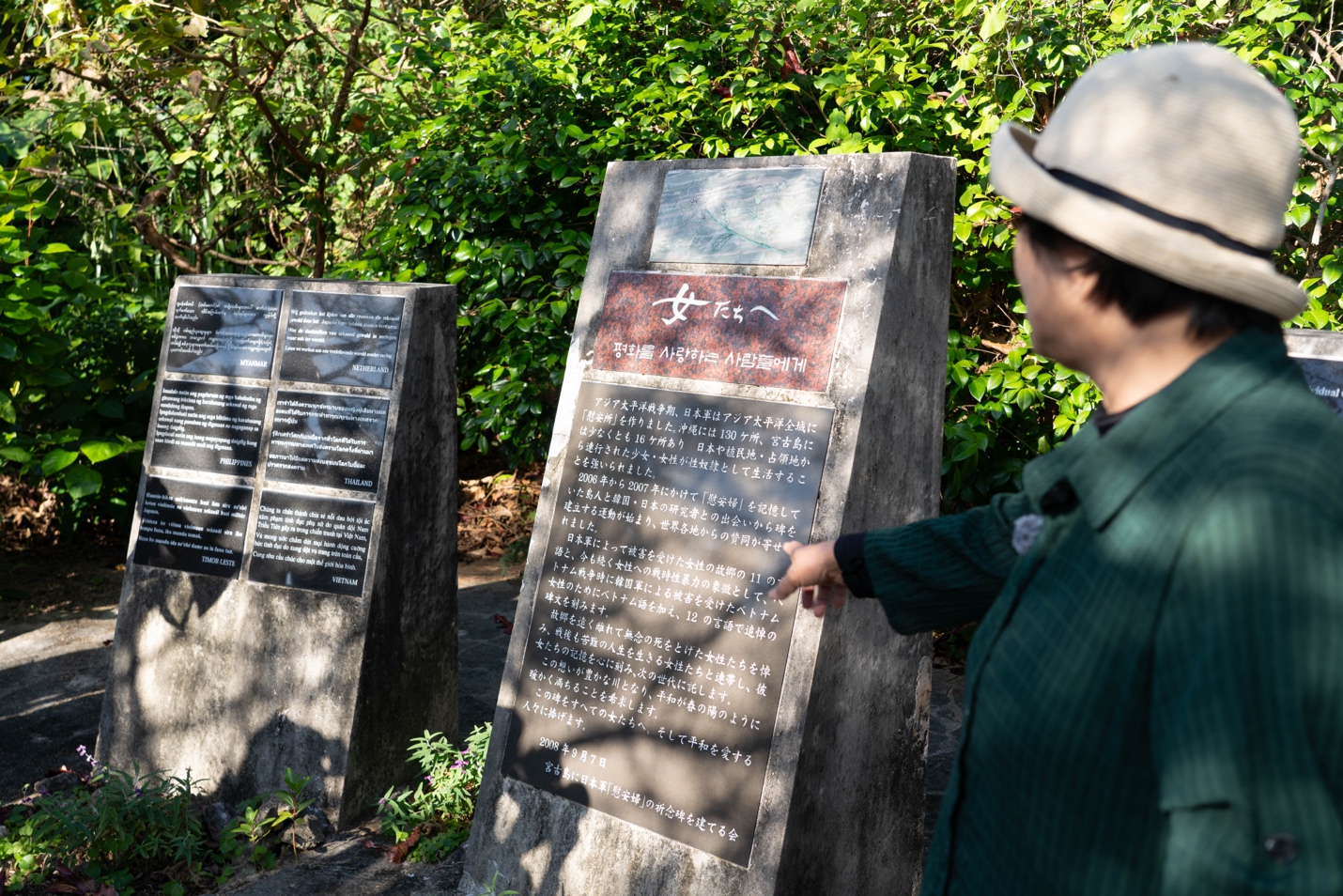 Image Captions: Uesato Kiyomi introducing the "Comfort Women" memorial monument
January 15, 2026 - Fourth Day of Okinawa Research Visit
On the morning of January 15, Okinawa Prefecture Governor Denny Tamaki met with the Global South Academic Forum delegation at the prefectural government. Both sides engaged in in-depth exchanges on regional peace situations and civilian exchange cooperation, reaching consensus on jointly promoting peace and advancing civilian exchanges.
Governor Tamaki expressed his attention to the delegation's investigation itinerary and, upholding the principle of "never allowing Okinawa to become a battlefield again," hoped to maintain continuous dialogue and promote good neighborliness and friendship. Xiong Jie introduced the forum's mission and the purpose of this visit, emphasizing the importance of strengthening civilian exchanges between Okinawa and mainland China, Taiwan Province, and the Global South. He stated: "We hope that the Japanese government and Prime Minister will consider issues from the long-term interests of the Japanese nation and people, abandon Cold War mentality, and cherish the hard-won peace between China and Japan."
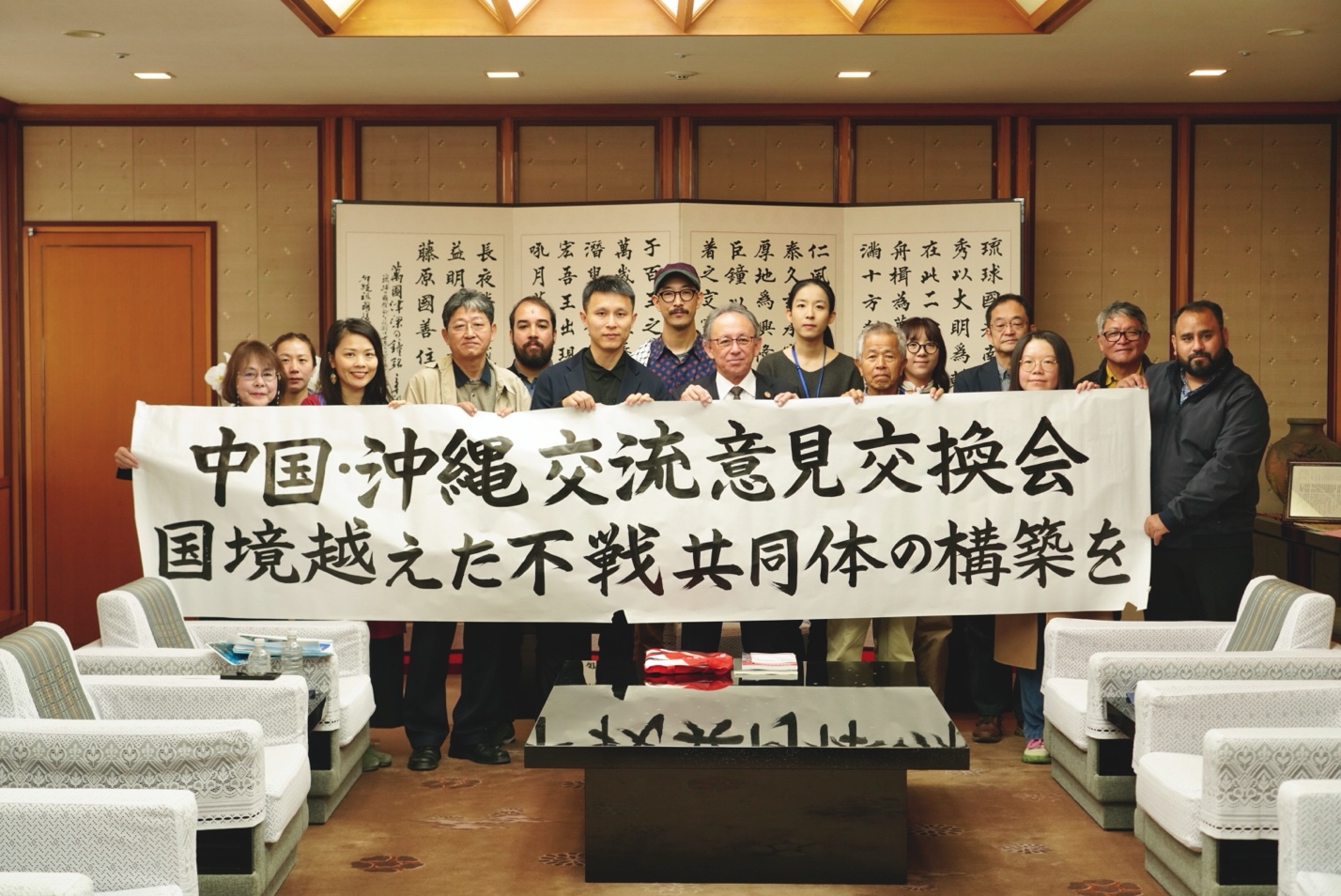 Image Captions: Okinawa Prefecture Governor Denny Tamaki and delegation group photo
After the meeting, local media including Ryukyu Shimpo, Okinawa Times, Okinawa Asahi Broadcasting (QAB), Miyako Shinpo, and JIJI Press conducted interviews with the delegation lasting one and a half hours. From a scholarly perspective, the delegation responded to questions from various journalists on sensitive issues including Ryukyu militarization, the "China threat theory," and the Taiwan question. Xiong Jie stated that Taiwan is an inseparable part of China, that the Taiwan question is China's internal affair, and does not tolerate interference from other countries. He indicated that militarization will only intensify tensions, and that peace needs to be achieved through dialogue rather than confrontation. He emphasized that the Chinese people and the Okinawan people are "neighbors who cannot be moved away" and should cherish hard-won peace, calling on the Japanese side not to be manipulated by extraregional powers into damaging neighborly relations.
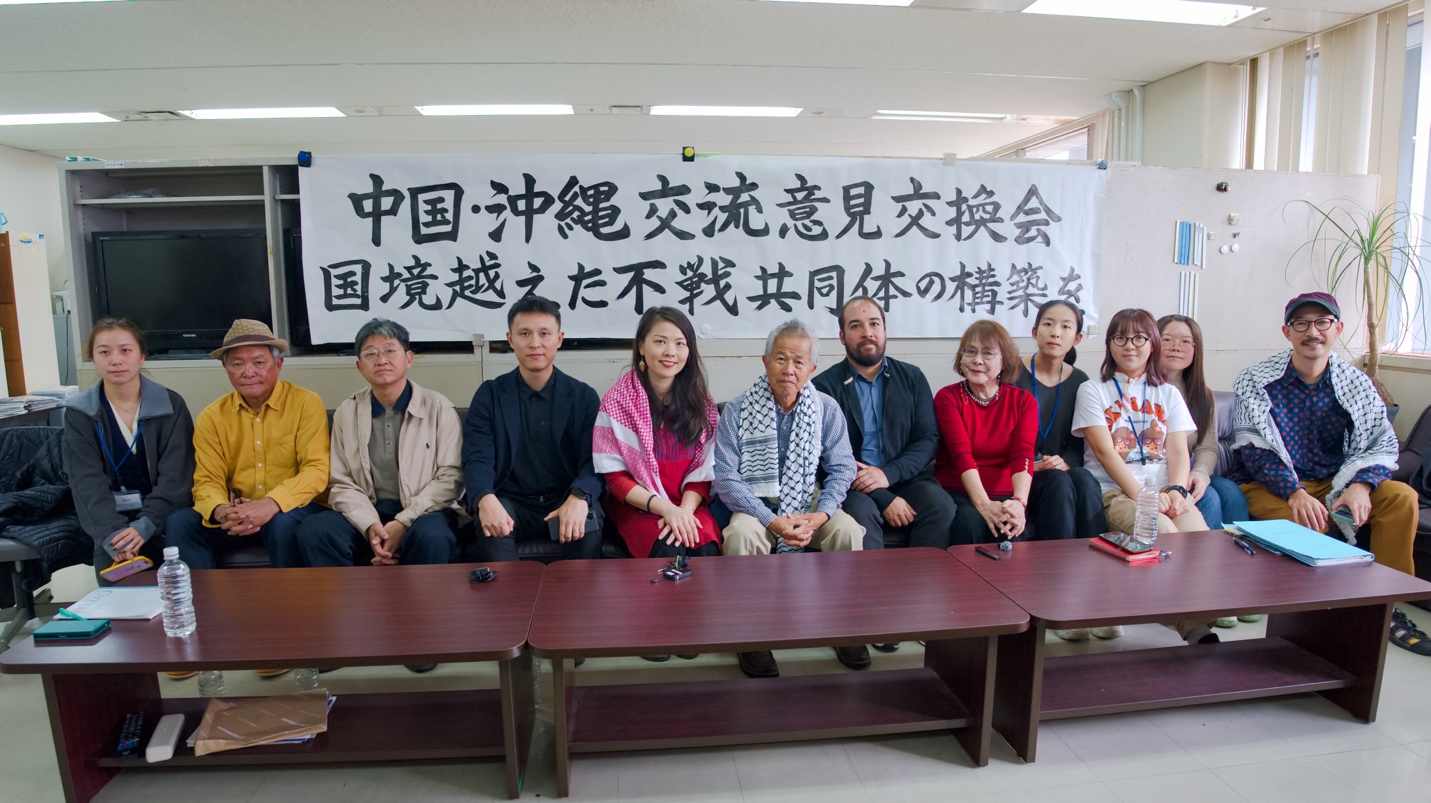 Image Captions: Media exchange
This media interview provided a rare opportunity for Okinawan citizens to understand the Global South perspective and demonstrated the delegation's commitment to enhancing mutual understanding and eliminating misunderstandings through civilian exchanges.