From January 24 to January 26, a high-level delegation from the Republic of Ghana visited Shanghai. The Global South Academic Forum (GSAF) served as the academic reception and dialogue partner for this Shanghai visit, engaging in substantive discussions with the delegation on relevant development issues.
Ghana is currently advancing its "24-Hour Economy" national strategy and seeks to understand the Chinese development model. The delegation was led by the Honorable Augustus Tanoh, Consultant to the President of Ghana and Head of the "24-Hour Economy" Secretariat. Core members included the Honorable Emelia Arthur, Minister for Fisheries and Aquaculture Development; Dr. Audrey Smock Amoah, Acting Director-General of the National Development Planning Commission (NDPC); and Mr. Kyeretwie Opoku, Coordinator of the "24-Hour Economy" Secretariat. Through historical examination, theoretical seminars, and roundtable discussions, the Global South Academic Forum exchanged experiences on Chinese and African modernization.
Witnessing Change: The "China Blueprint" in Spatio-Temporal Folding
"Modernization is not Westernization, but a capacity grown from one's own land."
On January 24, the delegation’s first stop was the Shanghai Urban Planning Exhibition Center and the Bund. As the Ghanaian delegation is currently formulating a long-term national development plan, Shanghai serves as a valuable "development sample" for reference. At the Urban Planning Exhibition Center, delegation members viewed city models and discussed Shanghai's long-term planning capabilities and the coordination of industrial layouts with livelihood needs with the Chinese side. At the Bund, facing the two banks of the Huangpu River—with the International Architecture Exhibition on one side and the Lujiazui skyline on the other—the Ghanaian guests witnessed the transformations China has achieved over several decades.
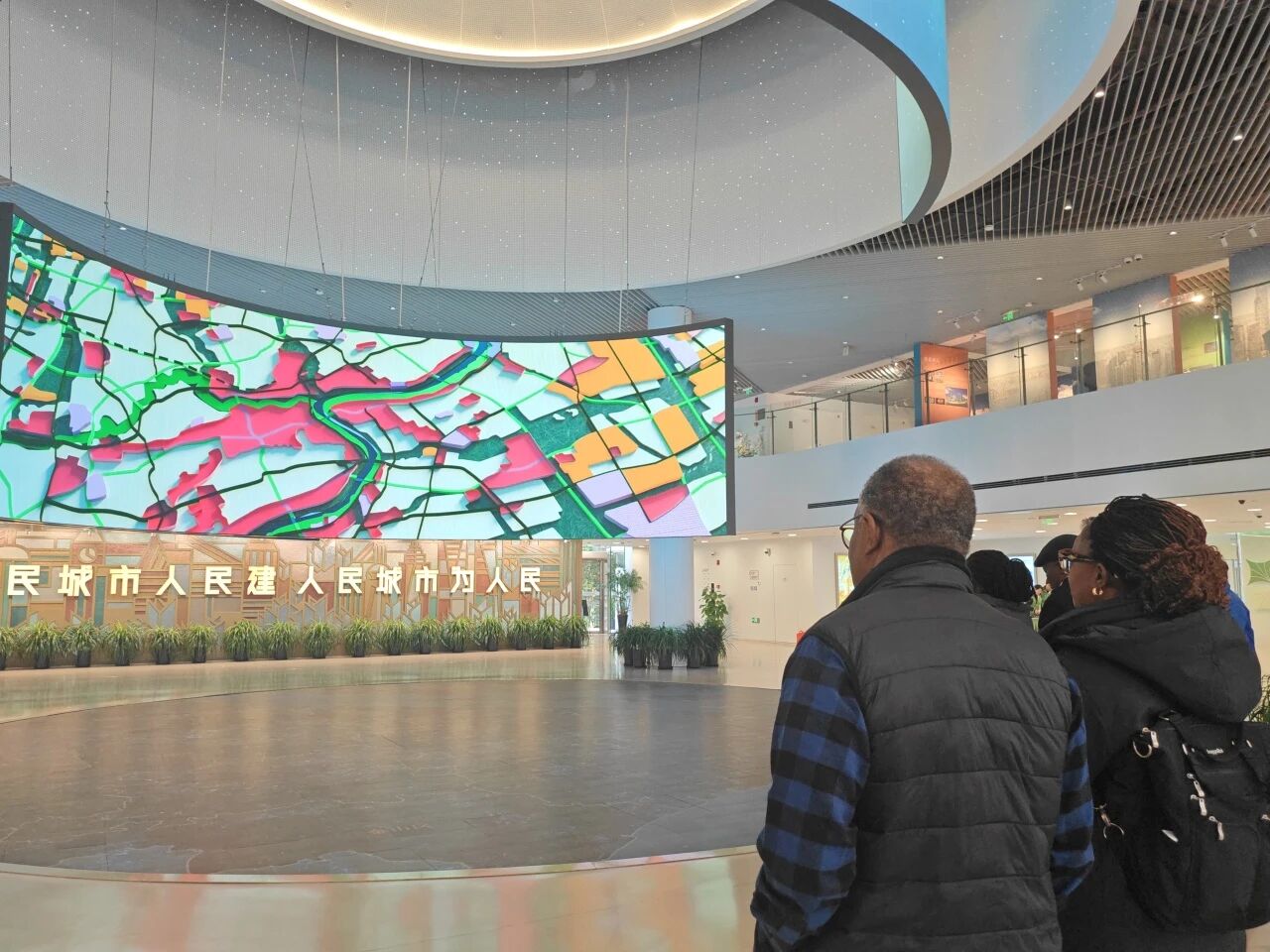
Image Captions: The Ghanaian delegation investigates urban development changes and the implementation of blueprints at the Shanghai Urban Planning Exhibition Center.
This visual impact provided a realistic foundation for subsequent theoretical inquiries: How does a powerful sovereign state transform a vision into reality through planning and execution?
Theoretical Decoding: The "China Formula" of the Party and the Market Economy
Chinese-style modernization possesses a unique institutional logic. In promoting a "24-Hour Economy," Ghana needs to resolve how to exercise "state capacity" within market mechanisms.
On the morning of January 25, Professor Meng Jie from the School of Economics at Fudan University delivered a lecture titled "The Landscape of the Party and Market Economy 3.0" to the delegation. Using the rise of China's New Energy Vehicle (NEV) industry as a case study, Professor Meng analyzed how the Communist Party of China (CPC) has redefined the relationship between the government and the market through strategic planning—neither Neoliberal laissez-faire nor a command economy, but an organic integration of a "promising government" and an "effective market."
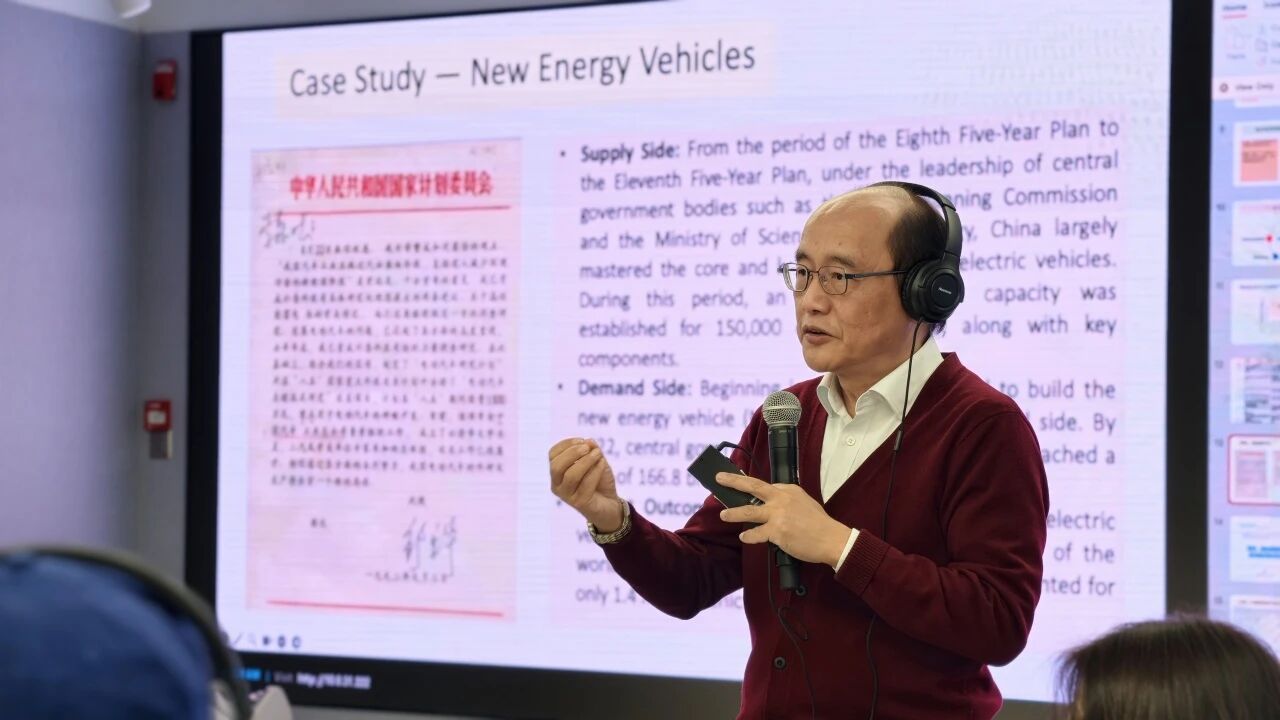
Image Captions: Professor Meng Jie of Fudan University analyzes the institutional logic of Chinese political economy for the delegation.
This theoretical explanation resonated with the Ghanaian delegation. Honorable Tanoh stated that Ghana is exploring how to guide industrial upgrading through state intervention. He noted that China's experience in managing the relationship between the government and capital is a "knowledge public product" needed by countries in the Global South.
Ideological Stirring: The Autonomous Path of the Global South
On the afternoon of January 25, a closed-door roundtable seminar titled "Modernization Paths of the Global South: Sovereignty, Development, and Social Transformation" was held. Professor Lu Xinyu of East China Normal University, who serves as the Chair of the Global South Academic Forum, and Mr. Xiong Jie, Secretary-General of the Global South Academic Forum, engaged in dialogue with the core leadership of the Ghanaian delegation.
In her speech, Professor Lu Xinyu analyzed the structural dilemmas facing Global South countries by contrasting the "failure of Soviet agricultural modernization" with the "predatory nature of American capitalist agriculture." She pointed out that the core of Chinese-style modernization lies in adhering to a "revolutionary alliance of workers and peasants." From establishing an independent industrial system during the Mao Zedong era to addressing the "Three Rural Issues" (agriculture, rural areas, and farmers) and external food sovereignty challenges through "Rural Revitalization" and "Targeted Poverty Alleviation" in the new era, China has explored a path distinct from the West. She called for Global South countries to unite and use "People’s Globalization" to counter "Capital Globalization."
Secretary-General Xiong Jie introduced the "Global South Insights" scientific research data platform to the delegation. He noted that in the digital age, mastering digital sovereignty is a prerequisite for developing countries to formulate independent industrial policies. The Global South Academic Forum is committed to providing decision-making support for Global South governments through "data-driven" research.
Honorable Tanoh expressed agreement with these topics. The two sides discussed specific issues such as "how state capacity can navigate the market" and "how to achieve social mobilization through party organization." Honorable Tanoh remarked that China's experience in handling urban-rural relations and maintaining independence provides a reference for Ghana's ongoing "24-Hour Economy" strategy.
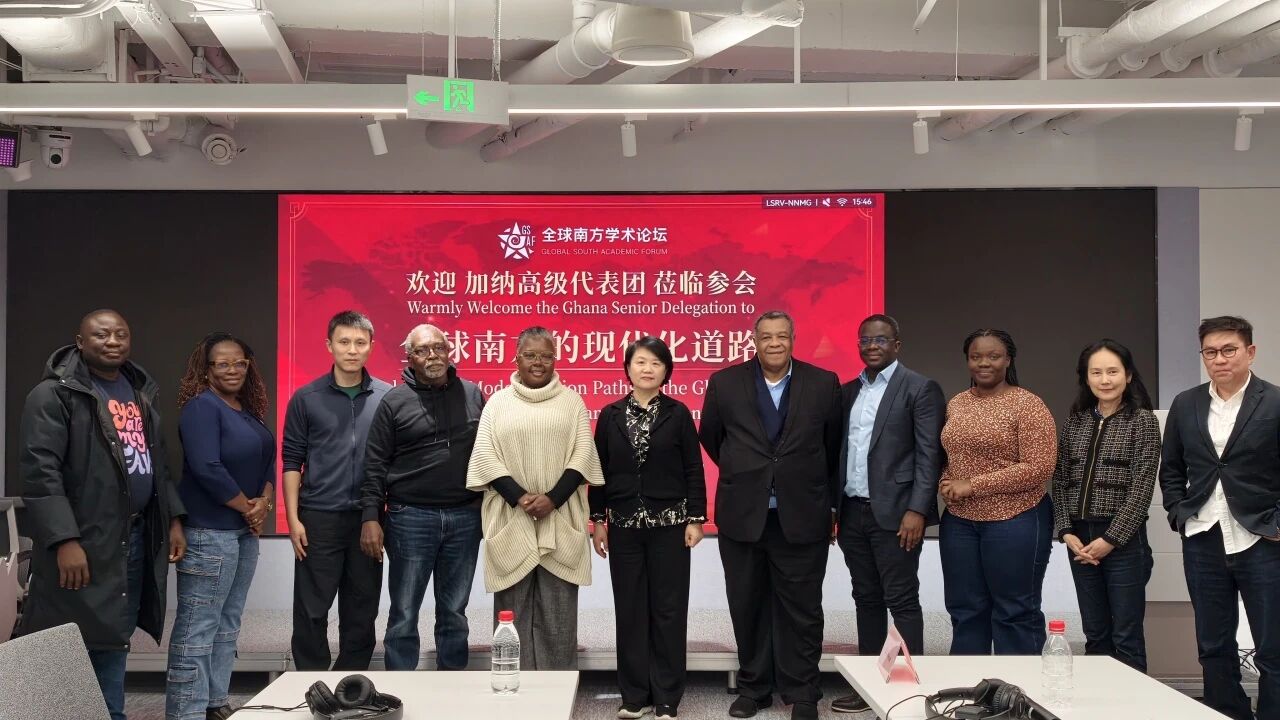
Image Captions: A commemorative group photo of the core team of the Global South Academic Forum and the main members of the Ghanaian delegation.
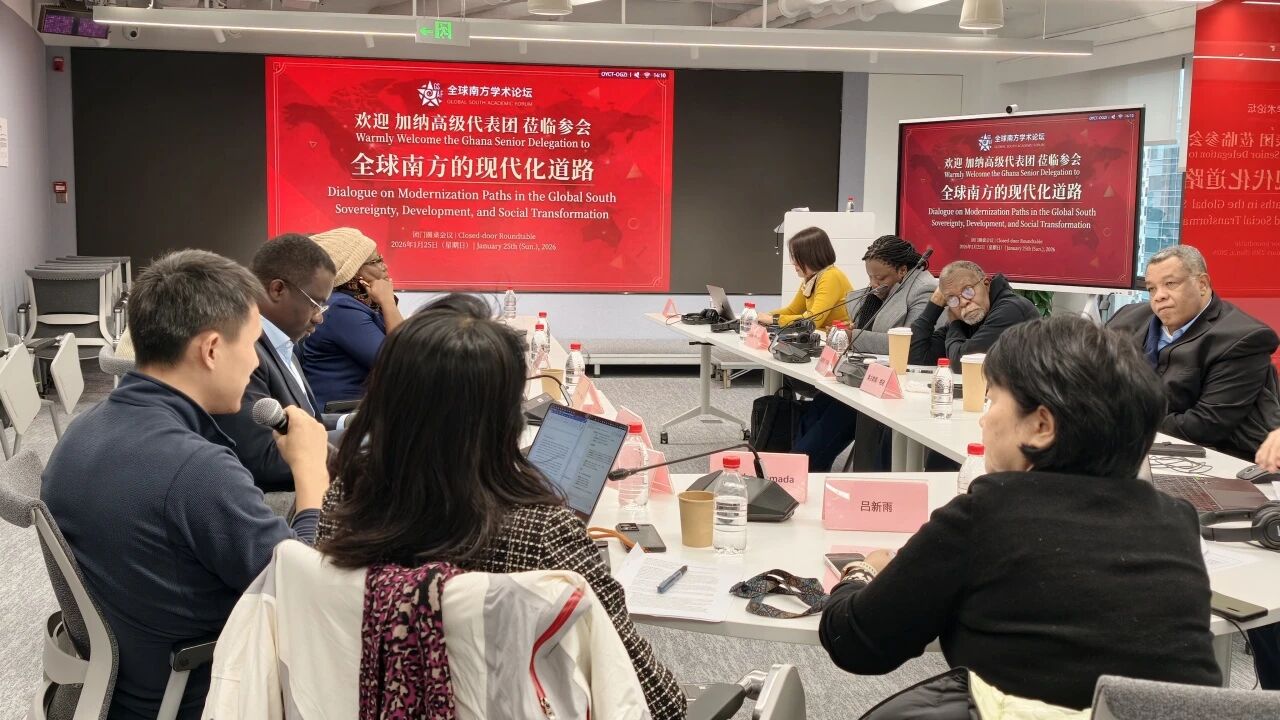
Image Captions: Both sides conduct an in-depth discussion on state capacity building and autonomous development paths.
Deep Echoes: The "Shanghai Dialogue"
Following the roundtable meeting, Professor Lu Xinyu held a conversation with Honorable Tanoh and Mr. Opoku, marking the commencement of the 2026 "Shanghai Dialogue" interview series by the Global South Academic Forum.
As the dialogue began, Professor Lu Xinyu set the tone for this cross-continental collision of ideas. She noted that the world is currently at a moment where the "old order is collapsing while the new order has yet to be established," and "Neoliberal globalization is receding." She emphasized that as inheritors of Pan-Africanism and the Chinese revolutionary tradition, the two parties met to review the history of anti-imperialism and anti-colonialism and to find ways for the Global South to survive and develop amidst crises.
Mr. Opoku responded from a geopolitical perspective, stating that while the current "New Cold War" landscape is severe, it also presents an opportunity for Global South countries to break away from Western dependency systems through unity and collaboration. Honorable Tanoh, reflecting on the practical challenges of Ghana's "24-Hour Economy," reconsidered the importance of "state capacity." He argued that without a strong state apparatus to navigate capital and the market, developing countries cannot resolve issues of poverty and inequality.
At the conclusion of the interview, Honorable Tanoh summarized: "The success of Chinese-style modernization sends a signal to the world—the socialist path is feasible, and it represents the future direction of modernization for the Global South."
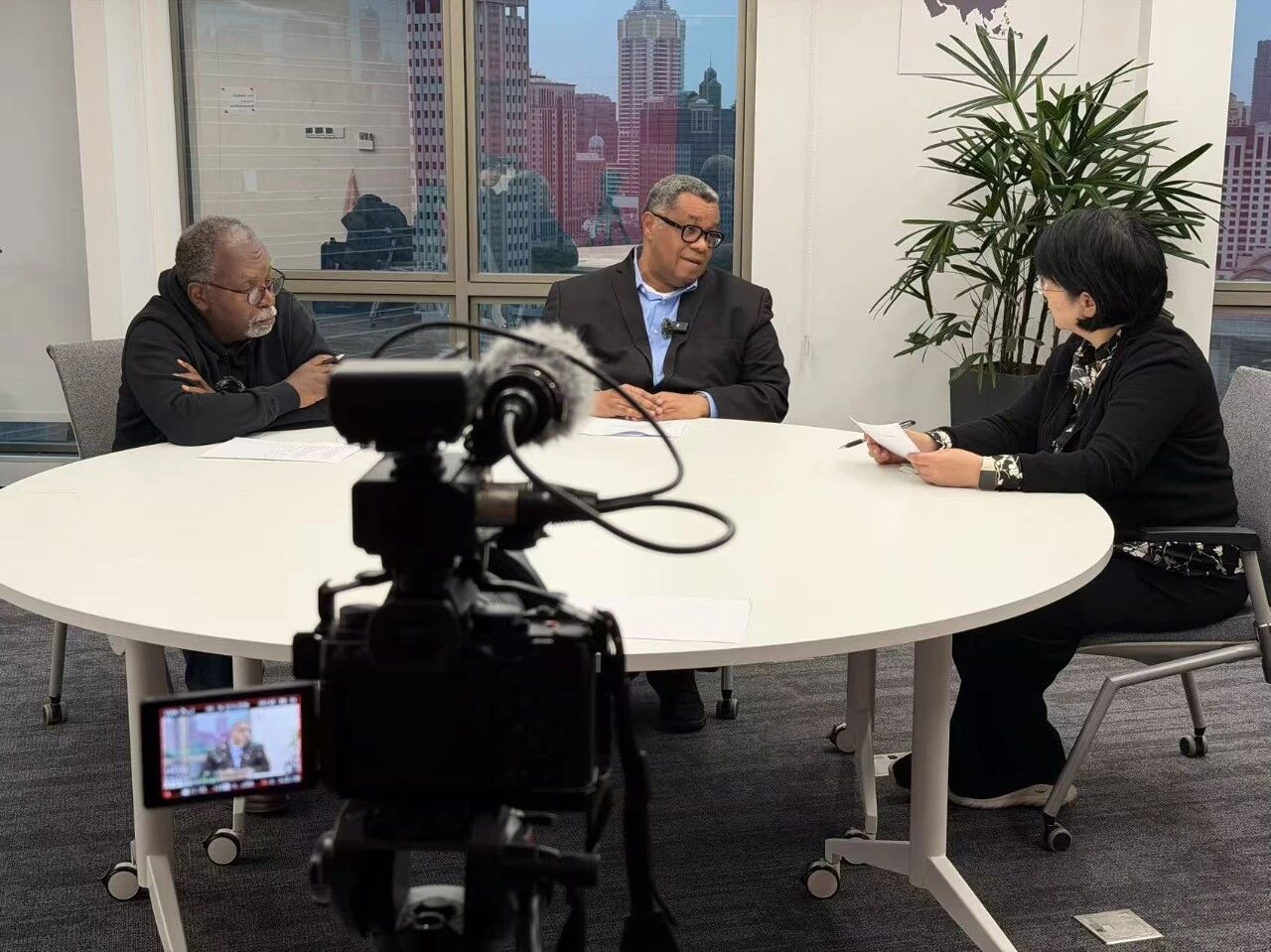
Image Captions: An in-depth dialogue between Professor Lu Xinyu, Honorable Tanoh, and Mr. Opoku.
Facing the Future: AI Empowerment and Digital Sovereignty
On the morning of January 26, as the concluding segment of the visit, the Global South Academic Forum team presented a demonstration on "AI Empowering Digital Sovereignty" to the delegation.
The demonstration illustrated how Artificial Intelligence can become an extension of state capacity. Representatives of the Forum used AI data analysis and RAG (Retrieval-Augmented Generation) technology to demonstrate how data from the Ghana Statistical Service (GSS), the Ministry of Finance, and the World Bank could be integrated to construct a decision-support system serving the "24-Hour Economy."
A member of the Ghanaian delegation remarked that although "digital sovereignty" had been mentioned many times in previous work, it had always seemed obscure and difficult to understand; however, today's demonstration showed how technology can serve as a "leverage point" for national governance. This sharing allowed the Ghanaian delegation to shift their thinking—recognizing that in the digital age, developing countries have the capability to build independent data infrastructure, break their dependence on external technological "black boxes," and provide space for economic transformation.
![Secretary-General Xiong Jie shares the construction of digital sovereignty in the Global South with the Ghanaian delegation.][/images/events/20260129-jiana-6.jpg]
Image Captions: Secretary-General Xiong Jie shares the construction of digital sovereignty in the Global South with the Ghanaian delegation.
From the banks of the Huangpu River to the exchanges in the conference room, this Shanghai visit by the high-level Ghanaian delegation was both an investigation of the "China Model" and a portrayal of the unity and self-strengthening of Global South countries.
The Global South Academic Forum is dedicated to connecting the thoughts and actions of the Global South. Through the production and dissemination of knowledge, China and Africa can build a community with a shared future and promote the establishment of a new international order for the 21st century.
All images were provided by the original author(s).