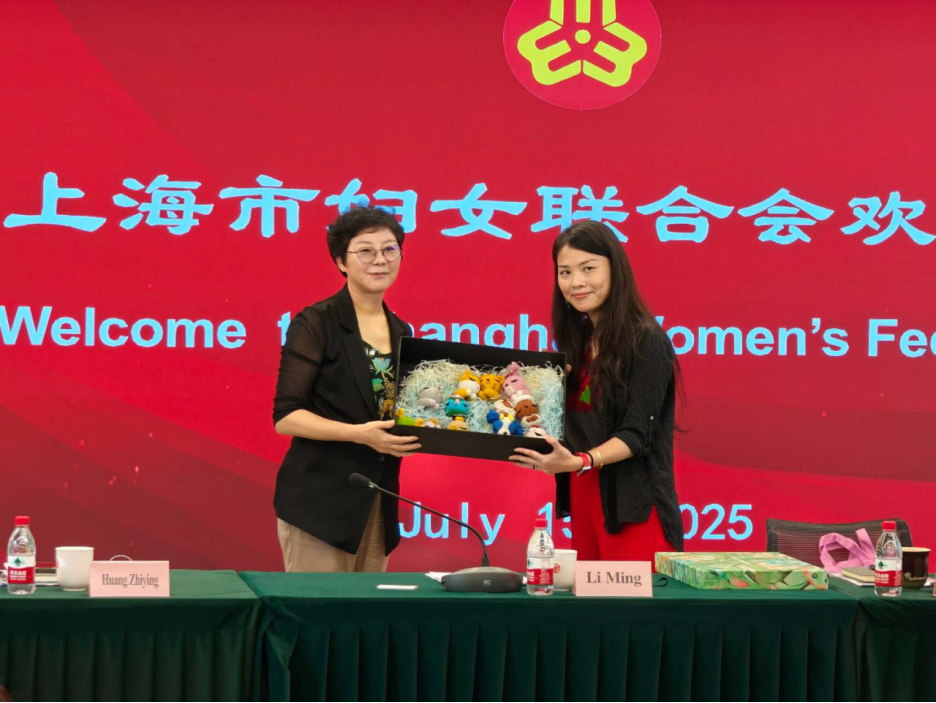
On July 15, the Shanghai Women's Federation headquarters welcomed a group of special guests — a delegation of the "Global South Artificial Intelligence Development and Application" workshop composed of more than 40 experts and scholars from 15 countries and regions including Asia, Africa, and Latin America. In this friendly dialogue across three continents, the two sides conducted in-depth and fruitful exchanges on core issues such as women's development, gender equality, family building, and technological empowerment in the context of the new era, and jointly drew up a beautiful blueprint for future cooperation.
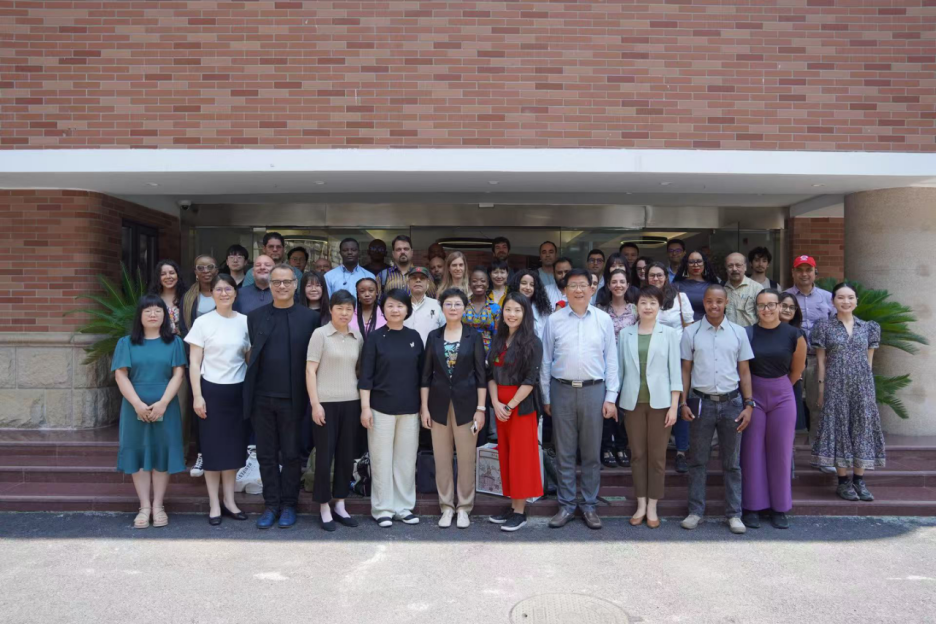
The delegation members came from diverse backgrounds, including well-known scholars, researchers, and social activists from the Tricontinental Institute for Social Research, the International Association for Popular Cooperation, universities, and trade unions in many countries, reflecting the strong interest of the Global South in China's experience in advancing women's development.
At the symposium, Li Ming, vice chair of the Shanghai Women's Federation, first extended the warmest welcome to the guests from afar on behalf of the Federation. She pointed out that Shanghai, as a frontier window of China's reform and opening up, has always regarded protecting the rights and interests of women and children and promoting gender equality as core elements of urban development. Through a series of detailed data, she vividly demonstrated the outstanding achievements made by Shanghai women in the fields of health, education, the economy, and social management. In particular, in terms of improving women's political participation, the proportion of female representatives at all levels of party congresses and people's congresses in Shanghai, as well as the proportion of female members of the Chinese People's Political Consultative Conference (CPPCC), has continued to grow steadily, demonstrating the increasingly important role of women in social governance.
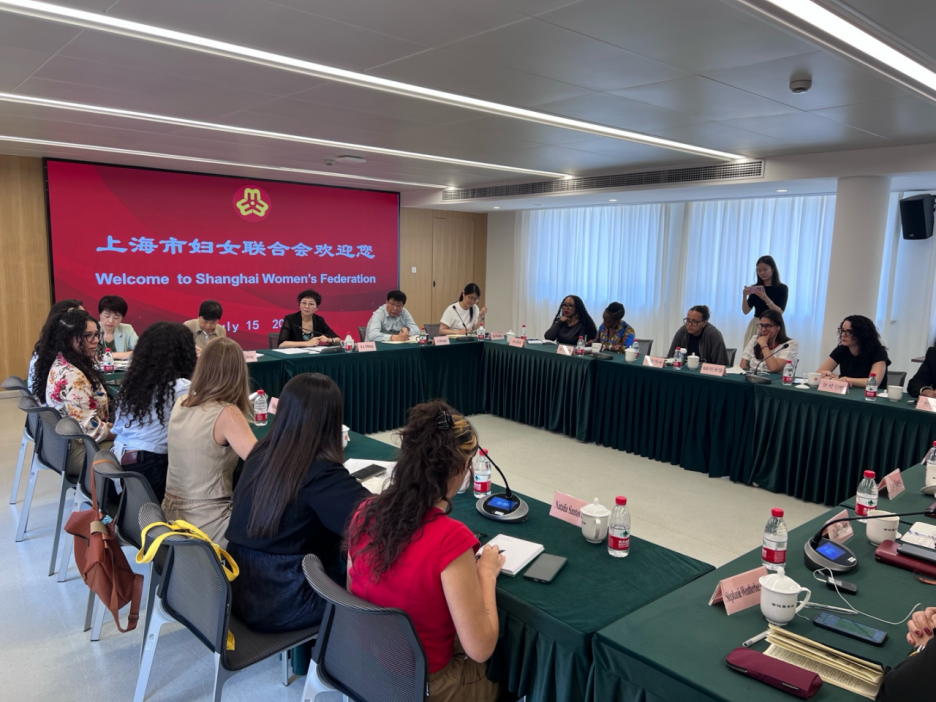
Professor Lu Xinyu, dean of the Institute of International Communication at East China Normal University and leader of the workshop, spoke on behalf of all members. She said that the delegation has great interest in China's achievements in uniting and leading women, safeguarding women's rights, and promoting women's scientific and technological innovation and economic and social development, and believes that China's experience is of significant reference value to countries across the Global South. She emphasized that, with the rapid development of artificial intelligence (AI) technology, ensuring that all social groups, including women, benefit fairly is a common issue facing the world, and she looks forward to gaining profound inspiration through this exchange.
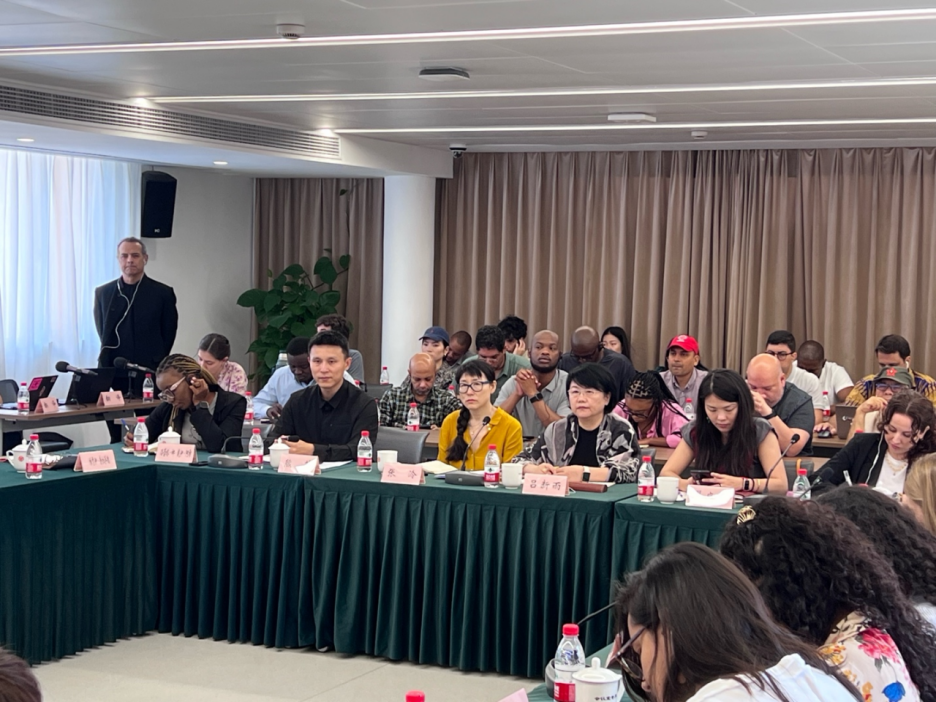
In the subsequent interactive session, the atmosphere was warm and friendly. Representatives from Ghana, Brazil, Morocco, Mexico, and other countries asked questions enthusiastically, focusing on topics such as how China empowers rural working women, how to respond to certain criticisms of the development of Chinese women in Western society, how to protect women's rights through institutional design, and how to integrate the concept of gender equality into the national development strategy.
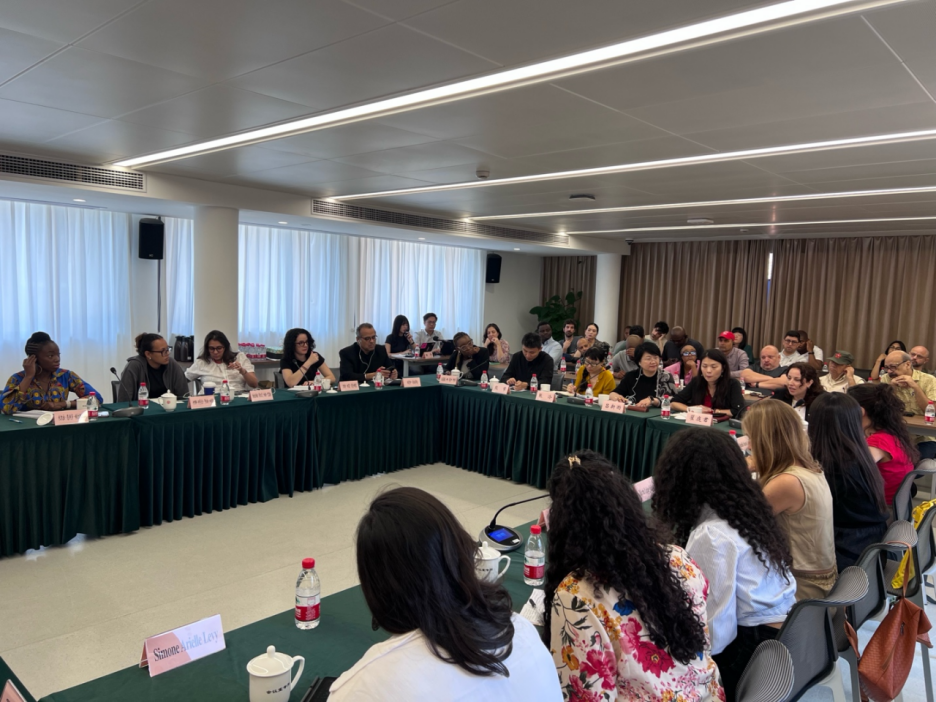
Faced with these practical issues, Huang Zhiying, deputy director of the Shanghai Women and Children's Work Committee Office; Lu Ronggen, director of the Rights Protection Department of the Shanghai Women's Federation; Zhang Yanhua, director of the Family and Children's Department; Jin Weiqing, deputy director of the Development Liaison Department; and Zhang Yi and Liu Xirong, staff members of the Development Liaison Department, gave candid and detailed answers. They introduced Shanghai's experience in promoting the comprehensive development of women's causes through systematic policy intervention, the guidance of cultural concepts, and women's capacity-building.
- At the level of institutional safeguards, from the national to the local level, China has written the basic national policy of upholding gender equality and protecting the legitimate rights and interests of women and children into laws and development plans, and has ensured steady, targeted progress by formulating five-year and ten-year plans.
- In terms of empowering women, the Shanghai Women's Federation has helped female college students find employment and start businesses by creating the "Seagull Plan," built new spaces for family education through projects such as "Home + Bookstore," and held high-level activities such as the "AI Women's Elite Forum" to make outstanding women from all walks of life visible and inspired.
- At the level of social mobilization, the Shanghai Women's Federation relies on a four-tier organizational network and a large group membership system, including the "Female Doctors Association" and the "Female Lawyers Association," as well as volunteer projects such as "Loving Neighbor Moms," to widely gather social forces and provide precise and warm services for women, children, and families.
The symposium concluded in a warm atmosphere, with participants exchanging special souvenirs. It was not only a successful experience-sharing session but also a meeting of minds and a deepening of friendship. It clearly shows that, despite different national conditions, the voices of the Global South are converging on the road to pursuing gender equality and promoting the all-around development of women, and China's practices are contributing unique wisdom and solutions to the world. Both sides look forward to more such high-level dialogue opportunities in the future, moving forward hand in hand and jointly writing a new chapter in the global cause of women's development.