On February 8, in the Japanese House of Representatives election, the ruling coalition consisting of the Liberal Democratic Party (LDP) and the Nippon Ishin no Kai (Japan Innovation Party) won more than half of the seats. Following Sanae Takaichi's political gamble, the outside world has begun to worry that Japan may use this result to further agitate the situation in East Asia. Since taking office, Sanae Takaichi has repeatedly made erroneous remarks regarding Taiwan, which constitutes a serious provocation and a departure from China-Japan political documents. At the same time, the Ryukyu (Okinawa) issue has been pushed back to the forefront of public opinion, with renewed focus on the region's status, the excessive burden of U.S. military bases, and the local population's concerns regarding the risks of war.
From January 12 to 15, a delegation from the Global South Academic Forum traveled to Ryukyu for a research visit and jointly organized a symposium titled "China-Okinawa Exchange of Views: Building a Peace Community Across National Borders" with the association "No More Battle of Okinawa: Life is Treasure" and the Asia-Wide Campaign against U.S.-Japanese Domination and Aggression (AWC) to promote a shared vision of peace and development. Participating guests from Ryukyu included Kunio Arakaki, Hidefumi Sakoda, and Takamatsu Gushiken, who were invited to participate in the Global South Academic Forum in 2024 and 2025 respectively.
The Global South Academic Forum, in collaboration with Guancha.cn, presents the "Voice of the Global South" column, featuring articles authored by guest collaborators of the Global South Academic Forum.
This article is based on a speech delivered at the meeting by Hiroshi Taniyama, the initiator of the "Okinawa Dialogue" project. Based on his many years of experience in international cooperation, he discussed how the United States has manufactured multiple wars while the Japanese mainstream media finds it difficult to obtain the truth. He also pointed out the dangers of the "China Threat Theory" and Takaichi's remarks, calling for all parties to respond with wisdom. Guancha.cn has organized and published his speech for readers' reference.
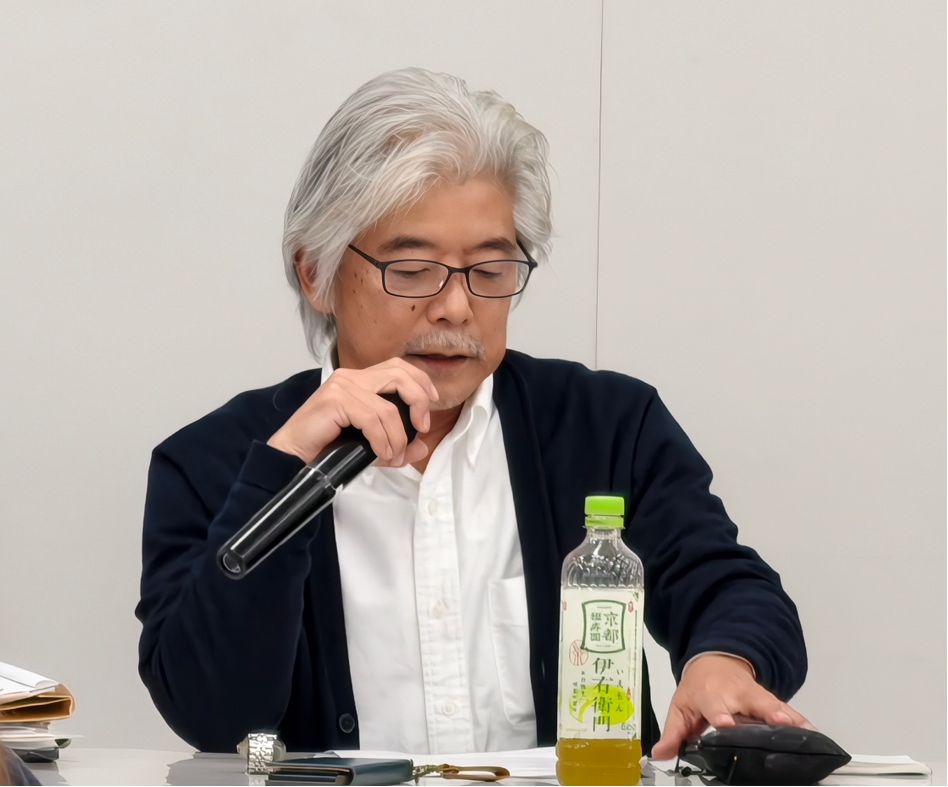
Image Captions: Hiroshi Taniyama at the meeting venue.
I am Hiroshi Taniyama, the initiator of the "Okinawa Dialogue" project. Over the past 34 years, I have been engaged in international assistance work, spending approximately 12 of those years overseas, moving between various field locations. During these experiences, I have been on the front lines of conflicts and wars many times, which has forced me to continually question the essence of war.
Wars That Are "Manufactured"
Many of the battlefields I have visited are related to the United States: I was in Thailand during the Gulf War; later, I repeatedly visited the sites of the Kosovo conflict, the Afghan War, and the Iraq War, and I was stationed in Afghanistan for about four and a half years. My eventual choice to come to Okinawa is directly related to this experience in Afghanistan.
My white hair is a testament to many years spent under the threat of the U.S. military. The clinic we operated was hit by rockets, occupied by armed personnel, and even family members of our staff were killed. Whenever such incidents occurred, we had to invest a great deal of energy in responding, even involving the United Nations (UN) to lodge protests with the U.S. military.
At the same time, in order to ensure the safety of travel and daily movements, information collection became crucial. I set a rule for myself: never enter areas where the U.S. military is conducting operations. Every morning, we determined our action plan for the day through information gathering and staff meetings. Experience told us that approaching the U.S. military meant becoming a target. And the forces directly threatening us at that time were specifically the U.S. Marine Corps from Okinawa.
In this way, Okinawa became closely linked to the trajectory of my life. As my frontline work came to an end, I made up my mind that I must come to Okinawa, and I eventually moved here.
Based on these personal experiences, I would like to talk about the appearance of war as I have seen it.
Taking Afghanistan as an example, this war, which lasted twenty years, ended in 2021. How did it end? It was a retreat of the U.S. military following their defeat. Although Japanese media rarely writes it this way, the reality is that the United States chose to withdraw when victory was impossible and sustainability was difficult. More importantly, an agreement was reached between the Trump administration and the Taliban—which the U.S. had always called a terrorist organization—while the Afghan government at the time was excluded from the negotiations. As a result, after the U.S. military withdrew, the Afghan government forces quickly collapsed, the Ghani government fell, and the Taliban occupied the entire country to establish a new regime. In other words, the United States personally abandoned the government it had fostered.
Many people believe that as long as the U.S. military is stationed in Japan, they can feel at ease, or that joint operations with the U.S. military in an emergency can turn danger into safety. However, history has repeatedly told us: in the end, we will be abandoned. This is a sobering lesson.
Reviewing the wars launched by the United States in Iraq, Kosovo, and other places, I have repeatedly verified field information against macro data. The results clearly show that these were "manufactured" wars; in other words, they were wars that could have been avoided.
Nevertheless, wars were still launched and often received the tacit consent or even support of the international community, with the reasons packaged as "just wars." This was the case with the Gulf War, where Saddam Hussein was categorized as part of the "axis of evil," making the strike against him seen as legitimate. The Kosovo War was the same; Milosevic, the Yugoslav government, and its federation were labeled as "evil," giving legitimacy to the airstrikes launched "to save the people of Kosovo." Iraq and Afghanistan were no exception, where the Taliban were simplified as pure "villains."
What is chilling is that even many people who consider themselves liberals, or who have even participated in anti-war movements, would turn to criticize us when we critiqued these wars. This precisely shows how powerful the discourse of "just war" is.
To break this illusion, we must rely solely on facts. However, relying only on Japan's mainstream newspapers makes it almost impossible to obtain these facts. We need to actively obtain information through channels such as the "Third World Network" (TWN) and ensure that not only do we obtain it ourselves, but that more people see it. I identify more with the Ryukyu Shimpo and the Okinawa Times; compared to the major newspapers in mainland Japan, they have closer connections with global networks and can better present different observations of the same event from around the world. Numerous issues, including those in Guatemala, should be viewed in connection with one another.
Information can trigger war, so we must think about how to obtain truthful information—this could perhaps be called "war literacy."
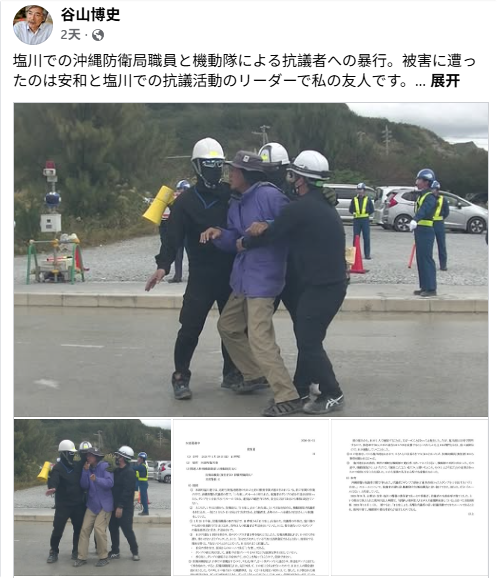
Image Captions: Hiroshi Taniyama's Facebook account was recently updated: "An incident occurred at Shiokawa where staff from the Okinawa Defense Bureau of the Ministry of Defense and the riot police committed violence against protesters. The victim is a leader of the protest activities in Awa and Shiokawa, and also a friend of mine."
Two Concerning Trends
Between 2021 and 2022, the topic of "something happening in Taiwan" was continuously played up, and we did indeed feel a sense of crisis. Against this background, 13 partners from Okinawa and mainland Japan and I initiated the "Okinawa Dialogue" project to prevent "something happening in Taiwan."
Over a period of one and a half years, we held five seminars, three of which were international seminars. In addition, we carried out three sub-topic activities and continued to release information to the outside world through press conferences and other means. Our starting point was simple: if the governments do not engage in dialogue, then the citizens will. Regarding the Taiwan region, we invited individuals from different positions to participate, not limited to one party, including both scholars from think tanks affiliated with the Democratic Progressive Party (DPP) and researchers from the Kuomintang (KMT) camp, and we also conducted face-to-face exchanges with the Chinese mainland.
Despite considerable outside criticism, two achievements are worth affirming:
First, participants (including both speakers on stage and the audience) generally agreed that the most important thing at present is to conduct dialogue.
Second, we re-awakened and confirmed an important international legal commitment that must not be forgotten—"one China." The Chinese mainland refers to this as the "one China principle," while the Taiwan authorities refer to it as the "one China policy." Many people were previously unaware of this, and Japanese media rarely touches upon it. If we do not use this as a starting point, we simply cannot truly deter the occurrence of war. I believe this is a very important gain.
I must also point out that the spread of the "China Threat Theory" should not be underestimated. Recently, a friend of mine who is very active in the peace movement in Tokyo specifically chose Coming of Age Day in Japan to interact with the public through "sticker voting" on questions such as "How do you view Takaichi," "Do you support the expansion of the Self-Defense Forces," and "How do you view 'something happening in Taiwan'." The results showed that many young people believe "China is scary, therefore we must prepare for war," and some even stated, "I will also go to the battlefield." This experienced young peace activist was so discouraged by this situation that they decided to stop their activities for the day. I believe this situation is both frightening and severe.
At the same time, Takaichi's remarks regarding how "something happening in Taiwan" could constitute a "situation that threatens the survival of Japan" triggered a series of counter-measures from China. However, during this process, Takaichi's popularity rose instead of falling, which emboldened her to take the risk of dissolving the House of Representatives and holding a general election. This trend is equally worrying.
Therefore, we must seriously consider how to respond. While emphasizing "correct arguments" such as "one China" is important, there is a greater need to handle problems in the manner of the "Sun" rather than the "North Wind." For China, lodging protests is inevitable, but if it only faces Japan with the "North Wind," it will likely only push Japan further onto the track of "preparing for war." Greater wisdom can be used to adopt a warmer and more far-sighted approach.
All images were provided by the original author(s).