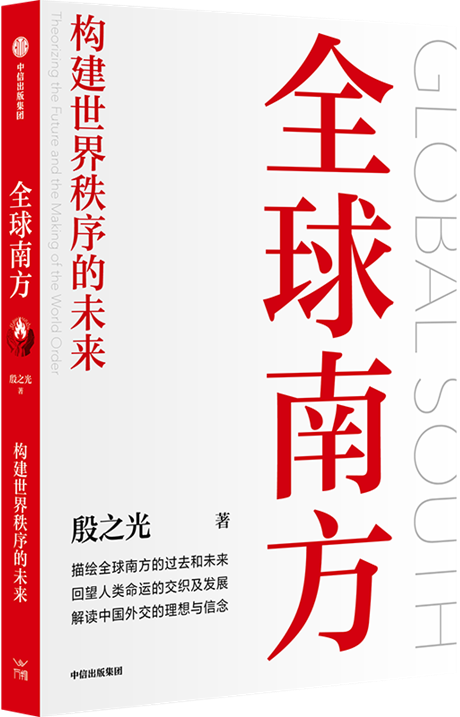
The Global South: Theorizing the Future and the Making of the World Order
Yin Zhiguang
China International Publishing House, 2026
About the Author
Yin Zhiguang is a Professor and Doctoral Supervisor in the Department of International Politics at the School of International Relations and Public Affairs, Fudan University, and serves as the Chief Expert for major projects of the National Social Science Fund of China. He has long been committed to research in fields such as the relationship between China and the Third World, South-South cooperation, the history of empire and imperialism, Pan-Africanism, Third World international law, and Afro-Asian movements. His published monographs include Politics of Art (Brill, 2014), The New World: Chinese Practice and the Origins of Afro-Asian Solidarity (Contemporary World Press, 2022), and The Old Order: The Construction of the World System Centered on Empire and Hegemony (Social Sciences Academic Press, 2026), and he also serves as the series editor for the Global South book series published by Palgrave Macmillan.
Content Summary
The "Global South" is a political-economic category characterized by dialectical development. Professor Yin Zhiguang of Fudan University integrates multi-disciplinary perspectives to systematically trace the historical evolution from "oppressed nations" to the "Third World" and ultimately to the "Global South," revealing the common demands for anti-colonialism, anti-hegemony, and the pursuit of substantive equality that run through this conceptual genealogy. The author simultaneously conducts an in-depth exploration of the theoretical significance of the Global South, proposing new theoretical perspectives and analytical frameworks. This work not only critiques the Western-led developmentalism model and the structural inequality it creates but also proposes a new conception of international order from a Chinese perspective—a network-style unified large market based on the real economy. By analyzing the collective rise of Southern nations after World War II, the book demonstrates how the Global South, as a nascent force in contemporary world politics, is reshaping the international landscape, and it puts forward a new developmentalism theoretical framework that emphasizes autonomous development and equal cooperation. This work, which possesses both theoretical depth and practical wisdom, is both a profound interpretation of the historical logic of the Global South and a passionate outlook on the future world order, providing indispensable ideological resources for understanding the transformation of contemporary international relations.
Table of Contents
Introduction: The South as a Calling and Its Subjectivity
Chapter One: Creating Dependency: The Emergence and Historical Evolution of the Southern Question
Chapter Two: Facing the Future: The Global South as the Antithesis of the Hegemonic Order
Chapter Three: The Dialectics of Time: The Global South as a Historical Trend
Chapter Four: Empowering through Solidarity: The Political Program of the Global South
Chapter Five: New Globalization: The Order Scheme of the Global South
Chapter Six: The Social Republic: The Political Ideal of the Global South
Conclusion: The Dialectics of Liberation and the Future of the Global South
Notes
Introduction: The South as a Calling and Its Subjectivity
Today the Third World faces Europe like a colossal mass whose project should be to try to resolve the problems to which Europe has not been able to find the answers.”
— Frantz Fanon
In short, the dialectics of history must eventually lead to the disappearance of North-South economic relations.”
— Chen Qiren
Hegemonic Stability and Its World Imagination
The discussion on the Global South issue is, in essence, a discussion on the problems and paths of human modernization—including accumulation, development, and growth—within the integral structure of a world market. This is a discussion regarding the possibilities of dependent development versus de-linking development, as well as a discussion regarding the two worldviews underlying these two perspectives on development. However, before systematically intervening in these issues, let us first shift our perspective.
In the autumn of 1942, the war in Europe had entered its fourth year, yet this profound conflict was actually part of a larger-scale transformation of the world. In 1931, Japan launched the September 18th Incident and brazenly invaded Northeast China, prompting the Chinese government representative in Geneva to formally write to the Secretary-General of the League of Nations on September 21, requesting the Council to "bring to the attention of the Council the dispute between China and Japan" and, "acting under Article 11 of the Covenant of the League, request the Council to take immediate steps to prevent the situation from expanding and endangering international peace". At that time, the Chinese government attempted to use the newly created international organization of the League of Nations to respond to the violence of imperialists through institutional means, but the results were predictable. In January 1932, the League of Nations formally established an inquiry commission led by the British Earl of Lytton to investigate the incident of Japan's invasion of Northeast China. In October, the commission released the Report of the Commission of Enquiry of the League of Nations (commonly known as the "Lytton Report"), which made an "objective" statement of the situation based on the principle of formal equality. It both recognized China's sovereignty over "Manchuria" and, at the geopolitical level, acknowledged the region's significant value to China as a strategic buffer zone for the dispute between Japan and Russia. Economically, the report relied on European colonial experience to view "Manchuria" as a "frontier wilderness" that might regulate China's "overpopulation" problem in the future.
However, conclusions drawn from the perspective of a hegemonic dominator—relying on European colonial experience, based on the formal equality of legal subjects, and entirely dependent on a static analysis of elements such as national capacity, power balance, and geopolitical relations at a single moment—could hardly convince the Chinese people of that time. For Japan, its claims regarding its "special status" and "paramount interests" in "Manchuria" happened to follow "objective" reasons. Ultimately, formal equality could only degenerate into an institutional endorsement for an unequal situation. The commission was even unable to provide any persuasive analysis regarding the reasons and impact of Japan's invasion of China, instead offering only superficial or even far-fetched causal explanations for the phenomena. The Chinese boycott of Japanese goods was even viewed as one of the important triggers for Japan's invasion of China. The conclusions given by the commission were further established on the premise that "if the Governments of China and Japan could recognize the identical nature of their respective primary interests".
The "objectivity" recognized by the League of Nations can also be viewed as a "realist" attitude. This attitude does not consider inequality or the complex structural factors that constitute a state of inequality, nor does it consider the challenges that the shifting balance of power might pose to the structural factors causing inequality. On this basis, the world seen from this perspective becomes a form of "Great Power Politics," where the basic pattern of world order is manipulated by a tiny minority of great powers or alliances of great powers. What determines the status of a great power is its strength in military, economic, and other fields. The order constructed by great powers and their alliances has a clear structural framework, and members within the alliance maintain a high degree of consistency in economic development, military capability, social systems, and cultural concepts. Conversely, this consistency among members and the high degree of institutionalization of the organization are regarded as prerequisites for the "order," mobility, and influence of an international organization. It is like an ideal order falling from the sky, providing certain dependable norms for a complex world filled with uncertainty.
This view of order reflects an epistemology characterized by a highly monotheistic civilization and European historical experience. In fact, after the Lytton Commission completed its report, Chinese people generally began to question the effectiveness and justice of the League of Nations, yet Europeans still believed the League represented the developmental direction of the future order of human society. In 1933, the British science fiction writer H. G. Wells published the novel The Shape of Things to Come (the Chinese translation of which was titled Future World in 1937). Through the mouth of Dr. Philip Raven, it depicted a path toward a future utopian order. The story begins with the death of Dr. Raven in 1930; as a diplomat, the obscure Dr. Raven had been working in the Secretariat of the League of Nations in Geneva during his lifetime. After Raven's death, a small book he had obtained by chance fell into the hands of the author. This booklet, which Raven called a "dream book," prophesied the collapse and reconstruction of European civilization and the establishment of a world state. Before the formation of this world state, the world was in a condition of a "Modern State," which was initially ruled by an "Air Dictatorship" in the clouds. The dictator suspended in the air was omniscient and omnipotent, in charge of the world government. This government promoted education, developed technology, and implemented Basic English as the world language.
The dictator in the clouds would sanction behavior that undermined the order. In Raven's dream book, Japan's invasion of China in 1931 seemed like a repetition of the Napoleonic Wars in Europe. Furthermore, the incompetence of the League of Nations in responding to the incident of Japan's invasion of China posed a challenge to the future of world peace. The global Modern State, strongly organized through the dictator in the clouds, was a response to this state of incompetence. It is not difficult to see that regarding the establishment of a world empire as the only way to resolve imperialist wars is more of a desperate measure. It reflects the limitations of a worldview brought about by Western historical experience. Under this view of order, the establishment of order is a top-down process. Corresponding to this heroic view of history is the people-centered view of history formed in China's revolutionary and modernization practices.
For many Western intellectuals at the end of the 20th century, the Modern State envisioned by Wells seemed to become possible with the collapse of the Soviet Union. Amidst American triumphalist sentiment, a unipolar and unified world order was about to be born. This order was provided with structural guarantees in economic, political, and legal terms by international organizations such as the World Bank, the International Monetary Fund (IMF), and the United Nations. These international organizations were not only influenced by the American spirit but also structurally reflected the will of the United States as an "empire by invitation". As a "benevolent hegemon," the United States could eliminate potential challengers and destroyers of order through military intervention and provide public goods such as security guarantees, developmental knowledge, and political experience for the world. Behind this triumphalist sentiment, hegemony and the unequal structure that maintains it were rationalized as necessary mechanisms for maintaining world peace and promoting historical development. The United States, this dictator in the clouds, not only provided order for the world but also became a unified model for the development of human society, the only "city upon a hill". This confidence in hegemony and its stable structure led some American elites to believe that history had thus ended.
Neoliberal economics and its politics represent a stage in the long process of capitalist globalization. At the epistemological level, this new stage creates no new worldview. At the practical level, it continues the hierarchical structure of the old imperialist order. The only change in this stage originates from developments in fields such as communications, transportation, military, and biotechnology. This technological development allows the top-down governance techniques of imperialism to be more refined, more efficient, and able to penetrate many corners of the globe more deeply. A modernization driven by capital profit has linked different human societies together on a larger scale and reproduced on a global scale what dependency theory scholars critique—uneven development. On this basis, this development model has embedded inequality at the levels of social relations and worldviews into people's imagination of order. When people cannot imagine another possibility for order, when they cannot think of a way to another possibility on the basis of the existing world order, and when people have "no alternative," history seemingly "ends" amidst the triumphal progress of capitalism, just as the American triumphalists, modernization theorists, and politicians imagined.
Starting from Failure and Repeated Failure
Former British Prime Minister Margaret Thatcher's famous "There is no alternative" (TINA) expression forcefully pushed the neoliberal economic scheme to the forefront of history. At that historical moment, humanity's exploration of development methods seemed to have ended. However, this capitalist solution of having "no alternative" but neoliberalism was itself a product of the crisis of capitalism. In the 1980s, development theory faced a crisis. Modernization theory and underdevelopment theory, which were born during the Cold War confrontation between the two camps of the United States and the Soviet Union, had been popular worldwide since the 1970s but were doubted when the Western world erupted into an economic crisis. Additionally, the socialist internationalization development conception promoted by the Soviet Union also came to an end in the 1980s. At the end of the 20th century, the world fell into confusion about where to go. It was precisely in this era of dual theoretical and practical confusion that Britain and the United States began to vigorously promote neoliberal political and economic policies to cope with their own economic crises.
However, the capitalist solution to its own crisis dragged more parts of the world into deeper crises. Under the impact of this crisis, the arduous national and social construction plans initiated by the Global South suffered severe shocks. Neoliberal reforms not only affected the political and economic structures of Britain and the United States but were also forcibly pushed upon the world through the World Bank and the IMF, two important multilateral institutions. During this period, integrating into the globalization process dominated by developed capitalist countries was depicted as the only way for national development. Correspondingly, the vast Third World countries in Asia, Africa, and Latin America, in seeking development, had to accept the structural adjustment programs (SAPs) provided by these multilateral institutions. Starting from 1990, the development loans provided by the World Bank and the IMF began to attach harsh conditions; for example, requiring debtor nations to reduce government fiscal and healthcare spending, remove obstacles to free currency exchange, and lower grain reserves. This series of conditions directly led to poverty and even more severe famine in Third World countries across Asia, Africa, and Latin America. The Egyptian economist Samir Amin once used the term "Fourth Worldization" to describe this regression in development.
The region most severely impacted by the phenomenon of Fourth Worldization was Africa. As a fertile land with the youngest population structure in the world, Africa has nonetheless become one of the regions with the lowest development levels, and the modernization process and aid to Africa have always been key issues of concern for the international community and global governance. After World War II, the West provided a large amount of development assistance to African countries, especially those in sub-Saharan Africa. However, traditional Western aid practices to Africa, and the Western international development aid theories formed on this basis, were built upon the Western modernization theory oriented toward a single development paradigm. This denied the possibility of diverse modernization paths and ignored or deliberately obscured the obstacles posed by the global capitalist political and economic order to the modernization process of African countries, possessing a strong neo-colonialist color. Particularly in the 1980s, with the advancement of neoliberal globalization, the dominant institutions of international development assistance, such as the World Bank and the IMF, began to reflect on the minimal effectiveness of development aid to regions like Africa after World War II. They believed that the non-democratic nature of the recipient countries' political systems and the non-liberal nature of their economies were the main reasons for the ineffective aid, and thus proposed the "Structural Adjustment" theory centered on economic liberalization. Under the guidance of this theory, Western countries and international financial institutions began to push aid models with strict conditions on a large scale, involving political system reform, free flow of currency, and optimization of fiscal expenditures. Just as Africa's economic situation was going from bad to worse, many African countries had to accept the harshly conditioned structural adjustment programs to seek loan assistance. However, countries implementing structural adjustment generally experienced rising domestic social discontent and other political and economic crises, and countries such as Benin were forced to interrupt the execution of the "Structural Adjustment Plan". After losing foreign aid, it was even harder for the economies of developing countries to continue, and they had to restart the plans, repeating the cycle and falling into a vicious loop. This kind of development assistance not only failed to make African countries flourish because of the aid but instead caused them to generally fall into an aid-dependency or aid-ineffectiveness trap, and even created the paradoxical phenomenon of becoming poorer the more they were helped.
Accompanying the neoliberal globalization economic scheme was a form of interventionism disguised as aid, the purpose of which was to create a political environment suitable for the free flow of capital. Under conditions of extreme developmental imbalance, this free flow undoubtedly became a pouring of advantage from politically and economically dominant subjects into disadvantaged regions. Furthermore, with the disintegration of the Soviet Union, the Global South lost an alternative choice for development aid, objectively creating a temporary neoliberal monopoly over global development aid resources. For the vast majority of developing countries, having "no alternative" became an important international reality faced during this stage. On the one hand, African countries that emulated the Soviet and Eastern European models lost their reliance; as the Kenyan thinker Ali Mazrui stated, "the major setbacks of European socialism dealt a heavy blow to African socialism". On the other hand, African countries further lost the maneuvering space created by the East-West confrontation during the Cold War; facing the additional conditions of Western countries, the bargaining power of African countries was significantly reduced. Western countries took the opportunity to forcefully promote the third wave of democratization in Africa, further pushing Africa to embrace neoliberalism. In this process, Africa not only failed to achieve the expected developmental effects but instead suffered deeply from unstable factors such as tribal conflicts, military coups, terrorist attacks, and religious contradictions. Simultaneously, as Africa's overall geopolitical strategic importance to the West declined, Western aid funds to Africa were significantly reduced; from 1982 to 1997, the ratio of Official Development Assistance (ODA) to the Gross National Product of donor countries dropped from 0.38% to a historical low of 0.22%.
In the year 2000, the United Nations proposed the Millennium Development Goals (MDGs), and the issue of poverty reduction in Africa once again received attention from the international community. Western aid funds to Africa began to increase rapidly, and aid methods underwent multiple reforms, placing more emphasis on aid effectiveness. However, to this day, Africa's economic and social development data overall remain at a low global level, and the poverty problem is still prominent. In the Human Development Report released by the United Nations Development Programme (UNDP) in 2024, 30 of the 33 countries in the low development level group are from Africa. This certainly cannot be entirely attributed to the failure of Western aid to Africa, but the issue of the failure of Western aid to Africa has been recognized and closely monitored by all sectors.
The End of the End of History
In the epistemological information cocoon created by post-Cold War triumphalist sentiment, the aforementioned problems were viewed as puzzles without answers. After a huge rupture appeared between theory and reality, people surprisingly questioned reality rather than theory. The global economic crisis of 2008 was the first real challenge encountered by this triumphalist sentiment. Simultaneously, grassroots resistance against neoliberal globalization occurred within Western society. Most of the younger generation found it difficult to benefit from the process of neoliberal globalization. Starting from the 1980s, almost the entire world was expecting the realization of the utopia promised by the supporters of neoliberal globalization. For this dream of prosperity, people in the following 20-plus years endured increasingly intensified social inequality and continuous interventionist wars in the name of humanitarianism and the liberal international order. In this historical process, inequality within developed industrial countries—or "Imperialism of the Triad" in the words of Samir Amin—and global inequality intensified and solidified day by day. The American science fiction writer William Gibson noticed the dangers that such unequal development might cause as early as the beginning of the 1990s. Gibson reminded us, "The future is already here—it's just not very evenly distributed".
With the development of neoliberal globalization, a small number of people in a few countries in this world have fully enjoyed the benefits brought by globalization. Compared with these people who can travel globally, own computers and cars, and enjoy delicacies from all over the world, the vast majority of people in the world cannot experience the future brought by this globalization. This uneven distribution is even more serious at the national level; compared with a tiny minority of developed countries, the vast majority of under-developed, non-developed, and developing countries cannot even provide their ordinary citizens with clean drinking water, clean air, basic education, or a stable society. Neoliberal modernization created development, but it also created inequality. In this unequal structure, how to achieve a more equal, balanced, and just modernization development is the common wish of all countries outside the developed world, and also the common expectation of all those at the bottom of this unequal structure. This common expectation for a more equal, affluent, and secure world constitutes the basic order ideal of the Global South today and connects the universal exploration of the past nearly a century. This road is full of failure and hesitation, but the ideal of exploring a better world continues to this day. It is also in this historical sequence that China's experience of development and rejuvenation as a Global South country—a country once at the bottom of the unequal order structure and a peripheral country—gains broader significance. The fact that China has become the China of today, achieved modernization development, and escaped the experience of dependency needs to be theorized within the historical context of the Global South. This theoretical exploration is for the purpose of eliminating the basic structures that cause North-South differences. The theoretical discussion of the Southern question today is for the purpose of pushing the development of the world order to a better stage.
The rupture between the political and economic development of neoliberal globalization and the utopian ideal it guaranteed is becoming larger and larger. This rupture simultaneously has had a social impact on the Global North, where a pervasive mood of disappointment has transformed into general dissatisfaction and suspicion toward globalization, globalized elites, the "deep state," and even all states. Under this pervasive social emotion, anti-globalization has appeared in the Global North in various forms of anarchist movements. These types of anti-establishment movements emerging in different countries have not proposed any alternative schemes but have merely reacted to the state of inequality in their respective countries. These highly fragmented, issue-driven resistance movements draw ideological resources from various aspects of the West. Like all issue-driven resistance movements, the protests within Western society in the 21st century have not prompted theoretical reflection. On the contrary, they extract resources from existing theories in a fragmentary manner and, after cutting and patching them together, package them as something mysterious to be thrown to the public.
Information isolation regarding the diverse practices of the world is another reason for this theoretical poverty. Among these, information isolation regarding China's modernization practices is particularly prominent. On the one hand, this isolation can continuously shape China as an exceptional state of the world—an enemy of the liberal international order; on the other hand, it can also isolate China's modernization experience from the entire Asian, African, and Latin American world, and continue to use the narrative of an underdeveloped Asia, Africa, and Latin America/Third World to dissipate the inherent subjectivity of China and all countries oppressed by the structure of global economic inequality.
The prerequisite for achieving this state of information isolation is material. Under the dominance of a transnational hegemonic group composed of parts of the political elites from the US Republican and Democratic parties, as well as parts of the world's financial, internet, and military-industrial sectors, a hegemonic group has begun to increasingly and clearly attempt to drag humanity back into the mire of global confrontation or even war, with China as an opponent, the binary oppositional Cold War thinking as a template, and the interests of a small number of people as the core. In 2021, the Atlantic Council produced a long strategic report titled "The Longer Telegram," modeled after George Kennan's famous "Long Telegram" of the Cold War era and published anonymously, which clearly emphasized the use of ideological opposition as a pretext to conduct a comprehensive Cold War against China and safeguard US national interests. This report, together with the report "Asymmetric Competition" published by the "China Strategy Group" led by Google in the autumn of 2020, jointly constituted the basic attitude of the Biden administration toward China and the global order. In these two reports, the former explicitly emphasized the intention of comprehensive strategic confrontation or even political subversion against China, while the latter, targeting the suppression of China's technological development and the maintenance of US leadership in the information field, clearly proposed the ambition of maintaining a dual monopoly on technology and media platforms in the technological battlefield.
A series of turmoils that appeared in the past 10 years began brewing as early as the end of the 20th century. Starting with the collapse of the Soviet Union at the end of the 20th century, the monopoly interests of the hegemonic group began to rapidly penetrate multiple levels of the globe alongside neoliberal globalization. The contradictory forces accompanying this were the anti-globalization demands appearing almost simultaneously in the Western world from both the political left and right. At the same time, the continuous global social unrest during the 12 years since the 2008 global economic crisis also reflected the instability of this hegemonic pattern.
The instability of this hegemonic pattern originates from its inherent inequality and its external attribute of monopolistic expansion. After entering the second decade of the 21st century, the evil consequences caused by this monopolistic hegemonic order globally began to appear more densely, ranging from the political turmoil in the Arab world in 2011 to the European refugee crisis, the rise of right-wing nativism, racism, and Euro-skeptic political forces, the UK "Brexit" referendum, and then to the "Occupy Wall Street" movement in the US, racial violence, as well as the trade war and "leaving groups" (withdrawing from international organizations/treaties) in the Trump era, all of which are inseparable from this hegemonic pattern.
In 2016, Trump was elected President of the United States and explicitly took "America First" as his tenet, beginning a comprehensive and public confrontation with China in many aspects such as trade, technology, diplomacy, and ideology. The pressure on China in the international public opinion arena has become greater and greater, and overseas media and even academic circles, especially English academic circles, have shown increasingly arrogant anti-China attitudes. Today, for hegemonists, anti-China issues have almost become a cornerstone for manufacturing consensus. However, this means of public opinion precisely demonstrates the lack of consensus in Western society in recent years. This public opinion space, which is extremely out of touch with reality, will further tear society apart.
In fact, manufacturing issues is one of the core political means of the parliamentary democratic system. As the ancient Roman satirist Juvenal said, "bread and circuses" were the basic means used by the Roman aristocratic political rule to reconcile internal interest conflicts of the state and maintain social stability. By the 17th century, outward commercial colonial expansion became the core way for Western colonialists to maintain domestic stability, expand sectoral interests, and export social contradictions. In the second half of the 19th century, Cecil Rhodes, the vanguard of British colonial expansion in South Africa and a businessman, once witnessed unemployed people at a rally in the East End of London shouting in unison, "Give us bread". After that, he deeply felt that in order to avoid a bloody civil war in the British mainland, the only way out was to "become an imperialist".
Based on external expansion and overseas hegemony, at the cost of intensifying underdevelopment in Asian, African, and Latin American regions as well as the developmental inequality of local societies, and using war or economic sanctions as weapons to safeguard the monopoly interests of the hegemonic group—this has been the basic reason causing the global rapid oscillation between war and peace since the 19th century. Even today, the politics of Britain and the US revolve around these two. "Bread" symbolizes the means of stabilizing the public with a small amount of welfare by distributing interests and "giving candy". "Circuses" refers to the ideology work through entertainment, celebrations, and other means to either prompt public compromise or divert public attention. In today's era of mass democratic politics, the various issues continuously manufactured by the news media are the important means frequently used by various political forces to seek sectoral political resources under the parliamentary democratic system. Ironically, politics degenerating into "bread and circuses" precisely marks the decline of ancient Roman society and the state.
It must be emphasized that this hegemonic position of taking China as an enemy did not begin with the Trump administration and will not end with Trump leaving office. This position is an inevitable product of the monopolistic group maintaining the hegemonic world pattern. This world pattern has led to political crises within the European and American worlds, triggered hostility toward China, and also caused today's Global South problem. The solution to the crisis is also contained within this structural problem; it requires us to penetrate the crisis and the epistemological hegemony behind the crisis, project our vision onto China and all the modernization practices unfolding around the Global South, and truly begin to explore the theoretical possibilities for the future contained behind them.
From Afro-Asian Solidarity to the Global South
If we view the entire world as the Modern State in Wells's writings and the unipolar hegemonic world order established by the US as the order created by the dictator in the clouds, then by shifting the perspective to outside the unipolar hegemony, we can see the Global South. In fact, whether it is the Global South of today, the Third World of the past, or the earlier Asia, Africa, and Latin America, they all reflect dissatisfaction with the hegemonic order and the expectation of the oppressed to achieve de-linking and modernization through solidarity and mutual assistance in the face of such a hegemonic order. Different from the view of the world order centered on hegemony, the perspective of the Global South reflects an affirmation of the agency of the governed and the oppressed. Therefore, it does not reflect the "subaltern" (subordinate/marginalized) perspective in the sense of post-colonialism in Western academic circles at the end of the 20th century, but rather endows historical and theoretical significance to uncertain practical actions such as resistance, struggle, and exploration. In the long historical continuation, China's unremitting exploration of the path to modernization, as a part of diverse practices and as a resistance to the hegemonic order, has truly gained theoretical universality. The purpose of such anti-hegemonic practices is to construct an order without hegemony.
In traditional definitions, the Global South is considered a very deceptive, vague concept without any academic connotation. Some also emphasize its uncertainty or equate it with a certain political alliance and geopolitical category. How should we understand this uncertainty? In existing cognition, our understanding of the world order is based on seeking certainty. But in practice and theory, uncertainty is the norm in the empirical world. Past theoretical research treated this uncertainty as an exception or even an abnormal state. This uncertainty actually originates from the limitations of understanding certainty at the epistemological level.
An important characteristic of modern Western epistemology is the top-down view of order. Almost all descriptions of international order revolve around a certain orderliness and certainty. This certainty comes from the top-down monopoly of power, resources, and various aspects. The basic architecture of the international order imagined under this monopoly is stable in our view. In reality, the so-called stability does not truly exist for a long time. We have a demand for stability, but we face more shocks to this stability. On this epistemological basis, the Global South, as the object of being ruled and managed, naturally appears messy and disorganized. Today, when we understand the Global South, we also frequently start from this epistemology and take it for granted to describe the Global South as an un-unified, uncertain, and unstable object. This to a large extent reflects the theoretical poverty of the existing Western international relations and international order knowledge systems.
Antonio Gramsci had a discussion full of dialectical meaning regarding the South as a geographical concept. When discussing the obstacles faced by the unification of Italy, he noticed the developmental differences between the North and South of Italy formed by production methods and economic structures. He also clearly saw that after these differences were layered with ideological meaning, they caused cultural discrimination by Northern Italy against the South. The South of Italy was based on an agricultural production structure and simultaneously faced the challenge of the industrial production structure of the North. For Gramsci, the fundamental purpose of discussing the Southern question lay in thinking about how to make Southern and Northern Italy—which had highly unequal development, highly inconsistent economic bases, and highly different cultural customs—form a unified force and continue to develop under the prerequisite of pursuing unification.
In Gramsci's view, the South is an objectively existing natural geographical category, but the formation of the Southern question is the result of unbalanced economic development based on human activity. Under the influence of the natural environment, the South constituted a socio-economic order based on agricultural production. However, in the view of the industrialized North, the South became a synonym for cultural backwardness, barbarism, and conservatism. Opposite to it was the advanced, civilized, and open North. It is precisely this description that contains a profound determinist theory, which emphasizes that the underdevelopment of the South is closely related to its essence and is not due to any structural reasons. Gramsci believed that when dealing with the issue of a unified Italy, the structural inequality relationship between the North and the South must be understood within a unified framework.
Similarly, today when we understand the Global South, we should not ask "why is the Global South underdeveloped," but should ask "in what kind of structure was the Global South problem itself created," and look for a practical path to dissipate the North-South differences in the discussion. Philosophy of practice is the only way to understand the Global South. It means that when we take the realization of an order without hegemony as the goal, all attempts become a transition to this future. It is also in the consciousness of transitioning toward the future that the Global South can truly possess its subject. In the movement toward the Global South order, all subjects united by this historical process in turn endow the Global South with meaning. This is the significance of our discussion of the Global South today, and eliminating the structure that causes the Global South problem is the fundamental purpose of our discussion of the Global South.
Understanding the Universal Significance of China within the Global South
The discussion of the Global South issue is, in essence, a discussion of the universality and possibility of China's development model. This universality does not lie in treating China as a blueprint that can be copied, but in studying China's modernization as a case of achieving de-linking development. With the formation of the capitalist world market characterized by colonial expansion, unified but unbalanced development gave birth to the Global South problem. The solution to the problem lies in the long-term cause carried out by the Global South for independence and autonomous development. For the capitalist North, the path to modernization is a homogenized top-down process. Modernization seems to be a result of the diffusion of power and culture—spreading from the core areas in dominant positions to the dependent semi-peripheral and peripheral areas. This modernization is usually only associated with the capitalist economic development model and the comprehensive social changes triggered by the expansion of such capitalist production methods. The rise of European capitalism and its continuous global colonial expansion gave birth to what Marx called the "world market". The core of this world market manifests in two basic aspects: first, it means the global integration of production; second, it marks the normalized flow of commodities on a global scale. Although Western economics tends to use concepts such as demand, exchange, and division of labor to summarize this flow, such summaries cover up a key characteristic of this world market—unidirectionality.
The unequal structure causing unbalanced world development continues to play a role even today. But with the rejuvenation of China, this structure, as well as the theories built on the basis of this structure, are suffering the most fundamental impact. In the past, from the end of the Cold War to the beginning of the 21st century, questions about how the world should develop, under what conditions it should develop, what order it should follow, and what the future picture of the world order and human modernization development would be seemed to have definite answers. For the vast majority of countries and people in the world, the answer was to "become more like the United States". American triumphalism after the Cold War was built on the high-speed development of the US economy as well as US global military hegemony. For other countries in the world, the United States became the only object to be imitated and the only center to be referenced. All knowledge systems were built around how to become more like the United States. But in the past ten years, this world has undergone fundamental changes, and the most direct result is that the US, which was running in front, is "gone". This means that for China today, the question "what kind of world do we want," which has a utopian meaning, is no longer an unreachable fantasy. Conceiving how and in which direction to develop under new historical conditions has become a realistic question that must be answered.
The decline of the United States as the unique center is the most eye-catching event in these years. Simultaneously, the process of the collective rise of China and the entire Global South is an extremely important event of this historical period. There is no simple cause-and-effect relationship between the two. From a dialectical perspective, the decline of the US central position is the result of the development of the structural contradictions within the hegemonic order. The rise of China can be understood as a realistic case of a non-core country achieving de-linking development in the era of neoliberal globalization.
The most direct reaction caused by de-linking development at the current stage is that the core countries, driven by the goal of maintaining the hegemonic structure, launch trade wars and tariff wars against the world. China has become an important fortress for the de-linking development model in this struggle. De-linked modernization development is the future that the Global South and even the whole world should jointly pursue.
The formation of dependency comes from monopolies in two aspects. In the past, we often discussed monopoly around a single production link. Indeed, in China's modernization process, an important achievement lay in breaking the monopoly on the production side; we escaped our original oppressed status by becoming the "factory of the world," but this only answered the questions of the past forty-plus years of reform and opening up. Dependency theory noticed as early as the 1950s that international companies had already begun to transfer the production side to the Global South. With the formation of the global industrial chain of transnational corporations, the monopoly on the production side has been broken. However, another question triggered by this is, why does the Global South remain dependent and unable to achieve autonomous development even as the production side transfers to it? Why can it not invest part of the surplus value generated on the production side into the national economic cycle and reproduction to achieve true accumulation oriented toward healthy growth? This is closely related to the global dependency structure of the market side and demand side that still exists universally.
In fact, when Trump launched a tariff war again in 2025, an important argument from the White House was emphasizing that the United States is the largest market in the world, and it is precisely out of the demand for this largest unified market that other countries have to sell products to the US—this is the most fundamental logic of Trump launching the trade war. The Global South has also clearly realized in the development process that its dependency on the North is not purely on production knowledge, but is comprehensive. More importantly, when the Global South looks for markets and hopes to establish a good cycle, it finds that there is no large unified market anywhere else except in the North that can absorb the large number of products produced by the Global South.
This is not a problem that only appeared in the 1950s. Britain established a global circulation system in the 19th century. For example, before independence, Ghana, which was regarded as the "Gold Coast" by European colonialists, had its absolute economic pillar in the export of cocoa beans. And the largest consumer market for cocoa beans was precisely its old colonizer—Europe. The colonialists pulled Ghana into their own colonial economic global cycle for the sake of resources and cocoa beans, and established a complete chain from the production side to the demand side. The direct consequence caused by this circulation chain was the complete destruction of the original economic autonomous cycle of the "Gold Coast" and its transformation into a highly dependent, self-sufficient gear in the colonial globalization cycle anchored by European market demand.
Starting from the Asian-African Conference (Bandung Conference) in the 1950s, the demand of the Global South has been to get rid of dependency in many aspects, including getting rid of the monopoly on production capacity and establishing an internal cycle within the Global South. But due to many institutional reasons, coupled with the impact of changes in the geopolitical pattern, this cycle has never been built. In the course of the Global South seeking modernization development, there are many experiences of failure. Comparing the practical experience of China achieving de-linking modernization development with the lessons of the vast majority of Global South countries unable to achieve de-linking modernization development, it is not difficult for us to find that one of the important constraints for the Global South to achieve de-linking development in the era of globalization is the inability to control the sovereignty of its own national currency. The value created in the domestic production cycle cannot be invested in reproduction in the form of capital; that is to say, the value accumulated through producing products cannot enter the cycle of domestic reproduction. The profits obtained by the economic, cultural, and political elites of the Global South through joining the global production chains of the Global North mostly flow back into the Global North, becoming the consumption power for expensive real estate, luxury goods, education, and service markets in core cities such as London and New York. This economic growth without accumulation has actually restricted the overall development of the Global South in the past and has also caused the basic status quo of the highly compradorized (agent-based) economies of Global South countries.
In this context, understanding a series of conceptions put forward by China since the trade war, especially since the beginning of 2025, one will find that China is no longer limited to its own significance as the factory of the world, but has mentioned "Dual Circulation" many times, one very important point of which is that China can provide a diverse demand side for the global market that originally highly depended on the consumption power of the Global North. To put it simply, in this era and the coming decades, China not only wants to sell commodities to the globe but also wants to announce to other countries in the Global South that we can buy commodities, and we can become one of the larger common markets that the Global South depends on. This is the significance of mentioning "Dual Circulation" today, and it will also provide a very important starting point for our discussion of Global South development.
Returning to China's traditional view of development. Zhang Peigang, the founder of Chinese development economics, already pointed out in his doctoral dissertation in the 1940s (published in the 1950s) how to achieve modernization in a community of countries with highly unbalanced economic development. Shifting the perspective, this is similarly the development question that China and other Global South countries have to answer—how to achieve industrialization under a condition where development stages are highly unbalanced. In this sense, the Chinese experience that can best inspire the Global South is precisely the parallel progress of agricultural modernization and industrial modernization, as well as the vanguard party with high organizational capacity promoting the formation of a larger community through state power, and achieving a certain degree of capital accumulation through protective tariffs and sovereign currency tools, while ensuring that this accumulation can enter the economic reproduction cycle of the community.
When the intellectual circle looks back at the 1980s, it seems as if China had begun to fully imitate the United States, yet Chinese thinkers still possessed a very strong sense of Chinese subjectivity. This precisely creates the deepest intellectual resonance with the Global South. Here, I want to cite the research of the Marxist political economist Chen Qiren; on the basis of Marxist epistemology, he pointed out that the dialectics of history will eventually eliminate North-South economic differences. Today, China's discussion of the Global South is not about what the essential attributes of the Global South are, which countries or regions it consists of, or what conditions need to be met to be called "the South," but rather, by pointing out and recognizing the serious problem of global developmental inequality behind the phenomenon of the Global South, it discusses how to promote the further modernization of underdeveloped and developing countries through autonomous development and dissipate the problem of the high degree of inequality in globalized development.
One of the most important political statements of China's development theory lies in the fact that we do not only emphasize seeking formal equality but, more importantly, hope to explore substantive equality. This is closely related to strong state-building and cannot simply replicate original or Western-centric state theories; more so, it is about achieving people-centered social development under the conditions of international mutual assistance and strong state-building. What kind of international and domestic environments can guarantee such basic developmental demands, and how to defend or achieve such environments, are all theoretical questions that we must think about when discussing the Global South, facing both reality and the future.
This article is reprinted from the "Political Philosophy and Intellectual History" public account.